

“What does WYA mean?” If you’ve spent even five minutes on Snapchat or texting friends, you’ve probably seen those three letters pop up.
WYA looks simple, yet it carries tone, urgency, and context in ways most people don’t notice. Understanding the WYA meaning helps you read between the lines and respond confidently.
Let’s unpack the real definition, alternative meanings, usage rules and why this tiny abbreviation became a staple of modern digital communication.
What Does WYA Mean in Text? The Core Definition
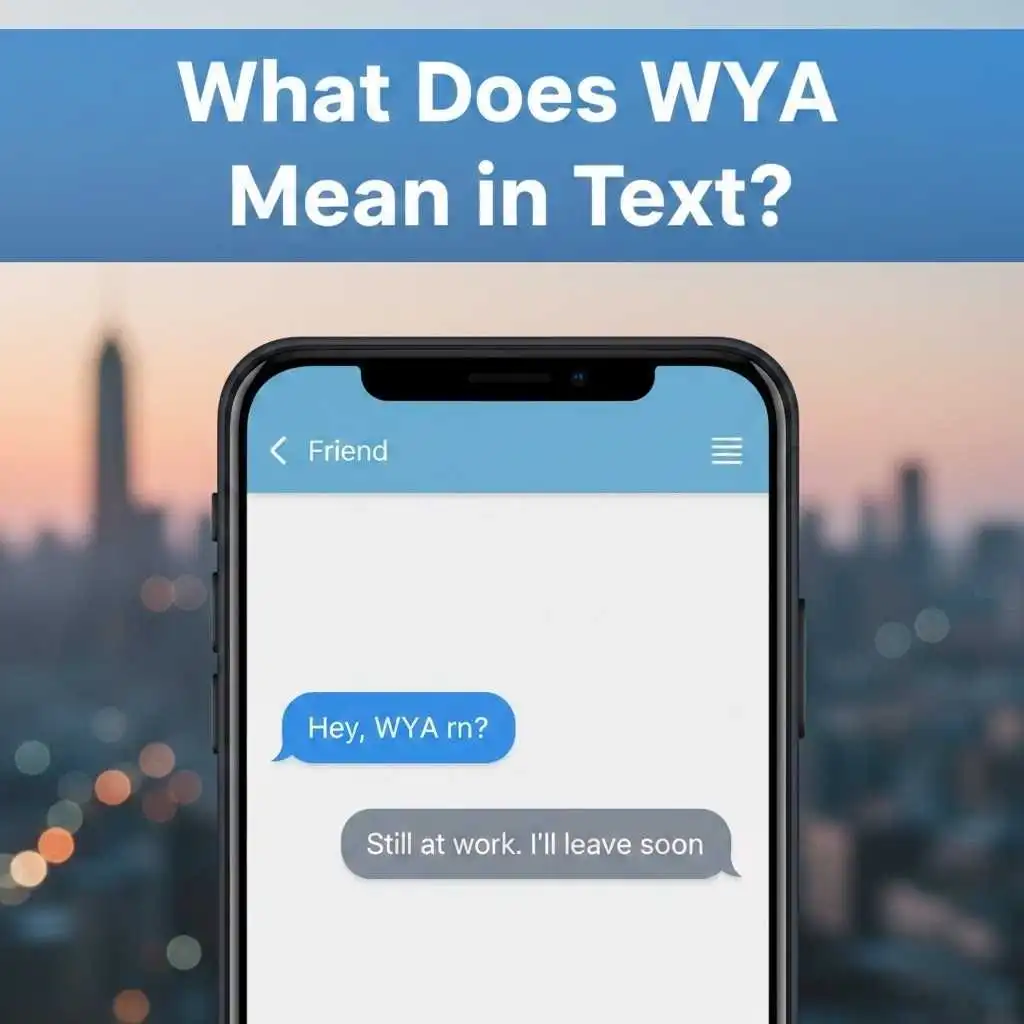
At its core, WYA stands for “Where you at?”
It’s a form of internet slang used in text messaging, social media, and other types of electronic communication. Unlike a traditional sentence such as “Where are you?” WYA drops grammar rules in favor of speed and simplicity.
That’s not laziness. It’s linguistic efficiency.
Quick Breakdown
| Term | Explanation |
| WYA | An initialism used in texting |
| Full phrase | “Where you at?” |
| Category | Text exchange term |
| Tone | Informal |
| Context | Asking for location or status |
Instead of typing four words, users type three letters. In fast-moving conversations, that matters.
Is WYA an Acronym, Initialism or Abbreviation?
Many people search for:
- What does WYA stand for
- WYA acronym
- WYA abbreviation
- WYA initialism
Here’s the accurate answer.
WYA is an initialism.
An acronym forms a new word when pronounced, like NASA.
An initialism spells out each letter, like FBI or LOL.
You say W-Y-A individually. Therefore it qualifies as an initialism.
It also functions as an abbreviation because it shortens a longer phrase. However, linguistically speaking, initialism is the most precise label.
Understanding this distinction helps in academic or professional discussions about online acronyms and chat abbreviations.
The Literal Meaning of WYA
The literal meaning of WYA is straightforward.
It asks where someone physically is.
Examples:
- “WYA? We’re outside.”
- “WYA rn?”
- “WYA at?”
In these cases, the sender wants your location. Nothing deeper. No hidden message.
It’s commonly used when:
- Meeting friends
- Coordinating plans
- Checking arrival time
- Making last-minute changes
Think of it as shorthand GPS language.
The Figurative Meaning of WYA
Language rarely stays literal.
Sometimes WYA carries a figurative meaning depending on context.
For example:
- “WYA? You vanished.”
- “WYA? Haven’t heard from you.”
Here, the sender might not be asking about your physical position. Instead, they may mean:
- Why aren’t you replying?
- Are you ignoring me?
- What’s going on?
This shift from literal to figurative meaning shows how slang expressions evolve in written communication.
Tone plays a huge role. A simple question can feel playful or confrontational depending on the relationship.
WYA Meaning on Snapchat, WhatsApp and Text Messaging
Different platforms influence how people use text messaging slang.
WYA on Snapchat
On Snapchat, WYA often signals:
- Starting a conversation
- Asking to hang out
- Continuing a streak
- Checking someone’s availability
Snapchat culture thrives on short bursts of communication. WYA fits perfectly.
WYA on WhatsApp
On WhatsApp, the term feels slightly more practical.
Common uses include:
- Coordinating family gatherings
- Checking office arrival times
- Confirming event locations
WhatsApp mixes informal and semi-formal tones. WYA works mostly in personal chats.
WYA in Standard SMS
Traditional SMS texting mirrors casual speech. WYA appears frequently among friends, siblings, or partners.
Why WYA Became So Popular
Language evolves toward speed. Digital platforms accelerate that evolution.
Here’s why WYA exploded in popularity:
- Faster than typing full sentences
- Matches conversational tone
- Reflects informal language
- Feels natural in texting shorthand
- Works across multiple platforms
Modern electronic communication favors quick exchanges. People prioritize convenience over strict grammar rules.
As texting increased globally, social media abbreviations became mainstream vocabulary.
WYA and Grammar | Is It Correct?
Technically, “Where you at?” isn’t a grammatically correct question in standard English.
The proper version is:
- “Where are you?”
However texting ignores strict rules. That’s where informal language differs from formal language.
Key Differences
| Formal Language | Informal Texting |
| Complete sentences | Fragments accepted |
| Proper punctuation | Often omitted |
| Standard grammar | Flexible structure |
| Professional tone | Casual tone |
WYA intentionally drops the verb “are.” It also skips punctuation.
In texting culture, that’s normal.
In a business email, it’s inappropriate.
When You Should Use WYA
Knowing when to use WYA matters more than knowing what it means.
Appropriate Situations
- Messaging close friends
- Casual group chats
- Social media DMs
- Quick location checks
Situations to Avoid
- Job interviews
- Academic essays
- Business communication
- Professional networking
Switch to “Where are you?” in professional contexts.
Understanding tone and audience prevents misunderstandings.
Alternative Meanings of WYA
Although “Where you at?” dominates usage, WYA has alternative interpretations in specific contexts.
Slang Variations
Rare but possible meanings include:
- “Watch your a**”
- “What’s your angle?”
These interpretations depend heavily on tone and surrounding conversation.
Organizational Meanings
WYA may represent:
- World Youth Alliance
- World Yoga Alliance
- Washington Yachting Association
- Wales Youth Agency
In these contexts, WYA refers to institutions rather than slang.
Historical Usage
Some historical discussions use WYA to reference:
- “War of Yankee Aggression”
This phrase appears in debates surrounding the American Civil War. It’s politically and regionally sensitive.
Context determines meaning. Always examine the conversation before assuming.
Context-Based Interpretation | Why It Matters
Without context, WYA can confuse readers.
Imagine receiving this message:
“WYA?”
Now imagine receiving:
“WYA? We’ve been waiting.”
Same letters. Different emotional weight.
Context influences:
- Tone
- Urgency
- Intention
- Emotional implication
Digital communication lacks facial expressions and voice cues. That makes contextual awareness essential.
How to Respond to WYA
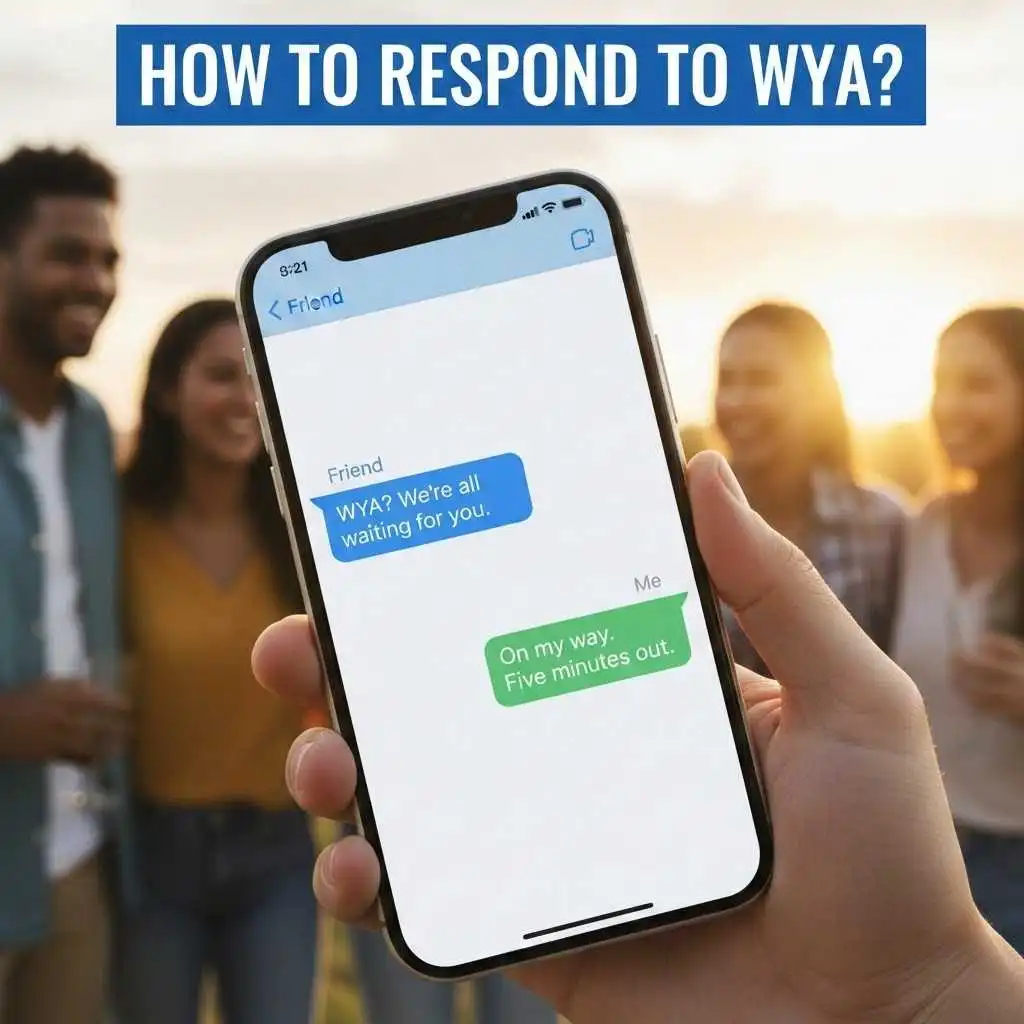
Responding correctly keeps conversations smooth.
Simple Location Responses
- “At home.”
- “Five minutes away.”
- “Still at work.”
- “On my way.”
If You’re Delayed
- “Sorry, just saw this. I’m heading out now.”
- “Running late. Be there soon.”
If It Feels Confrontational
Add clarity.
- “Been busy all day. Just checking messages.”
Clear communication reduces tension.
WYA vs. Similar Texting Shorthand
Understanding related chat abbreviations improves digital fluency.
| Abbreviation | Meaning |
| WYD | What you doing |
| IDK | I don’t know |
| BRB | Be right back |
| IMO | In my opinion |
| TTYL | Talk to you later |
These online acronyms function similarly. They shorten common phrases into quick signals.
The Role of Shorthand in Modern Written Communication
Texting created a new layer of written communication.
Unlike traditional writing, texting:
- Mimics speech
- Favors speed
- Reduces punctuation
- Uses emojis for tone
This shift influences language patterns globally.
Shorthand terms like WYA demonstrate how digital spaces reshape grammar conventions.
Punctuation in Texting | Why It’s Often Ignored
You rarely see “WYA?” typed with a question mark.
Why?
Because texting relies on implied tone.
In fact, adding punctuation can sometimes feel aggressive.
Example:
- “WYA?” feels neutral.
- “WYA??” feels urgent.
- “WYA.” feels cold.
Tiny punctuation changes alter emotional interpretation.
Asking for Location in Text | Cultural Norms
Before smartphones, asking location required a phone call.
Today, sending WYA takes two seconds.
Location sharing has become normalized due to:
- GPS integration
- Social check-ins
- Instant messaging
This shift explains why WYA meaning in text feels natural rather than intrusive.
How Age Groups Use WYA Differently
Language trends vary by generation.
Teenagers
- Use WYA frequently
- Combine with emojis
- Pair with slang
Example: “WYA 😂”
Adults
- Use it selectively
- Prefer full sentences in professional contexts
Older Generations
- May avoid shorthand
- Prefer standard grammar
Understanding demographic usage prevents awkward exchanges.
WYA and Message Response Delay
Sometimes WYA appears after silence.
Example:
“WYA? Haven’t heard from you.”
Here, it questions response delay rather than physical location.
This subtle shift shows how texting slang adapts emotionally.
Formal Alternatives to WYA
If you want to maintain professionalism, use:
- Where are you?
- Could you share your location?
- What’s your current location?
Switching tone demonstrates communication awareness.
WYA in Academic or Historical Documents

In non-texting contexts, WYA may refer to organizations or historical terminology.
For instance:
- Youth organizations
- Yoga certification bodies
- Regional associations
Always verify context before interpreting.
Common Misinterpretations of WYA
People sometimes:
- Assume aggression
- Misread urgency
- Confuse organizational references
Avoid misinterpretation by:
- Reviewing surrounding messages
- Considering relationship tone
- Asking for clarification
Clarity beats assumption every time.
Language Evolution | Why Slang Terms Stick
Slang survives when it meets three criteria:
- Efficiency
- Popular adoption
- Emotional flexibility
WYA satisfies all three.
It’s brief. It’s widely understood. It adapts across tones.
That combination ensures longevity in texting culture.
Digital Communication Trends and Abbreviations
The rise of smartphones accelerated the use of:
- Texting shorthand
- Social media abbreviations
- Online acronyms
Typing speed shapes vocabulary.
Autocorrect and predictive text further reinforce shorthand patterns.
Practical Examples of WYA in Conversations
Example 1: Meeting Up
Person A: “WYA?”
Person B: “Parking lot.”
Example 2: Checking In
Person A: “WYA? Haven’t seen you all day.”
Person B: “At home. Needed a break.”
Example 3: Casual Conversation
Person A: “WYA tonight?”
Person B: “Out with friends.”
Each example reflects subtle differences in intention.
The Psychology Behind Quick Abbreviations
Short forms create:
- Speed
- Informality
- Emotional closeness
They remove social stiffness.
When someone texts WYA instead of “Where are you currently located?” they signal familiarity.
That psychological cue strengthens bonds.
Final Takeaway | What Does WYA Mean?
WYA primarily means “Where you at?” It’s an initialism, a staple of internet slang, and a common feature of text messaging slang.
Context determines whether it asks about location or attention. Use it casually. Avoid it professionally. Once you understand tone and setting, WYA becomes effortless to interpret.

Tyler Wells is an American author known for his captivating storytelling and thoughtful insights into modern life. With a natural talent for weaving words into meaningful narratives, he has built a strong connection with readers who appreciate both authenticity and imagination.
Over the years, Tyler has written several acclaimed books, including “Echoes of the Dawn” (a moving story about hope and new beginnings), “Whispers Between the Lines” (a heartfelt story exploring love, loss, and resilience), and “The Silent Hour” (a suspenseful drama that keeps readers turning pages late into the night). His works blend emotional depth with relatable characters, making them both timeless and relevant for today’s audience.
Beyond writing, Tyler enjoys sharing his thoughts on creativity, personal growth, and the human experience. Whether through his books or his articles, he inspires readers to look at life from new perspectives and embrace their own stories with courage.