

“What does exempt mean?” At its core, it means you’re free from a duty, rule, or requirement.
However, once you step into the workplace, legal system or tax world, the meaning becomes precise and powerful.
The word can determine whether you earn overtime pay, qualify for tax relief, or avoid certain legal obligations.
If you’ve ever wondered how exempt meaning in work differs from exempt meaning in law, this guide clears it up in plain English.
The Simple Definition of Exempt
Before understanding how the word is used in law, taxes, or employment, it helps to first look at its basic meaning. The term “exempt” is commonly seen in official documents, workplace policies, and financial rules, which makes it important to clearly understand what it actually implies. Once you know the simple definition, the rest of its uses become much easier to understand.
Definition of Exempt in Plain English
The definition of exempt is straightforward: to be released from an obligation, duty, or requirement that others must follow.
In everyday language, exempt means:
- You don’t have to pay a fee.
- You don’t have to follow a specific rule.
- You’re legally excused from a requirement.
For example:
- A student may be exempt from a course requirement.
- A senior citizen may be exempt from certain fees.
- A homeowner may qualify for a property tax exemption.
The key idea remains consistent: freedom from obligation.
However, context changes everything. In legal and employment settings, exemption isn’t casual. It’s a formal legal classification that carries serious consequences.
Word Origin and Evolution
The word “exempt” comes from the Latin eximere, meaning “to remove” or “to take out.” Over time, English adopted it to describe someone removed from a duty or burden.
Today, the term appears frequently in:
- Employment law
- Labor regulations
- Tax law
- Government policies
- Workplace classification systems
While the base meaning stays the same, the legal impact can be significant.
Exempt Meaning Explained in Different Situations
What Does Exempt Mean for a Job?
In a job, exempt usually refers to employees who are not eligible for overtime pay. This means they receive a fixed salary and are expected to complete their job duties regardless of extra hours worked.
Exempt employees are often in professional, managerial, or administrative roles. These workers are paid based on their responsibilities rather than the number of hours they work.
What Does Exempt Mean in School?
In school, exempt means that a student does not have to complete a specific assignment, test, or requirement. This usually happens when the student already meets certain conditions.
For example, a student with excellent grades or attendance might be exempt from a final exam. Schools sometimes allow exemptions as a reward for strong academic performance.
Does Exempt Mean Salary?
Yes, in many work situations exempt employees are paid a salary instead of hourly wages. Being exempt often means the employee receives a fixed amount of pay each pay period.
However, the key point is that exempt employees do not receive overtime pay, even if they work more than the standard number of hours.
What Does Exempt Mean on W-4?
On a W-4 form, claiming exempt means that no federal income tax will be withheld from your paycheck. A person usually claims exempt if they did not owe taxes last year and expect to owe none this year.
Employees who qualify can write “exempt” on the W-4 form to prevent tax withholding from their wages.
What Does Exempt Mean for Taxes?
For taxes, exempt means you do not have to pay a certain tax or part of a tax because of special rules or qualifications.
For example, some organizations such as charities or religious groups may be tax-exempt. Individuals may also receive tax exemptions based on income level or other factors.
What Does Exempt Mean (Simple Meaning)?
In simple terms, exempt means you are excused from something that others must do.
For example, if someone is exempt from a rule, they do not have to follow that rule. It simply means they are given an exception.
Exempted From Exam Meaning
If a student is exempted from an exam, it means they do not need to take that exam. Schools may grant exam exemptions to students who already show strong understanding of the subject.
For example, a student with very high grades throughout the year might not need to take the final test.
What Does Exempt Mean in School Grades?
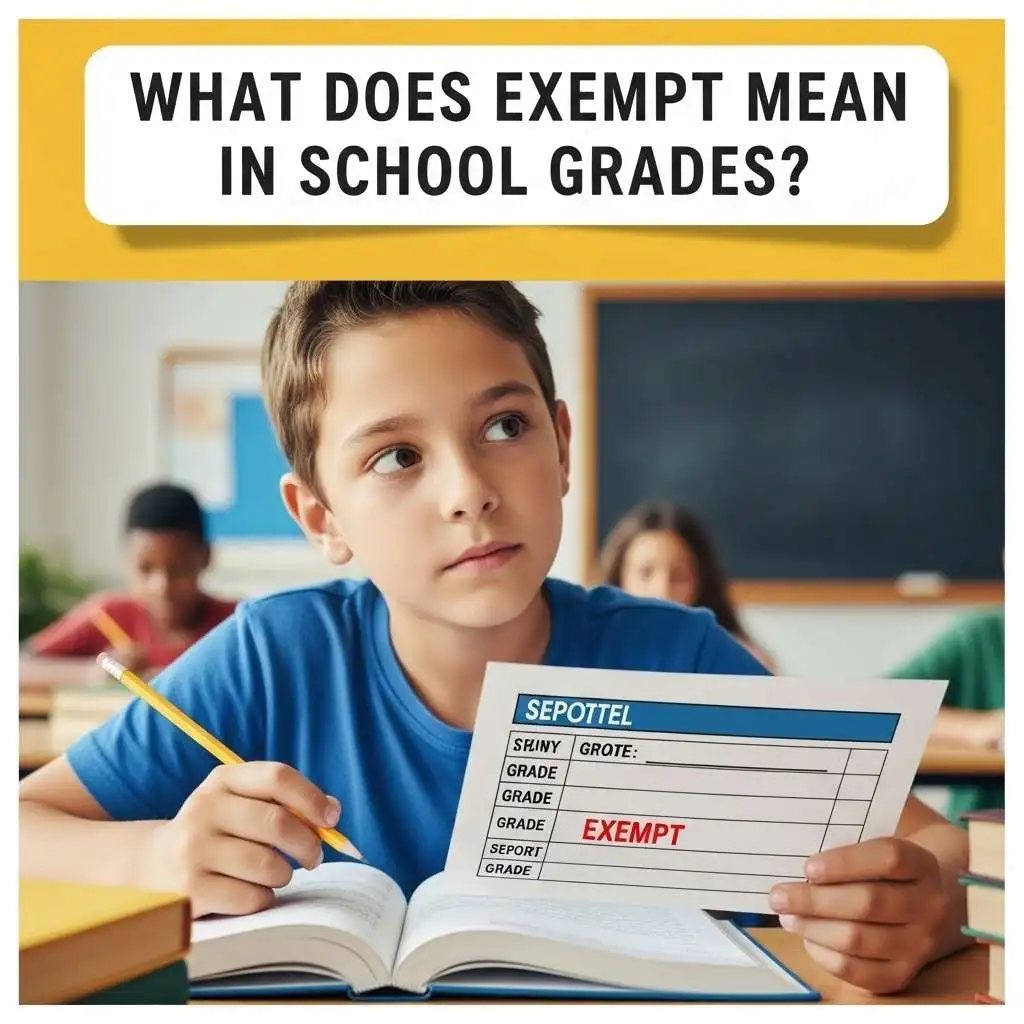
In school grades, exempt means a student is excused from a test or assignment because of good academic performance or other reasons.
Sometimes teachers exempt students from finals if they maintain high grades or perfect attendance during the term.
What Does Exempt Mean in Work?
When people ask about exempt meaning in work, they usually want to know one thing:
Does this affect overtime pay?
Yes. It absolutely does.
In the workplace, exempt typically refers to whether an employee is exempt from overtime eligibility under U.S. labor law.
What Is an Exempt Employee?
An exempt employee is someone who:
- Receives a fixed salary
- Meets specific job duties criteria
- Is not eligible for overtime pay
Exempt employees are generally salaried employees. They receive the same paycheck regardless of how many hours they work each week.
For example:
- A company manager works 50 hours.
- She earns the same weekly salary.
- She does not receive time-and-a-half pay.
That’s what exemption means in this context.
However, salary alone does not automatically make someone exempt. U.S. law requires employers to pass specific tests.
What Is a Non-Exempt Employee?
A non-exempt employee is typically:
- An hourly worker
- Eligible for overtime pay
- Protected under overtime rules
If a non-exempt employee works more than 40 hours in a week, they must receive overtime at 1.5 times their regular rate.
This protection comes from federal law.
The distinction between exempt vs non-exempt employees determines your pay structure and workplace rights.
Exempt vs Non-Exempt Employees
Here’s a clear side-by-side comparison:
| Feature | Exempt Employee | Non-Exempt Employee |
| Pay Structure | Fixed salary | Hourly or salary |
| Overtime Eligibility | Not eligible | Eligible |
| 40-Hour Workweek Protection | Not guaranteed | Guaranteed |
| Time-and-a-Half Pay | No | Yes |
| Legal Classification | Must meet tests | Covered automatically |
Why This Matters
If you’re misclassified, you could lose thousands of dollars in unpaid overtime.
For example:
- A non-exempt employee earning $20 per hour
- Works 10 overtime hours weekly
- Overtime rate = $30 per hour
- Extra weekly pay = $300
- Yearly difference = $15,600
Classification isn’t a small detail. It directly affects your compensation structure.
The Law Behind Exempt Meaning in Work

The rules come from the Fair Labor Standards Act (FLSA).
The FLSA is a federal law that governs:
- Minimum wage
- Overtime pay
- Recordkeeping
- Child labor standards
Under U.S. labor law, most employees must receive overtime for working beyond a 40-hour workweek. However, certain employees qualify as exempt.
The Three Legal Tests for Exempt Status
To classify someone as exempt, employers must satisfy three conditions:
1. Salary Basis Test
The employee must receive a guaranteed salary that does not change based on hours worked.
2. Salary Threshold
As of current federal standards, the minimum salary threshold is $684 per week ($35,568 annually). If someone earns less, they typically cannot qualify as exempt.
3. Job Duties Test
This is critical. The employee must perform specific executive, administrative, or professional duties.
Titles alone do not determine exemption. Duties do.
Types of Exempt Employees
Under labor regulations, three main categories qualify:
Executive Employees
- Manage a department
- Supervise at least two full-time employees
- Have authority in hiring or firing
Administrative Employees
- Perform office or non-manual work
- Exercise independent judgment
- Assist in business operations
Professional Employees
- Require advanced knowledge
- Work in fields like law, medicine, engineering, accounting
- Typically require specialized education
This classification system protects worker rights while allowing flexibility for leadership roles.
Employee Misclassification and Legal Risks
Improper worker classification creates serious consequences.
If an employer mislabels a non-exempt employee as exempt, the employee can:
- File complaints
- Demand back pay
- Sue for unpaid overtime
Employers may face:
- Legal penalties
- Fines
- Back wages
- Damages
- Attorney fees
In recent years, misclassification lawsuits have resulted in multi-million-dollar settlements.
Correct legal compliance protects both employers and workers.
Exempt Meaning in Law Beyond Employment
The exempt meaning in law extends beyond workplace rules.
Exemption appears throughout legal systems in areas such as:
Military Service Exemptions
Some individuals qualify for exemptions due to age, health, or hardship.
Medical Exemptions
Certain medical conditions allow exemption from mandatory requirements, such as vaccines in specific circumstances.
Court Fee Exemptions
Low-income individuals may qualify for fee waivers in court proceedings.
Regulatory Exemptions
Businesses sometimes receive limited exemptions from certain regulations depending on size or industry.
In each case, exemption removes a legal obligation under defined criteria.
What Does Tax-Exempt Mean?
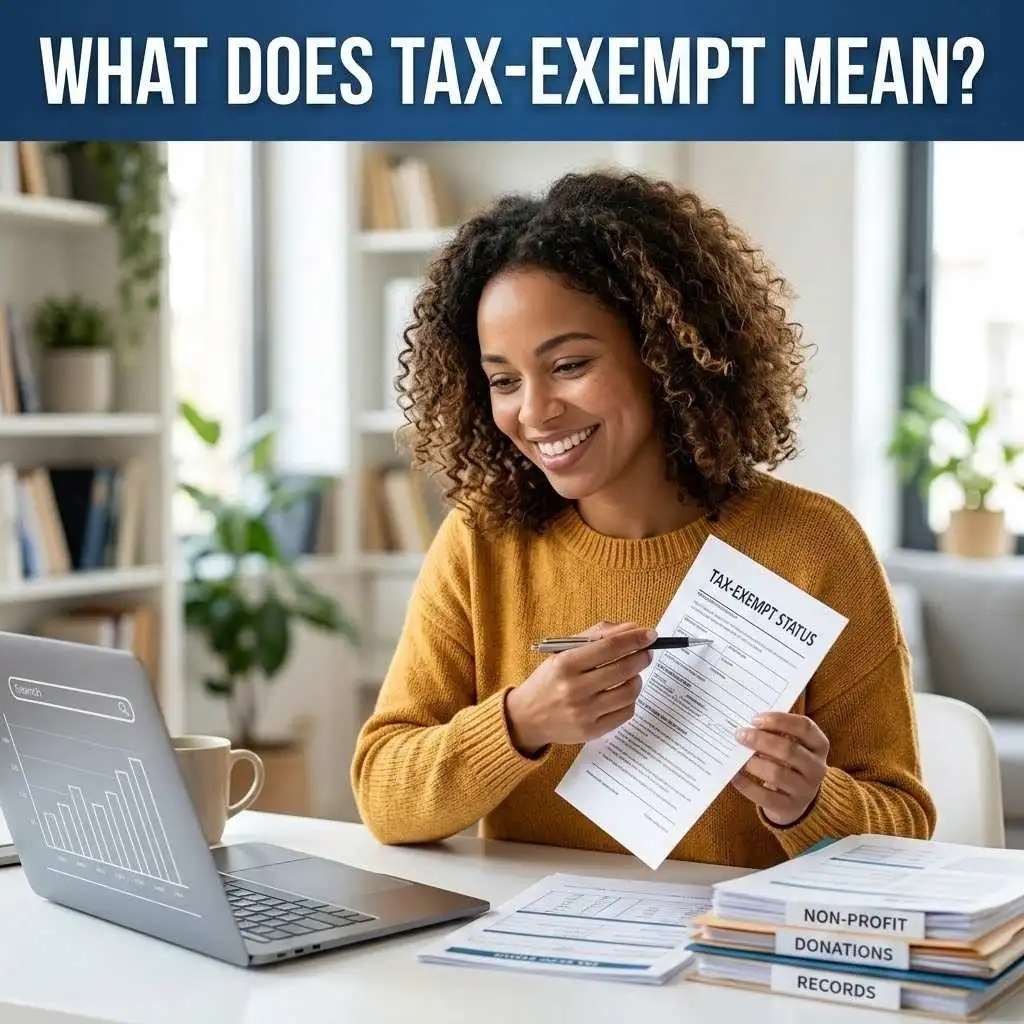
The term also appears in tax law.
Tax-exempt status means an individual or organization does not have to pay certain taxes.
Common examples include:
- Property tax exemptions
- Income level exemptions
- Nonprofit organizations
Property Tax Exemptions
Homeowners may qualify for reduced or eliminated property taxes due to:
- Age
- Disability
- Veteran status
- Primary residence status
This reduces financial burden legally.
Nonprofit Organizations
Charities and religious organizations often qualify for tax-exempt status.
To receive this status, organizations must:
- Operate for charitable purposes
- Avoid distributing profits to individuals
- Meet strict IRS requirements
This exemption encourages public service activities.
Key Legal and Workplace Terms You Should Know
Understanding these terms protects your workplace rights:
- Overtime eligibility – Qualification for overtime pay
- Time-and-a-half pay – 1.5x regular hourly rate
- Salary threshold – Minimum pay level for exemption
- Pay structure – How compensation is organized
- Employment classification – Legal category of worker
- Compensation structure – Overall wage and benefit system
- Legal obligations – Duties required by law
Knowing these terms helps you avoid costly misunderstandings.
Is Exempt Status Better or Worse?
The answer depends on your situation.
Benefits of Being Exempt
- Predictable salary
- Often higher status roles
- Flexibility in work schedule
Downsides
- No overtime pay
- Longer work hours without extra compensation
Some professionals value flexibility. Others prefer overtime protection.
You must evaluate what works best for your goals.
Can Employers Change Your Classification?
Yes, they can.
However, they must follow legal guidelines. Employers cannot simply change classification to avoid paying overtime. The role must genuinely meet exemption tests.
If you suspect misclassification, review your job duties and salary level carefully.
Practical Example | How Exemption Impacts Income
Imagine two employees:
| Detail | Employee A | Employee B |
| Classification | Exempt | Non-Exempt |
| Weekly Hours | 50 | 50 |
| Hourly Equivalent | $25 | $25 |
| Overtime Pay | No | Yes |
Employee B earns:
10 overtime hours × $37.50 = $375 extra weekly
Over one year, that equals $19,500 in additional income.
This illustrates why exempt meaning in work matters financially.
Common Questions About Exempt Meaning
Does exempt always mean no overtime?
In employment law, yes. In general English, no.
Can salaried employees be non-exempt?
Yes. Salary alone does not determine exemption.
Does exempt mean immune from all laws?
No. It means exempt from a specific obligation.
Is exempt a permanent status?
No. It can change if duties or salary change.
Why Understanding Exempt Meaning Protects You
When you understand what does exempt mean, you gain power.
You protect your wages.
You understand your worker rights.
You avoid legal confusion.
You recognize workplace classification errors.
Knowledge prevents costly mistakes.
Conclusion
Exempt means freedom from a rule, duty, or requirement, yet its impact varies by context. In work settings, it determines overtime eligibility and compensation structure. In law, it defines specific legal distinctions and obligations.
In tax matters, it can reduce or eliminate payment responsibilities. Understanding exempt meaning helps you protect your income, ensure legal compliance, and make informed decisions.
Discover More About:
- Discover What Does SMD Mean in Text? The Real Meaning, Usage and Safer Alternatives Explained for 2026
- Learn What Does OTW Mean? The Real Texting Meaning, Hidden Uses and How to Use It Correctly in 2026
- Learn What Does TS PMO Mean? Viral Slang Meaning, Full Form, Examples & Social Media Usage Explained for 2026

Ashton Cole is an American author celebrated for his compelling storytelling and ability to capture the depth of human emotions. His works often explore themes of love, resilience, and self-discovery, making him a relatable voice for readers around the world.
He has published several well-received books, including:
-
Whispers of Dawn – a reflective novel about finding hope in life’s darkest moments.
-
Beneath the Silent Sky – a moving story of love, memory, and the bonds that shape us.
-
The Edge of Forever – a thought-provoking tale that blends drama, destiny, and the courage to begin again.
Through his writing, Ashton strives to inspire readers to see beauty in both the struggles and triumphs of life. When he isn’t writing, he enjoys exploring new cities, collecting rare books, and spending time in cozy coffee shops where many of his story ideas take shape.