

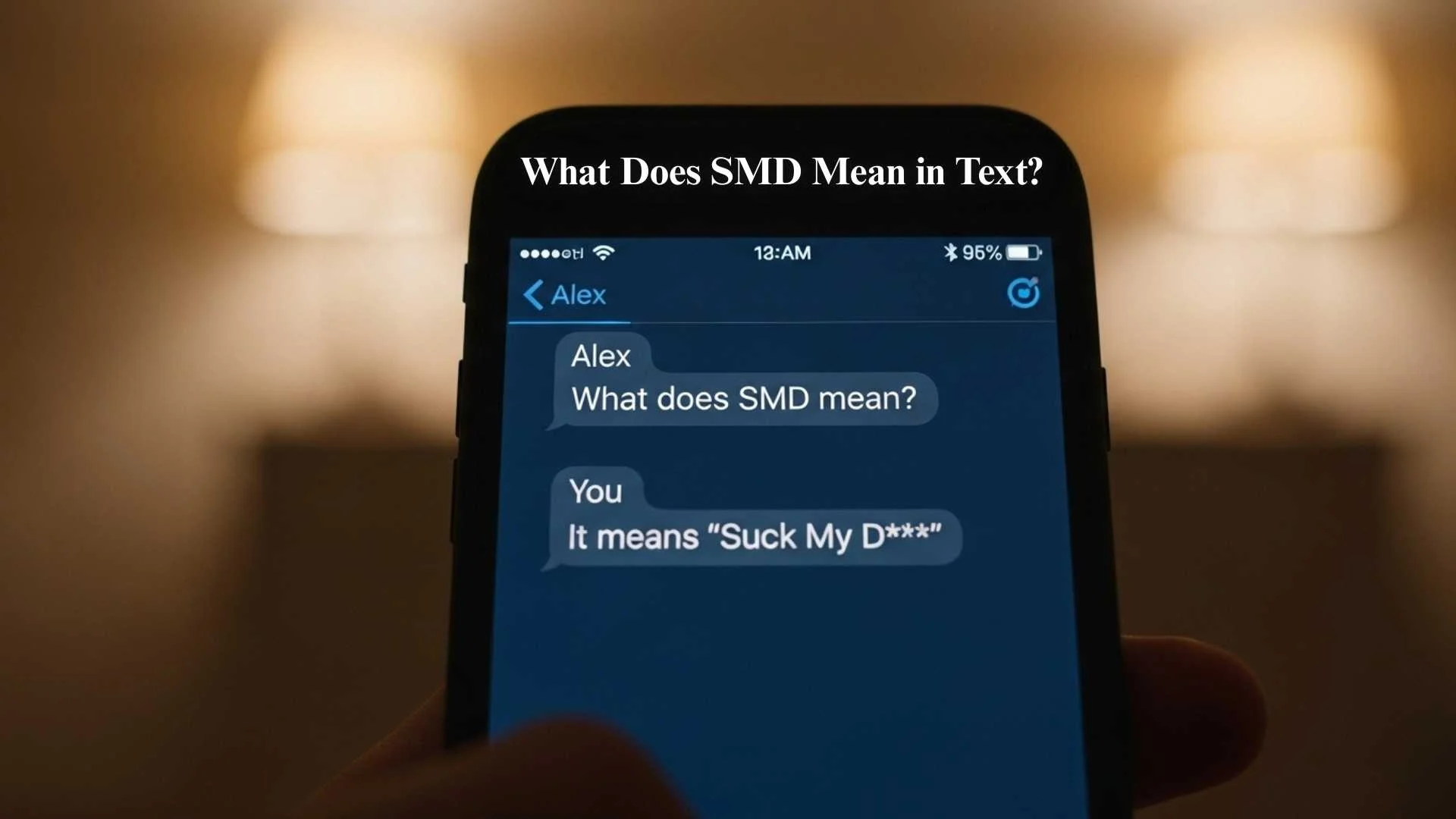
“What does SMD mean in text” is a question many people ask after seeing this short acronym pop up in messages or online comments.
At first glance, it looks harmless, but its meaning can be shocking if you’re not familiar with modern slang.
I’ve seen many readers stumble across it in a chat and feel confused, curious or even uncomfortable.
This guide clears up the meaning, context and what to do next without any unnecessary confusion.
What Does SMD Mean in Text?
Many internet abbreviations can have harmless or funny meanings, but some slang terms carry a much stronger tone. SMD is one of those abbreviations that often appears in heated online conversations or arguments. Because of its offensive nature, it’s important to understand what it means before using or responding to it in a text message or social media chat.
In texting and online slang, SMD most commonly stands for a highly explicit and offensive phrase. People usually use it as an insult, a way to dismiss someone, or to provoke a reaction during an argument.
It’s not a neutral or friendly abbreviation. In most cases, the intent behind SMD is rude, confrontational, or intentionally disrespectful.
SMD Meaning in Text and Social Media
SMD Meaning
SMD is a slang abbreviation often used in online chats, text messages, and social media. It usually represents a very rude and offensive phrase. People typically use it during arguments or when they want to insult someone. Because of its meaning, it is not considered polite language.
You may see it in comment sections, gaming chats, or private messages. In most cases, the person using it is angry or trying to provoke a reaction. It is not used in professional conversations. Many websites and platforms discourage using this term. Understanding slang like this helps you recognize the tone of online messages.
SMD Meaning Text
The SMD meaning in text messages is generally the same as it is on the internet. It stands for a vulgar phrase meant to insult or dismiss someone. When someone sends “SMD” in a text, they are usually expressing anger or disrespect.
It is often used during heated conversations or online arguments. Because the phrase is offensive, it is not suitable for polite discussions. Most people avoid using it in normal communication. Instead, it appears more in casual or toxic online conversations. If you see it in a text, it usually means the sender is being hostile. Always be careful using slang like this.
What Does SMD Stand For

If you are wondering what does SMD stand for, it is an abbreviation for a very explicit and disrespectful phrase. The phrase itself is considered vulgar, which is why people often shorten it to “SMD.” This abbreviation appears frequently in online arguments. It is meant to insult the other person or shut down a conversation.
Because of its meaning, it is not appropriate for professional or respectful communication. Many users avoid typing the full phrase and just use the initials instead. Still, the meaning remains the same. Understanding slang helps you interpret online messages correctly.
What Does SMD Stand For in Text
What does SMD stand for in text? In texting slang, SMD usually refers to the same explicit phrase used as an insult. People type it as a quick way to express anger or disrespect during a conversation. It is most commonly used among younger users or in informal chats.
However, the phrase is considered offensive and rude. Because of this, it should not be used in professional messages.
Many messaging platforms and communities discourage using abusive language. When you see SMD in a text, it generally means the sender is being confrontational. Understanding these abbreviations helps you better read the tone of messages.
SMD Meaning Texting
The SMD meaning in texting is tied to internet slang culture. It is a short abbreviation used when someone wants to insult another person quickly. Instead of typing the full offensive phrase, people simply write SMD.
This makes the message shorter but still carries the same negative tone. It often appears in arguments, gaming chats, or heated discussions online. Because the phrase is vulgar, it is not appropriate for respectful communication. Many users consider it toxic language. If someone sends SMD in a message, they are likely upset or trying to provoke you.
What Dose SMD Mean
If you are searching what dose SMD mean, the question usually refers to the slang abbreviation used online. Even though the spelling “dose” is a mistake for “does,” the meaning stays the same. SMD stands for a vulgar phrase commonly used as an insult. It appears in text messages, comments, and social media conversations.
The term is usually written during arguments or conflicts. Because of its offensive nature, it should be avoided in polite communication. Many people use it only in informal or aggressive chats. Understanding internet slang helps you recognize the intent behind messages.
What Do SMD Mean in Texting
The question what do SMD mean in texting is about understanding online slang. In texting culture, SMD is an abbreviation of an explicit insult. It is used when someone wants to show anger, disrespect, or frustration.
Instead of typing the full phrase, users shorten it to three letters. This makes it quick to send in fast conversations. However, the meaning is still rude and offensive.
Because of this, it should not be used in professional messages or friendly discussions. When you see SMD in texting, it usually signals a negative tone in the conversation.
What Does SMD Mean on Snap
If you see SMD and wonder what does SMD mean on Snap, it generally carries the same meaning as in other messaging apps. On platforms like Snapchat, people often use short slang terms to communicate quickly. SMD is one of those abbreviations, but it is considered very offensive.
It is often used during arguments or when someone wants to insult another person. Because Snapchat messages are quick and casual, slang appears frequently there. Still, the meaning remains rude and disrespectful. Most users recommend avoiding such language to keep conversations friendly.
What Do SMD Mean in Text
The phrase what do SMD mean in text refers to the abbreviation used in texting and online chats. SMD is commonly known as a vulgar slang term used as an insult. People type it when they are angry or trying to provoke someone. It is not a friendly or respectful expression.
Instead, it appears more often in arguments or heated discussions. Because the phrase behind it is explicit, many platforms discourage using it. Understanding this slang helps you recognize when a message has a negative tone. It also helps you respond more carefully in conversations.
What Does SMD Mean on Snapchat
If you are asking what does SMD mean on Snapchat, the meaning is the same as in texting or other social media platforms. It is an abbreviation for a vulgar phrase used to insult someone. Snapchat users often rely on short slang words while chatting. Because of that, abbreviations like SMD sometimes appear in messages or replies.
However, it is not considered polite or respectful language. Most people use it only in arguments or negative conversations. If you see it in a Snapchat chat, it usually means the sender is upset or trying to be offensive. It’s best to avoid using such slang in positive conversations.
Why Do People Use SMD in Text Messages?
People use SMD for a few main reasons:
- To shut down a conversation aggressively
- To express anger or frustration
- To insult or provoke someone online
- To gain attention or shock value in comments
Because texting removes tone and facial expressions, SMD often comes across harsher than intended and can escalate conflicts quickly.
Is SMD Always Meant to Be Offensive?
In real-world usage, yes—almost always.
While some slang terms soften over time, SMD has not become socially acceptable or playful in mainstream communication. Even when used “as a joke,” it still carries a strong negative meaning and can easily offend the reader.
Context matters, but SMD is rarely safe outside private, informal, and very specific circles.
Where You’ll Commonly See SMD Used
You’re most likely to encounter SMD in:
- Text messages
- Social media comment sections
- Online arguments
- Gaming chats
- TikTok or Instagram replies
It’s especially common during heated exchanges or troll-style conversations.
Is SMD Rude or Offensive?
Yes. SMD is widely considered rude, vulgar, and inappropriate in most settings.
Using it can:
- Damage relationships
- Create misunderstandings
- Get comments removed or accounts flagged
- Reflect poorly on the sender
That’s why many people look up its meaning after seeing it unexpectedly.
Should You Use SMD in Texting?
For most people, the answer is no.
You should avoid using SMD in:
- Professional conversations
- Family or group chats
- Public social media posts
- Conversations where respect matters
Even online, words leave a lasting impression.
How to Respond If Someone Texts You “SMD”
If someone sends you SMD, you have a few smart options:
- Ignore it – often the best response
- Respond calmly to avoid escalation
- Use humor to deflect the insult
- Mute or block if it’s repeated harassment
You don’t owe anyone a reaction to disrespect.
Polite and Safer Alternatives to SMD
If you want to express frustration without crossing a line, consider these alternatives:
- “I’m done with this conversation.”
- “Let’s agree to disagree.”
- “That’s not worth my time.”
- “I’m not engaging in this.”
These responses protect your tone and your reputation.
What Does SMD Mean for Parents?
For parents, SMD is a red-flag slang term worth understanding.
If a child encounters or uses it:
- It’s a chance to discuss respectful communication
- It can open a conversation about online behavior
- It helps build digital awareness and boundaries
Understanding slang helps parents guide, not panic.
Common Misunderstandings About SMD
- It is not a harmless abbreviation
- It does not have a widely accepted clean meaning
- It should not be used casually
Knowing this helps avoid awkward or harmful situations.
Conclusion
Understanding “what does SMD mean in text” helps you navigate modern online conversations with confidence and awareness. While the acronym may look simple, its meaning carries strong negative intent in most situations.
Knowing when to avoid it and how to respond if you see it can save you from unnecessary conflict and keep your communication respectful and clear.
Discover More Articles:
- Learn What Does OTW Mean? The Real Texting Meaning, Hidden Uses and How to Use It Correctly in 2026
- Know What Does Exempt Mean? The Complete Guide to Exempt Meaning in Work, Law and Taxes for 2026
- Learn What Does TS PMO Mean? Viral Slang Meaning, Full Form, Examples & Social Media Usage Explained for 2026

Ashton Cole is an American author celebrated for his compelling storytelling and ability to capture the depth of human emotions. His works often explore themes of love, resilience, and self-discovery, making him a relatable voice for readers around the world.
He has published several well-received books, including:
-
Whispers of Dawn – a reflective novel about finding hope in life’s darkest moments.
-
Beneath the Silent Sky – a moving story of love, memory, and the bonds that shape us.
-
The Edge of Forever – a thought-provoking tale that blends drama, destiny, and the courage to begin again.
Through his writing, Ashton strives to inspire readers to see beauty in both the struggles and triumphs of life. When he isn’t writing, he enjoys exploring new cities, collecting rare books, and spending time in cozy coffee shops where many of his story ideas take shape.