

“What does Shalom mean?” Most people translate it as “peace,” then move on. However the meaning of Shalom runs far deeper than calm feelings or the absence of war.
In Hebrew thought, Shalom describes wholeness, restoration, covenant blessing, and life as God intended it.
When you understand the biblical meaning of Shalom, you begin to see the Bible itself through a new lens.
What Does Shalom Mean in Hebrew? The Core Definition
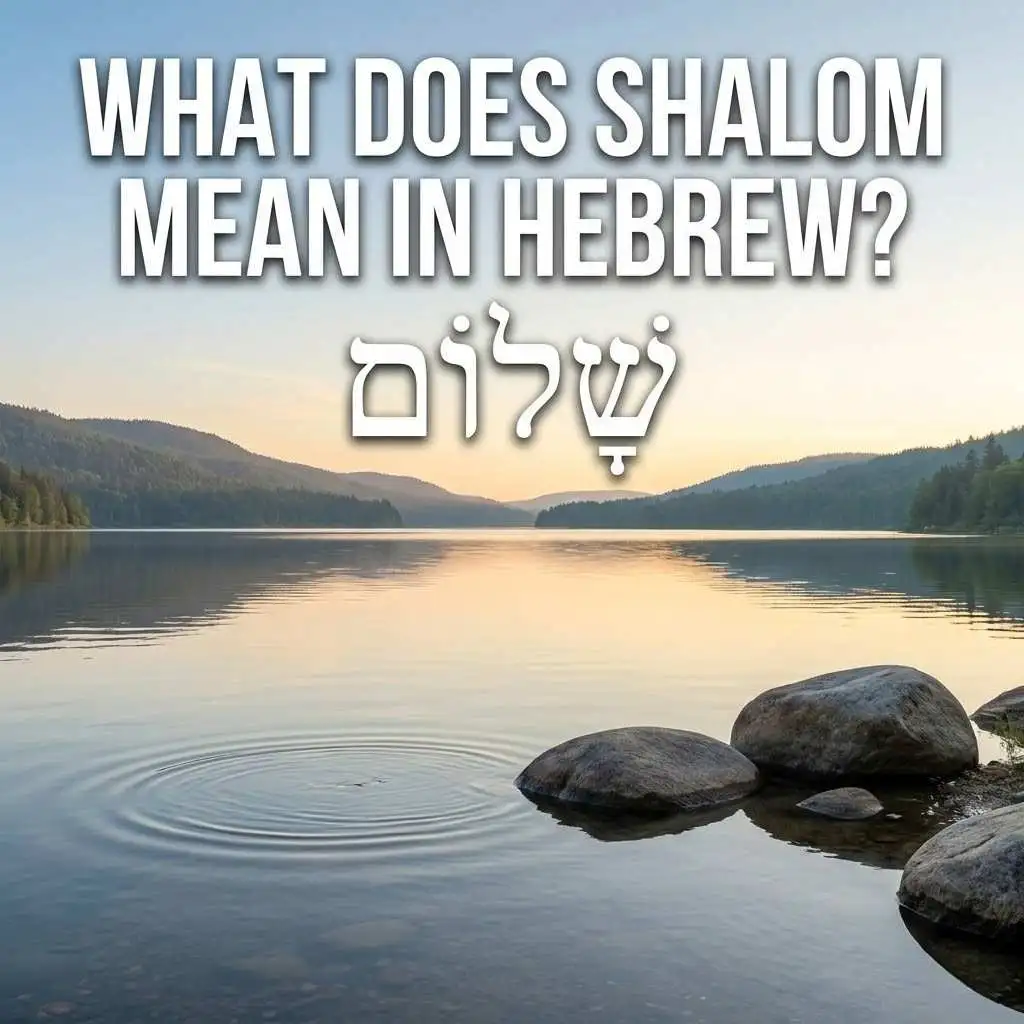
The Hebrew word Shalom (שָׁלוֹם) appears more than 250 times in the Hebrew Bible. While English Bibles often translate it as peace, that single word fails to capture its depth.
At its core, Shalom means completeness.
It implies:
- Wholeness
- Fullness
- Well-being
- Restoration
- Harmony
- Security
- Prosperity within covenant boundaries
- Spiritual completeness
In modern Western culture, peace usually means quiet circumstances. No war. No argument. No chaos.
However in ancient Hebrew thought, peace meant something stronger. It meant everything functioning as designed.
Think of it this way:
- A body without disease → Shalom
- A city with secure walls → Shalom
- A relationship restored after betrayal → Shalom
- A nation walking in covenant faithfulness → Shalom
That is the true meaning of Shalom.
The Root Word Shalam | Where Shalom Comes From
To understand the definition of Shalom, you must look at its root.
The Hebrew verb Shalam (שָׁלַם) means:
- To make whole
- To repay
- To make full restitution
- To restore
- To complete
This root appears in legal contexts in Exodus 21–22, where a person who caused damage had to restore fully what was lost.
That restoration is shalam.
The result of that restoration is shalom.
Key Insight
Shalam is the action. Shalom is the condition.
When something broken gets repaired completely, Shalom exists.
This shifts everything. Peace is not passive. It is repaired order.
Shalom in the Old Testament | Peace as Covenant Blessing
The Shalom in the Bible theme dominates the Hebrew Scriptures. It appears in personal greetings, national prayers, prophetic promises, and priestly blessings.
The Aaronic Blessing: Divine Protection and Peace
In Numbers 6:23–26, God commands Aaron and his sons to bless Israel:
“The Lord lift up His countenance upon you and give you peace.”
This is known as the Aaronic Blessing.
Here, Biblical peace equals:
- Divine protection
- Favor
- Covenant security
- Flourishing under God’s care
Notice something important. Peace follows God’s presence. It does not precede it.
This is covenant blessing language. Shalom is relational before it is emotional.
Pray for the Peace of Jerusalem
Psalm 122:6–7 says:
“Pray for the peace of Jerusalem.”
The city referenced is Jerusalem, often called the City of the Great King.
In Hebrew thought, Jerusalem represented:
- Spiritual center of Ancient Israel
- The dwelling place of God’s Name
- The heart of covenant life
“Peace within your walls” meant:
- Security from invasion
- Prosperity within boundaries
- Spiritual faithfulness
- National stability
This phrase reflects prosperity within walls, not reckless wealth. It describes ordered flourishing under divine rule.
Shalom in Genesis: Personal Well-Being
In Genesis 43:27–28, Joseph asks his brothers about their father’s “peace” — his well-being.
Here, Shalom meaning in Hebrew includes:
- Physical health
- Safety
- Family stability
It answers the question: “Is everything intact?”
This is why Shalom often functions as a health inquiry greeting.
The Prophetic Promise: Prince of Peace
Isaiah 9:6 declares:
“His name shall be called Prince of Peace.”
The prophet Isaiah connects Shalom to the coming Messiah.
The title Prince of Peace signals:
- Governmental authority
- Kingdom justice
- Restored creation
- Messianic prophecy
This peace is not fragile. It governs.
Shalom in the New Testament | Fulfillment and Embodiment
The New Testament continues the Hebrew concept of peace.
Angels Proclaim Peace on Earth
In Luke 2:14, angels announce in Bethlehem:
“Peace on earth.”
This is not sentimental holiday language. It signals covenant fulfillment.
The Messiah’s arrival means Shalom enters history in embodied form.
“Peace Be With You” – Resurrection Greeting
After the resurrection, Jesus appears and says:
“Peace be with you.” (Luke 24:36)
This resurrection appearance matters.
The disciples feared death and persecution. Yet Jesus offers Shalom in battle conditions.
This demonstrates:
- Peace vs absence of war
- Inward tranquility amid chaos
- Divine protection in uncertainty
The peace he gives is covenant restoration, not circumstance control.
Paul’s Benedictions: Peace as Gift
Paul the Apostle writes in 2 Thessalonians 3:16:
“Now may the Lord of peace Himself give you peace at all times.”
Peace is described as:
- Gift of peace
- Continuous
- Rooted in the Lord
This reinforces God’s gift of peace, not self-manufactured calm.
Biblical Peace vs Modern Peace
Here’s where confusion often arises.
| Modern View of Peace | Biblical Worldview of Peace |
| No conflict | Right relationship with God |
| Emotional calm | Covenant alignment |
| Quiet life | Restored order |
| Personal preference | Divine protection and blessing |
Modern culture equates peace with comfort.
However the Hebrew concept of peace includes righteousness, justice, and obedience.
You can sit in silence and lack Shalom.
You can endure hardship and still possess Shalom.
Shalom and the Arabic Word Salam
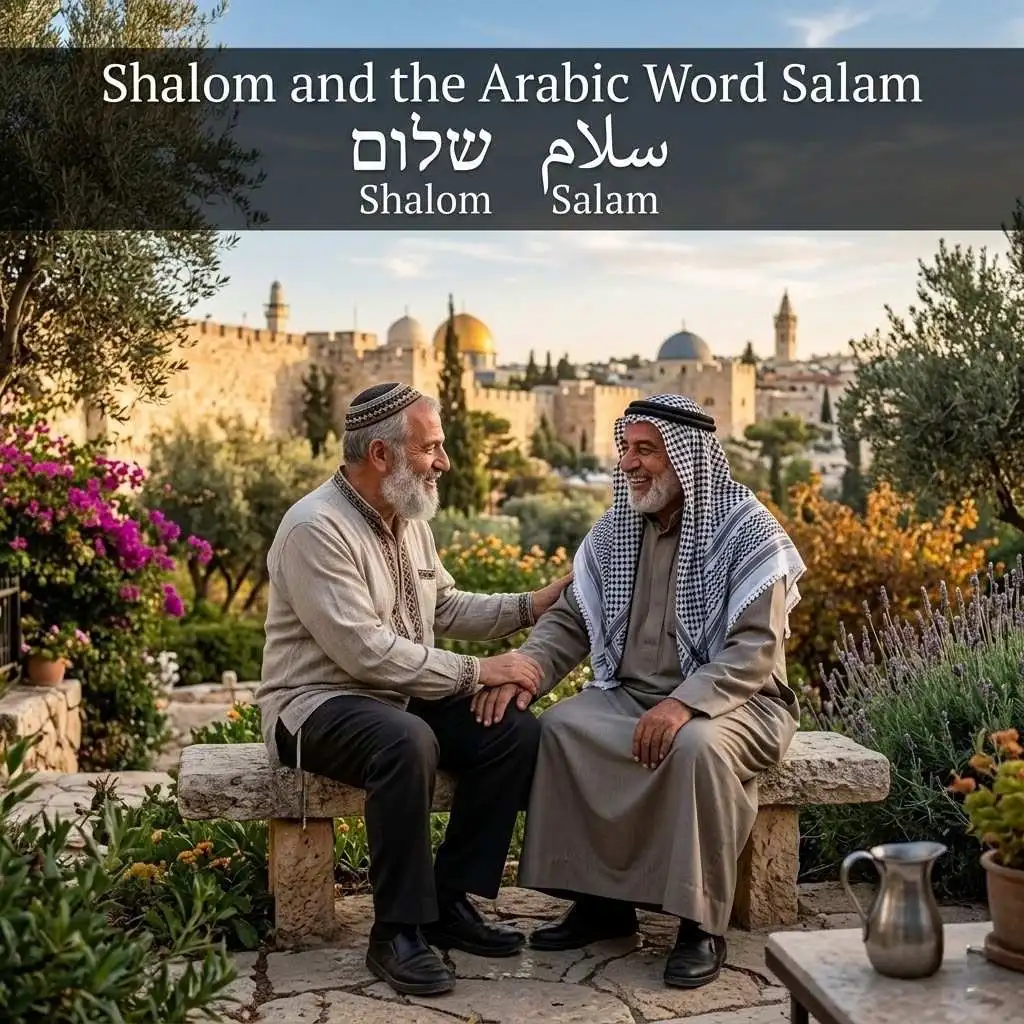
The Arabic word Salam shares the same Semitic root as Shalom.
Both words reflect:
- Peace
- Safety
- Submission to divine order
In Israel and surrounding regions, these greetings still function culturally.
This linguistic overlap reveals shared ancient heritage across Semitic languages.
Shalom as a Greeting in Israel
In modern Hebrew, Shalom functions as:
- Hello
- Goodbye
- Blessing
- Health inquiry
Common expressions include:
- Shabbat Shalom meaning — Peaceful Sabbath
- Ma shlom’kha — How is your peace?
- Shalom lehkhem — Peace to you
The phrase Shabbat Shalom connects Shalom with Sabbath rest.
The Sabbath itself represents:
- Lishbot — to stop
- Lashevet — to sit
- Rest and renewal
- Weekly day of rest
The greeting embodies the rhythm of covenant life.
Shalom and the Sabbath | Rest That Restores
The Sabbath represents a lived expression of Shalom.
When God commands rest in the Ten Commandments, He establishes:
- Trust in God
- Work-life boundaries
- Spiritual renewal
Sabbath rest declares: you are not your productivity.
True Shalom includes rest and restoration.
Theological Themes of Shalom
The deeper you explore Shalom, the more themes emerge.
Inner Completeness
This is not vague positivity. It is inner peace rooted in covenant trust.
Isaiah 26:3 says:
“You keep him in perfect peace whose mind is stayed on You.”
The Hebrew phrase literally reads “Shalom Shalom,” meaning complete peace.
Restoration Theology
Shalom drives restoration theology.
God restores:
- Broken relationships
- Moral disorder
- Spiritual alienation
- National injustice
Shalom is what the Kingdom of God looks like when fully realized.
Peace Spilling Over to Others
Matthew 5:9 says:
“Blessed are the peacemakers.”
Peacemakers embody Shalom.
They pursue reconciliation, justice, and truth. They do not avoid tension. They repair it.
Peace in Battle | Not Fragile, But Strong
Biblical peace often appears in war contexts.
For example:
- Peace in battle
- Peace during exile
- Peace amid persecution
Shalom does not require perfect conditions. It requires divine alignment.
It is steady. Anchored. Rooted.
Shalom and Prosperity | What It Really Means
The word can imply prosperity. However it does not promise reckless wealth.
In Hebrew context, prosperity means:
- Stability
- Security
- Sufficiency
- Community health
It describes a society functioning under justice and righteousness.
Frequently Asked Questions About Shalom
What is the literal definition of Shalom?
It means completeness, wholeness, and well-being.
What does Shabbat Shalom mean?
It means peaceful Sabbath or may your Sabbath be full of covenant rest.
Is Shalom only religious?
No. It functions culturally in Israel as daily greeting language.
Does Shalom mean prosperity?
Yes, within covenant context. It implies flourishing, not material excess.
How is Shalom different from peace?
Peace in English focuses on calm. Shalom focuses on restoration and fullness.
Why Understanding the True Meaning of Shalom Changes Everything
When you grasp the biblical meaning of Shalom, you stop chasing temporary calm.
Instead you pursue:
- Restored relationships
- Spiritual completeness
- Trust in God
- Justice and righteousness
- Covenant faithfulness
Shalom becomes a framework for life.
It shapes how you view conflict, success, suffering, and hope.
Conclusion
Shalom does not mean silence or soft music. It means wholeness restored under God’s design. The true meaning of Shalom stretches from Genesis to the resurrection of Jesus.
It describes covenant blessing, spiritual completeness, and peace that survives battle. When you understand Shalom, you understand the heartbeat of the Bible.

Edward Grant is an American author known for his modern storytelling and thought-provoking narratives. With a passion for exploring human emotions, relationships, and the complexities of everyday life, Edward writes in a style that feels both relatable and inspiring. His journey as a writer began in his early 20s, fueled by a love for literature and a deep curiosity about the world around him.
Over the years, Edward has developed a reputation for crafting characters that feel real, layered, and unforgettable. Whether he’s writing contemporary fiction or reflective essays, his work resonates with readers who value authenticity and emotional depth. Beyond writing, Edward is also an avid reader and enjoys spending time in quiet libraries and creative workspaces where new ideas come to life.
Some of his notable works include Whispers of Tomorrow, Shadows of the Heart, and The Last Horizon, each of which has received appreciation for its unique voice and meaningful storytelling.