

“What does senpai mean?” At its core, the word describes a senior member of a shared group in Japan.
Yet online, it often gets reduced to a romantic meme or exaggerated anime trope. That’s only half the story.
If you really want to understand senpai meaning, you need to look at Japanese culture, hierarchy, and everyday speech.
Let’s unpack it clearly. No fluff. Just the real meaning, real usage, and real cultural context.
What Does Senpai Mean in Japanese?
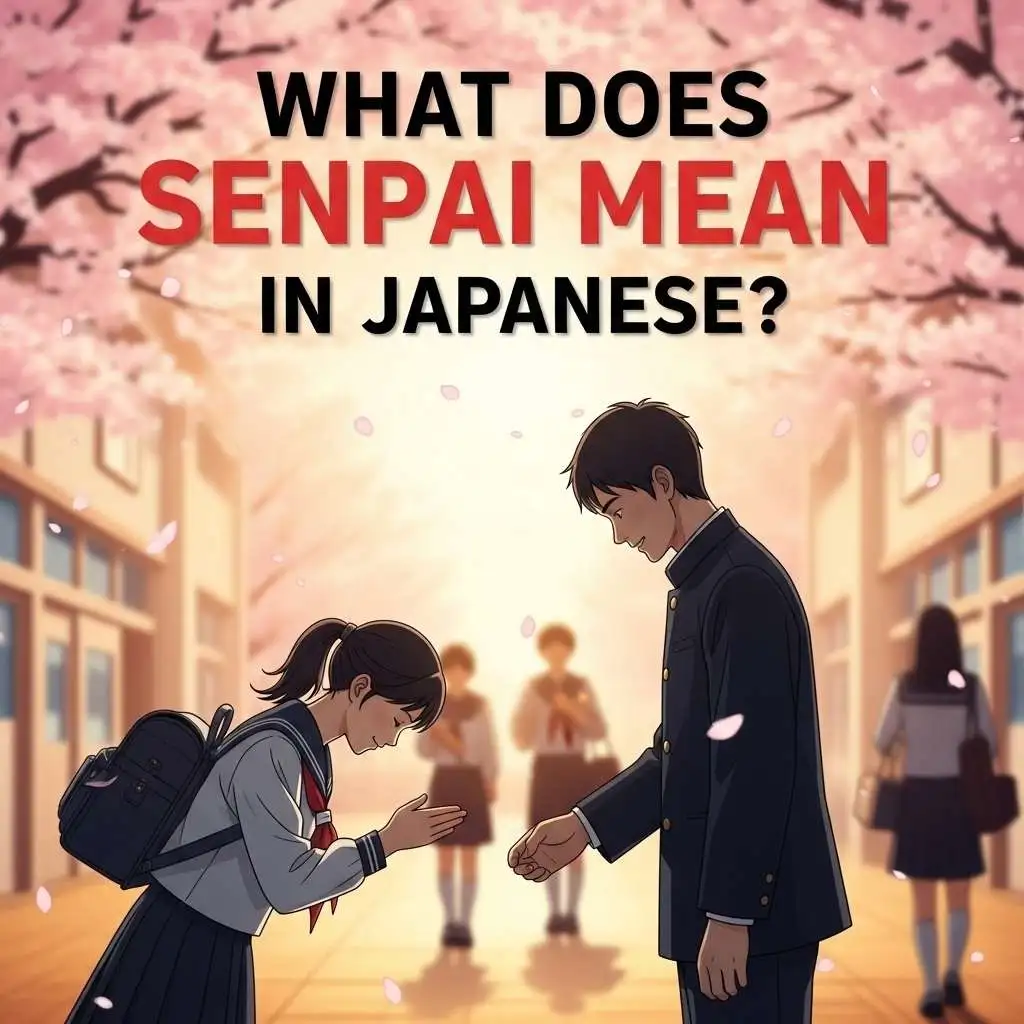
The word senpai (先輩) combines two kanji:
- 先 (sen) → before, ahead
- 輩 (pai) → companion, colleague
Put together, it means someone who came before you in the same group.
That’s it. Not “crush.” Not “master.” Not “boss.” Just a senior member.
Clear Definition
Senpai = A senior member of a group who entered before you and has more experience within that group.
The key idea is shared affiliation. A senpai must belong to the same:
- School
- Company
- Club
- Sports team
- University department
- Organization
Without shared membership, the term doesn’t apply.
Senpai vs Kouhai | The Senior–Junior Relationship Explained
You can’t understand senpai meaning without understanding kouhai meaning.
- Senpai (先輩) → senior member
- Kouhai (後輩) → junior member
This creates what scholars call the senior–junior relationship in Japan. It’s one of the most important social dynamics in Japanese social hierarchy.
Comparison Table
| Term | Japanese | Meaning | Role | Social Expectation |
| Senpai | 先輩 | Senior member | Mentor/Guide | Offers support and leadership |
| Kouhai | 後輩 | Junior member | Learner | Shows respect and humility |
How It Works in Real Life
Imagine you join a high school baseball team in Tokyo. A student who joined last year becomes your senpai even if they’re only a few months older. You show them respect. They guide you.
This dynamic includes:
- Mentor–mentee dynamic
- Hierarchical communication
- Politeness strategy
- Shared responsibility
A senpai doesn’t dominate. They guide. A kouhai doesn’t submit blindly. They respect and learn.
Is Senpai About Age or Status?
Here’s where people get confused.
Senpai is not based on age.
It’s based on entry order and experience within the group.
Example
- A 19-year-old university sophomore
- A 22-year-old first-year university student
The 19-year-old is the senpai because they entered first.
That’s how status-based address in Japan works. It’s structured and specific.
Important Distinction
| Factor | Determines Senpai Status? |
| Age | No |
| Wealth | No |
| Entry Order | Yes |
| Experience in Group | Yes |
This reflects Japan’s emphasis on group harmony (wa) and continuity.
How Senpai Fits Into Japanese Honorifics
To understand what does senpai mean, you must see how it compares to Japanese honorifics.
Japanese has a rich system of honorific suffixes that signal respect, affection, or hierarchy.
Common Japanese Honorifics
- -san (さん) → general respectful suffix
- -kun (くん) → often used for younger males or subordinates
- -chan (ちゃん) → affectionate diminutive
- -sama (様) → very high respect
- sensei (先生) → teacher or master
- -dono (殿) → formal historical title
- -tan → cute slang variation
Here’s the crucial difference:
Senpai is not a suffix like -san. It is a standalone title.
You say:
- “Tanaka-senpai”
- “Senpai, can you help me?”
You don’t attach it like -san. It functions as a title of respect.
Senpai vs Sensei vs Sama
Many learners mix these up.
Comparison Table
| Term | Meaning | Context | Respect Level |
| Senpai | Senior member | Shared group | Moderate |
| Sensei | Teacher/expert | Professional authority | High |
| Sama | Honorific suffix | Formal or divine status | Very High |
Key Differences
- Sensei meaning refers to teachers, doctors, politicians, or experts.
- Sama meaning implies deep reverence or formal superiority.
- Senpai meaning reflects shared group hierarchy.
If someone teaches you karate, they are sensei, not senpai.
How to Use Senpai Correctly
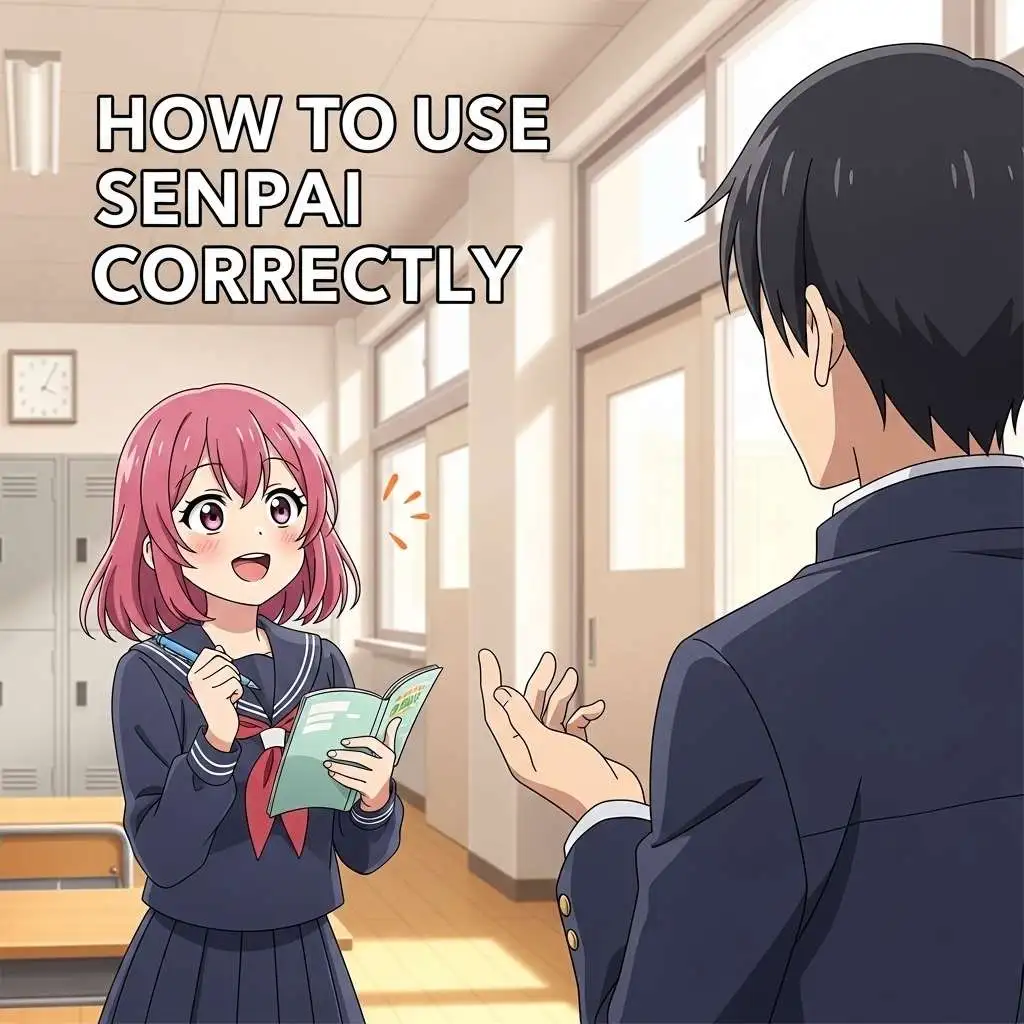
Correct usage matters in Japanese language etiquette.
Sentence Structures
- “Suzuki-senpai, may I ask a question?”
- “My senpai helped me with this project.”
- “That student is my senpai.”
When to Use It
You use senpai when:
- You belong to the same school.
- You work in the same company.
- You are in the same sports club.
- You are in the same organization.
When Not to Use It
Do not use senpai for:
- Random older strangers
- Teachers (use sensei)
- Customers (use -sama)
- Someone outside your group
Misusing it can sound awkward or childish.
Senpai in Japanese Schools
The Japanese school hierarchy strongly reinforces the senpai–kouhai system.
In many high schools:
- Kouhai clean clubrooms.
- Senpai lead training.
- Kouhai greet senpai formally.
- Senpai provide guidance.
This system teaches:
- Discipline
- Responsibility
- Leadership
- Respect
It’s not about oppression. It’s about structure.
Senpai in Professional Settings
The workplace mirrors this structure.
In Japanese companies:
- New employees rely on senior colleagues.
- Senpai teach internal processes.
- Kouhai show loyalty and attentiveness.
This reflects Japanese professional titles and hierarchical communication norms.
Corporate Reality
Large Japanese firms often use seniority-based promotion systems. Experience matters. Entry order matters.
Your senpai might:
- Review your reports
- Teach company etiquette
- Introduce you to managers
- Correct your mistakes
This mentorship culture strengthens long-term organizational stability.
Cultural Significance of the Senpai System
The senpai system reflects deeper cultural values:
- Collectivism
- Respect for experience
- Role-based identity
- Social responsibility
It aligns with Japan’s emphasis on status-based address forms and formal and informal address in Japanese.
Core Cultural Principles
- Respect flows upward.
- Responsibility flows downward.
- Harmony remains central.
It’s less about power and more about obligation.
Senpai in Anime | Why It Feels So Dramatic

Now let’s address anime honorifics explained.
Anime exaggerates everything. Especially senpai.
In school-based series, the senpai often becomes:
- The admired upperclassman
- The confident athlete
- The mysterious senior
- The romantic interest
This popularized the phrase:
“Notice me, senpai.”
However, real-life usage is far more subtle.
Why Anime Amplifies It
- Emotional storytelling
- Romantic tension
- Clear hierarchical contrast
- Character archetypes
Anime thrives on dramatic contrast. Real Japan doesn’t.
The Meme Version of Senpai
Western internet culture transformed senpai into a flirtatious trope.
Online, it often implies:
- Secret crush
- Obsession
- Romantic longing
That’s not what senpai meaning originally implies.
The meme simplified a complex Japanese social structure into a punchline.
Gender Differences in Japanese Honorifics
In many contexts:
- -kun often applies to boys or male subordinates.
- -chan signals affection, often toward girls or children.
- Senpai remains gender-neutral.
This reflects broader gender differences in Japanese honorifics.
However, modern workplaces are evolving. Usage grows more flexible.
Common Misconceptions About Senpai
Let’s clear them up.
Myth 1: Senpai means crush.
Reality: It means senior member.
Myth 2: It’s only used in anime.
Reality: It’s widely used in real schools and workplaces.
Myth 3: It means teacher.
Reality: That’s sensei meaning.
Myth 4: It implies superiority in all contexts.
Reality: Only within a shared group.
How Japanese Social Hierarchy Shapes Everyday Language
The Japanese language encodes hierarchy into speech.
You see it in:
- Verb conjugations
- Honorific suffix in Japanese
- Politeness levels
- Indirect phrasing
The senpai–kouhai system reinforces this daily.
Politeness Levels in Japanese
| Level | Example Usage |
| Casual | With close friends |
| Polite | With senpai |
| Honorific | With superiors or customers |
Language mirrors structure.
Should You Use “Senpai” in Real Life?
If you’re not part of a Japanese group structure, avoid casual use.
In Japan:
- Use it naturally within group contexts.
- Follow cues from others.
Outside Japan:
- Using it jokingly may sound cringeworthy.
- Overuse feels artificial.
Context is everything.
Why the Senpai System Still Matters
Even in modern Japan, the senpai structure influences:
- Corporate mentorship
- School leadership
- Social expectations
- Networking culture
It supports continuity. It preserves institutional knowledge. It shapes interpersonal etiquette.
While younger generations challenge rigid hierarchy, the core concept remains deeply rooted.
Final Takeaway | What Does Senpai Mean?
So what does senpai mean? It means a senior member of your shared group who entered before you. It reflects hierarchy rooted in experience rather than age. It carries responsibility, guidance, and mutual respect.
Anime may dramatize it, but real life treats it as structured mentorship. Understand the culture behind the word, and you understand far more than a meme.

Tyler Wells is an American author known for his captivating storytelling and thoughtful insights into modern life. With a natural talent for weaving words into meaningful narratives, he has built a strong connection with readers who appreciate both authenticity and imagination.
Over the years, Tyler has written several acclaimed books, including “Echoes of the Dawn” (a moving story about hope and new beginnings), “Whispers Between the Lines” (a heartfelt story exploring love, loss, and resilience), and “The Silent Hour” (a suspenseful drama that keeps readers turning pages late into the night). His works blend emotional depth with relatable characters, making them both timeless and relevant for today’s audience.
Beyond writing, Tyler enjoys sharing his thoughts on creativity, personal growth, and the human experience. Whether through his books or his articles, he inspires readers to look at life from new perspectives and embrace their own stories with courage.