

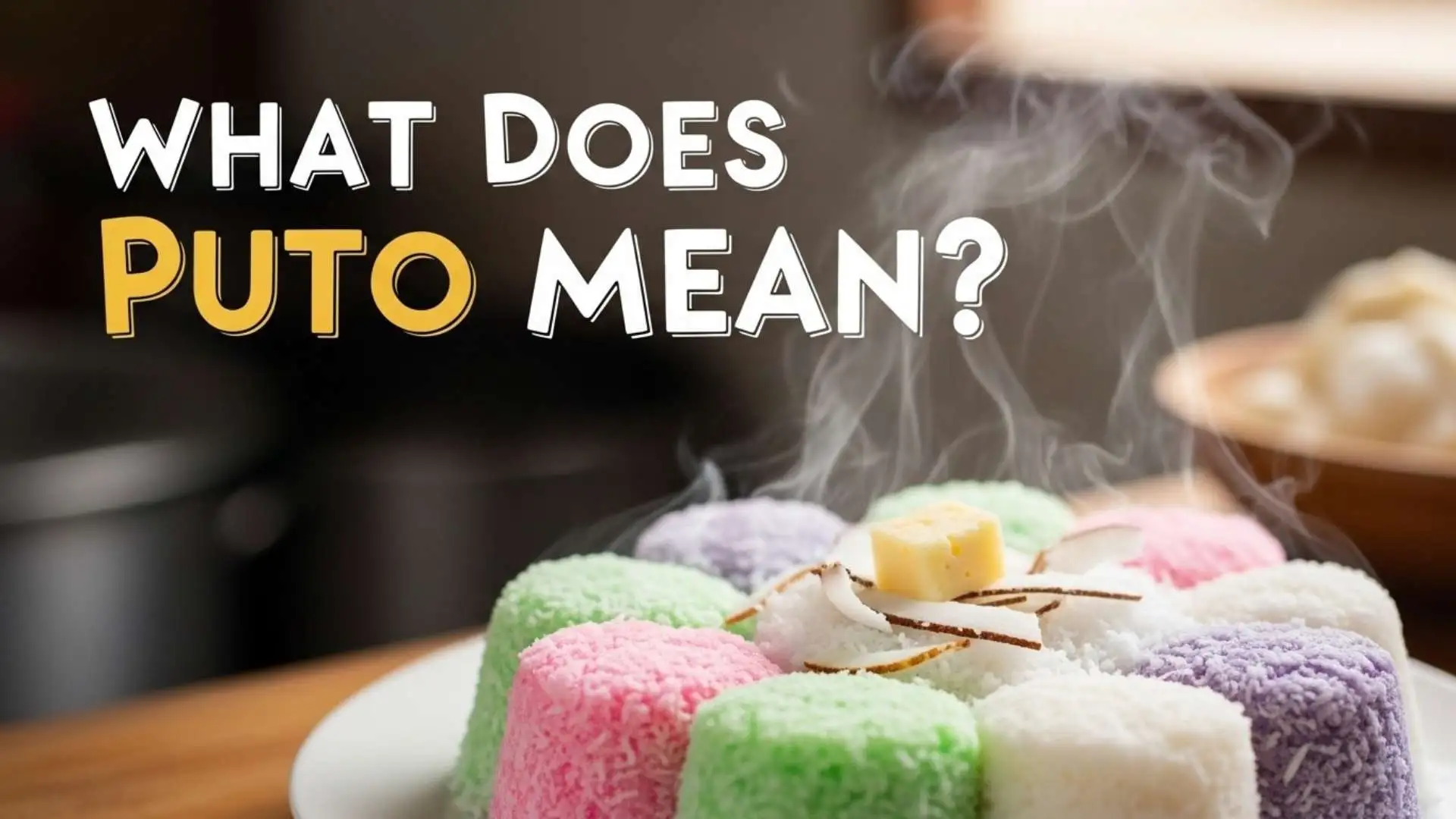
“What does puto mean?” This question surprises many people the first time they hear the word in a conversation, online game or social media video.
The meaning can feel shocking in one context and completely harmless in another.
I remember hearing it in a video and feeling confused until I discovered it has two very different meanings depending on the language.
Understanding the true definition of “puto” helps you avoid misunderstandings and use the word appropriately.
Quick Answer | What Does “Puto” Mean?
The word “puto” has different meanings depending on the language and cultural context.
- In Spanish, “puto” is often used as an offensive slang term or insult.
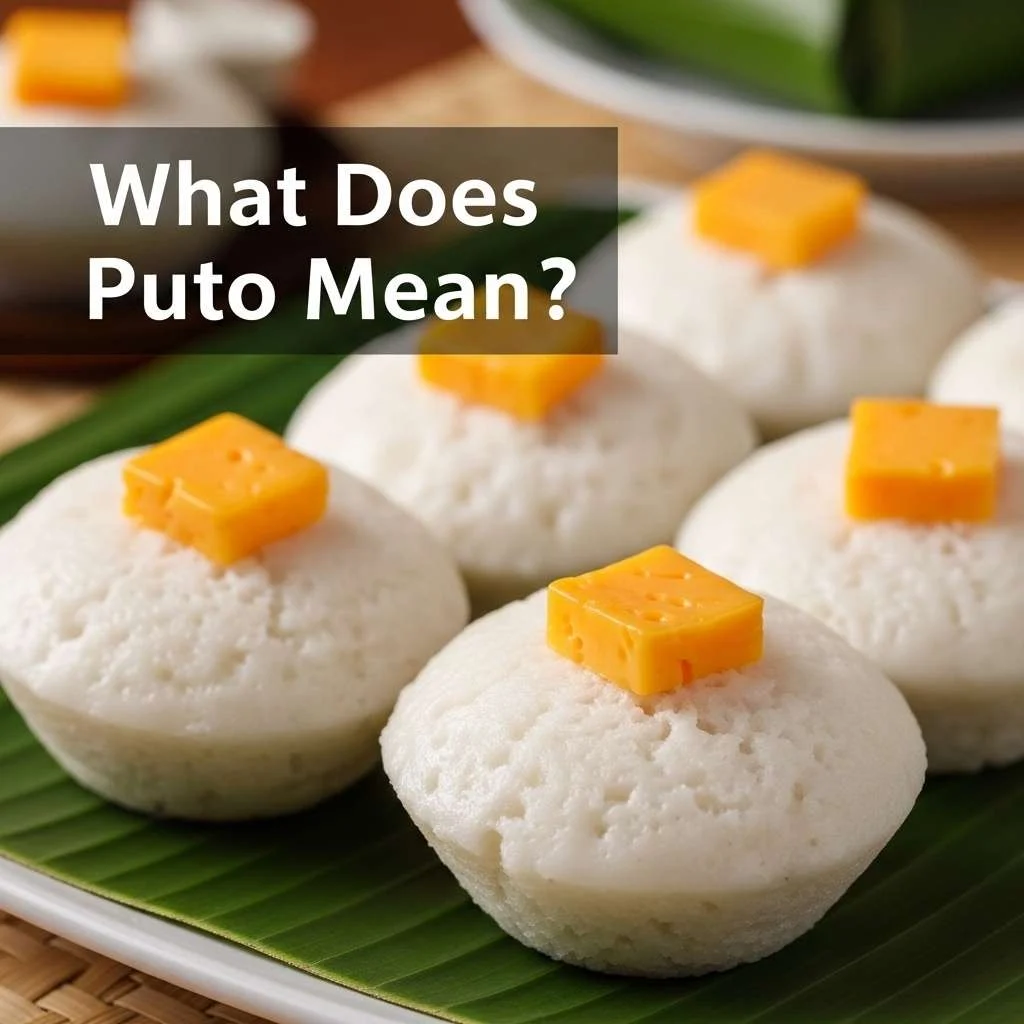
- In Filipino (Tagalog), “puto” refers to a traditional steamed rice cake and is completely harmless.
- The meaning depends entirely on where, how, and by whom the word is used.
Context is everything when interpreting this word.
Meaning of “Puto” in Spanish
Literal Definition in Spanish
In Spanish, “puto” is a masculine noun and slang term. It comes from informal street language and carries strong emotional meaning.
Depending on context, it can be used to insult someone or express anger.
Slang and Offensive Meaning
In many Spanish-speaking regions, “puto” is considered offensive. It may be used to:
- Insult someone
- Express anger or frustration
- Mock or disrespect a person
For example:
- “Ese tipo es un puto.”
(That guy is a puto.)
This usage is considered rude and inappropriate in formal situations.
How Offensive Is the Word?
The level of offensiveness depends on:
- Country
- Tone of voice
- Situation
- Relationship between speakers
In countries like Mexico and parts of Latin America, it can be highly offensive, especially when used aggressively.
However, among close friends, some slang terms may be used casually. Even so, it’s risky and not recommended for learners.
Meaning of “Puto” in Filipino
Definition as a Food
In Filipino culture, “puto” is a popular steamed rice cake. It is:
- Soft and fluffy
- Slightly sweet
- Made from rice flour
- Often eaten as a snack or dessert
This meaning is completely respectful and normal.
Cultural Importance in the Philippines
Puto is a beloved traditional food. People eat it during:
- Family gatherings
- Celebrations
- Holidays
- Everyday snacks
It is part of Filipino culinary identity.
Description of the Food
Filipino puto is usually:
- White, yellow, or purple
- Small and round
- Light and airy
- Sometimes topped with cheese
It is often served with savory dishes.
Example Sentences in Filipino Context
- “I bought puto from the bakery.”
- “My grandmother makes the best puto.”
- “We ate puto during the celebration.”
These examples show completely harmless usage.
Why Does “Puto” Have Different Meanings?
Language Evolution
Languages evolve separately. Words that sound the same can develop unrelated meanings.
This is called linguistic coincidence.
Cultural Independence
Spanish and Filipino cultures developed independently. Even though Spain influenced Filipino language historically, the food name “puto” developed its own harmless meaning.
The Spanish insult and Filipino food are not directly related.
Is “Puto” Always an Insult?
No. The meaning depends entirely on context.
Offensive Context
It may be offensive when:
- Used in Spanish slang
- Spoken aggressively
- Said during arguments
- Used to insult someone
Harmless Context
It is harmless when:
- Referring to Filipino rice cake
- Used in cooking discussions
- Mentioned in cultural or educational settings
Meaning in Different Spanish Speaking Countries
Mexico
In Mexico, the word can be highly offensive depending on usage and tone.
Spain
In Spain, the word may still be offensive but slang varies by region.
Latin America
In Latin America, the offensiveness varies. Cultural norms affect interpretation.
Always exercise caution.
Pronunciation of “Puto”
The pronunciation is similar in both languages.
Pronunciation: POO-toh
- “POO” sounds like the word “poo”
- “toh” sounds soft and short
Origin and Etymology of “Puto”
Spanish Origin
The Spanish slang term evolved over centuries through informal street language and cultural usage.
It gained negative connotations over time.
Filipino Origin
The Filipino food “puto” originates from traditional rice-based cooking methods. It has existed for generations as a respected and loved food.
Examples of “Puto” in Conversations
Spanish Slang Example
- “He insulted him by calling him puto.”
This is offensive.
Filipino Food Example
- “I love eating puto with coffee.”
This is completely harmless.
Internet and Gaming Usage
Many people encounter the word in:
- Online games
- Social media
- YouTube videos
- TikTok
In gaming, it is often used as slang or insult.
This can confuse people unfamiliar with the word.
Comparison Table | Spanish vs Filipino Meaning
| Language | Meaning | Offensive | Context |
| Spanish | Slang insult | Yes | Arguments, slang |
| Filipino | Rice cake | No | Food, culture |
Why You Should Be Careful Using This Word
Using words without understanding cultural meaning can cause problems.
Risks include:
- Offending someone
- Creating misunderstandings
- Appearing disrespectful
- Damaging relationships
When in doubt, avoid using slang terms from other languages.
Common Misunderstandings About “Puto”
Many people mistakenly believe:
- The word always means something offensive
- The food meaning is inappropriate
- The meaning is the same everywhere
These assumptions are incorrect.
Meaning always depends on language and context.
Should You Use the Word “Puto”?
Safe Situations
You can safely use it when:
- Talking about Filipino food
- Discussing language academically
- Explaining meanings
Situations to Avoid
Avoid using it when:
- Speaking Spanish casually
- Talking to strangers
- In professional settings
- When unsure of context
Frequently Asked Questions
Does puto always mean something bad?
No. In Filipino, it refers to a rice cake and is completely harmless.
Is puto a bad word in Spanish?
It can be offensive depending on context and tone.
What does puto mean in Filipino?
It means a traditional steamed rice cake.
Why do people use puto in gaming?
It is often used as slang or insult in online environments.
Conclusion
The meaning of “puto” depends entirely on language and cultural context. In Spanish, it is often considered offensive slang, while in Filipino, it refers to a delicious and harmless rice cake.
This difference highlights how language can carry completely different meanings across cultures.
Understanding these distinctions helps you communicate respectfully, avoid misunderstandings and appreciate the richness of global languages.

Tyler Wells is an American author known for his captivating storytelling and thoughtful insights into modern life. With a natural talent for weaving words into meaningful narratives, he has built a strong connection with readers who appreciate both authenticity and imagination.
Over the years, Tyler has written several acclaimed books, including “Echoes of the Dawn” (a moving story about hope and new beginnings), “Whispers Between the Lines” (a heartfelt story exploring love, loss, and resilience), and “The Silent Hour” (a suspenseful drama that keeps readers turning pages late into the night). His works blend emotional depth with relatable characters, making them both timeless and relevant for today’s audience.
Beyond writing, Tyler enjoys sharing his thoughts on creativity, personal growth, and the human experience. Whether through his books or his articles, he inspires readers to look at life from new perspectives and embrace their own stories with courage.