

“What does PR mean” and why does it seem to have a different meaning every time you see it? One moment it’s about brands and media, the next it’s in the gym or online chats.
That confusion is completely normal. PR is one of those short terms whose meaning depends entirely on context.
In this guide, you’ll discover every major meaning of PR explained simply, with real life examples that actually make sense.
What Does PR Stand For?
PR is one of the most widely used abbreviations in both professional and casual communication, which is why it often creates confusion for readers. From business and marketing to fitness tracking and online slang, the term appears in many different contexts. Knowing its possible meanings helps you quickly understand conversations without misinterpreting the message.
PR most commonly stands for Public Relations. However, PR can also mean Personal Record, slang terms, or industry-specific abbreviations depending on where and how it’s used.
The key thing to remember is this:
👉 PR doesn’t have one universal meaning, context decides everything.
What Is PR (Public Relations)?
Public Relations is the practice of managing how people perceive a person, brand, or organization. It focuses on building trust, credibility, and a positive public image over time.
Unlike advertising, PR isn’t mainly about paid promotion. It’s about relationships, reputation, and communication.
Core Functions of Public Relations
- Managing media relationships
- Shaping brand reputation
- Handling crisis communication
- Building public trust
- Maintaining a positive public image
PR Meaning in Business and the Corporate World
In business, PR plays a strategic role in shaping how a company is viewed by customers, investors, employees, and the media.
Companies use PR to:
- Announce major updates or launches
- Respond to public criticism or crises
- Build long-term brand authority
- Maintain stakeholder trust
Strong PR can protect a brand during tough times and amplify success during good ones.
PR Meaning in Marketing and Branding
In marketing, PR supports brand growth by creating earned visibility instead of paid exposure.
PR in marketing focuses on:
- Brand storytelling
- Media mentions and coverage
- Thought leadership
- Trust-building instead of direct selling
This is why PR is often seen as a long-term investment rather than a quick sales tactic.
PR Meaning in Social Media
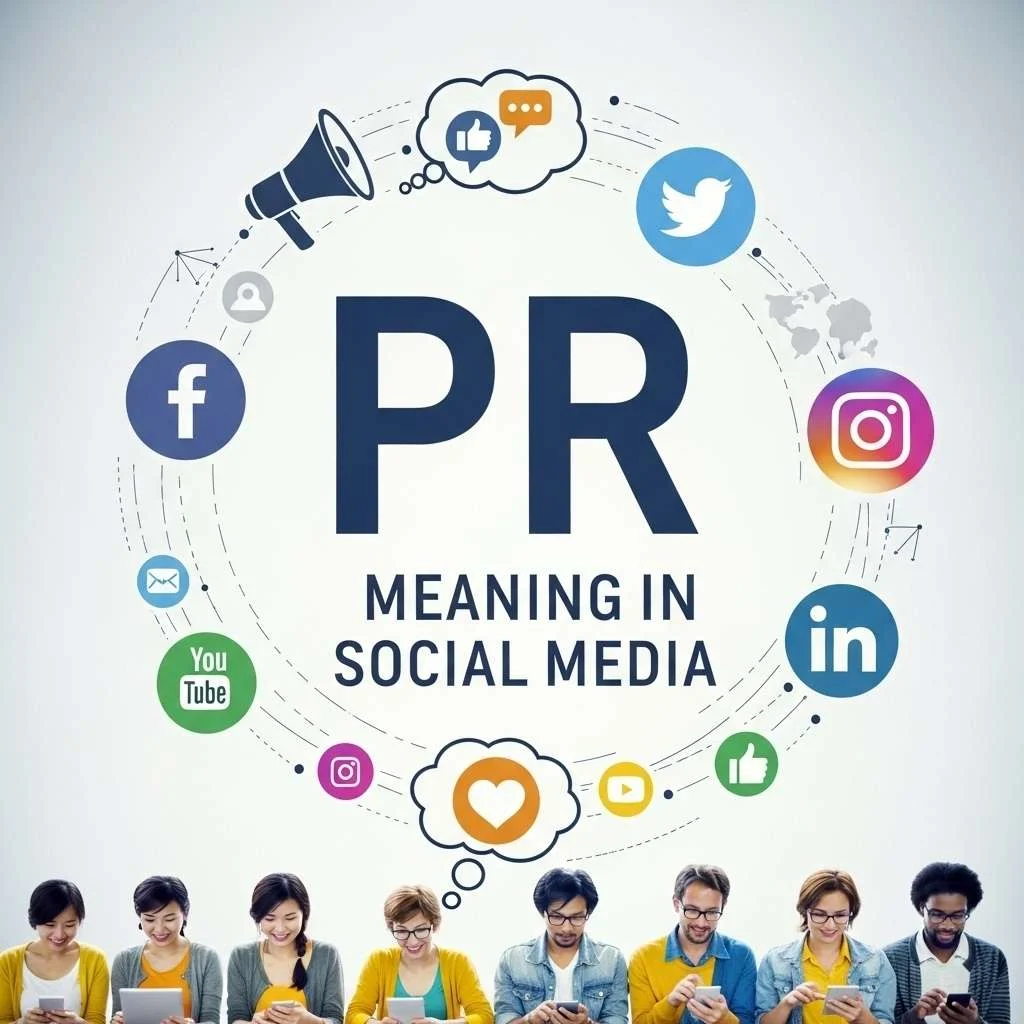
On social media, PR revolves around online reputation and public perception.
This includes:
- Influencer collaborations
- Managing viral moments
- Responding to public feedback
- Preventing or handling backlash
One tweet, post, or video can reshape a brand’s PR overnight — for better or worse.
PR Meaning in Digital Marketing and SEO
In digital marketing, PR often refers to Digital PR.
Digital PR helps brands:
- Earn high-quality backlinks
- Increase brand mentions online
- Improve authority and trust signals
- Support long-term SEO growth
This is where PR and SEO overlap heavily.
PR Meaning in Slang, Texting and Online Chats
In casual conversation, PR doesn’t always mean public relations.
Depending on context, it can:
- Be shorthand inside a community
- Refer to achievements
- Be used jokingly or informally
That’s why understanding the situation matters before assuming the meaning.
PR Meaning in Sports and Fitness
In sports and fitness, PR means Personal Record.
A personal record refers to:
- Your best performance ever
- A new personal achievement
Examples:
- “I hit a new PR on my deadlift today.”
- “That race was a PR for me.”
This meaning is extremely popular in gym and fitness culture.
PR Meaning in Gaming
In gaming, PR also usually means Personal Record.
Gamers use PR to describe:
- Best scores
- Fastest completion times
- Highest rankings achieved
It’s common in speedrunning and competitive games.
Other Common Meanings of PR
Depending on the industry, PR can also stand for:
- Performance Review
- Press Release
- Public Record
- Professional Reference
These meanings are less common but still appear in specific contexts.
PR vs Advertising | What’s the Difference?
PR focuses on earned trust, while advertising relies on paid visibility.
Key differences:
- PR builds credibility over time
- Advertising delivers immediate exposure
- PR feels more authentic
- Ads give full message control
Most successful brands use both together.
Why PR Is So Important Today
In today’s digital world, reputation spreads fast.
PR helps:
- Build trust in crowded markets
- Protect brands during crises
- Shape public perception long-term
- Support personal and business credibility
Without PR, even great brands can struggle to maintain trust.
How to Know Which Meaning of PR Is Being Used
Ask yourself:
- What industry is being discussed?
- Is the context business, fitness, or casual chat?
- Is it about reputation or performance?
Context will always reveal the correct meaning.
Conclusion
So, what does PR mean? Most of the time, it means Public Relations, but in fitness, gaming, and casual conversations, it often stands for Personal Record or other context specific terms.
Once you understand where and how PR is being used, the confusion disappears. PR is less about the letters and more about the situation behind them.
Discover More:
- Understand What Does Archive Mean? Complete Definition, Examples and How Archiving Works in Digital and Real Life for 2026
- Discover What Does Emo Mean? Real Definition, Origin, Culture, Music and Identity Explained in 2026
- Understanding What Does Ethnicity Mean? A Simple Explanation with Real Examples for 2026

Tyler Wells is an American author known for his captivating storytelling and thoughtful insights into modern life. With a natural talent for weaving words into meaningful narratives, he has built a strong connection with readers who appreciate both authenticity and imagination.
Over the years, Tyler has written several acclaimed books, including “Echoes of the Dawn” (a moving story about hope and new beginnings), “Whispers Between the Lines” (a heartfelt story exploring love, loss, and resilience), and “The Silent Hour” (a suspenseful drama that keeps readers turning pages late into the night). His works blend emotional depth with relatable characters, making them both timeless and relevant for today’s audience.
Beyond writing, Tyler enjoys sharing his thoughts on creativity, personal growth, and the human experience. Whether through his books or his articles, he inspires readers to look at life from new perspectives and embrace their own stories with courage.