

“What does organic mean?” You’ve seen the word on food labels, skincare bottles, clothing tags and even in digital marketing reports.
It sounds healthy, natural, and trustworthy but its meaning changes depending on context.
In this guide, you’ll discover exactly what organic means in food, farming, chemistry and marketing, explained in simple, clear language.
What Does Organic Mean?
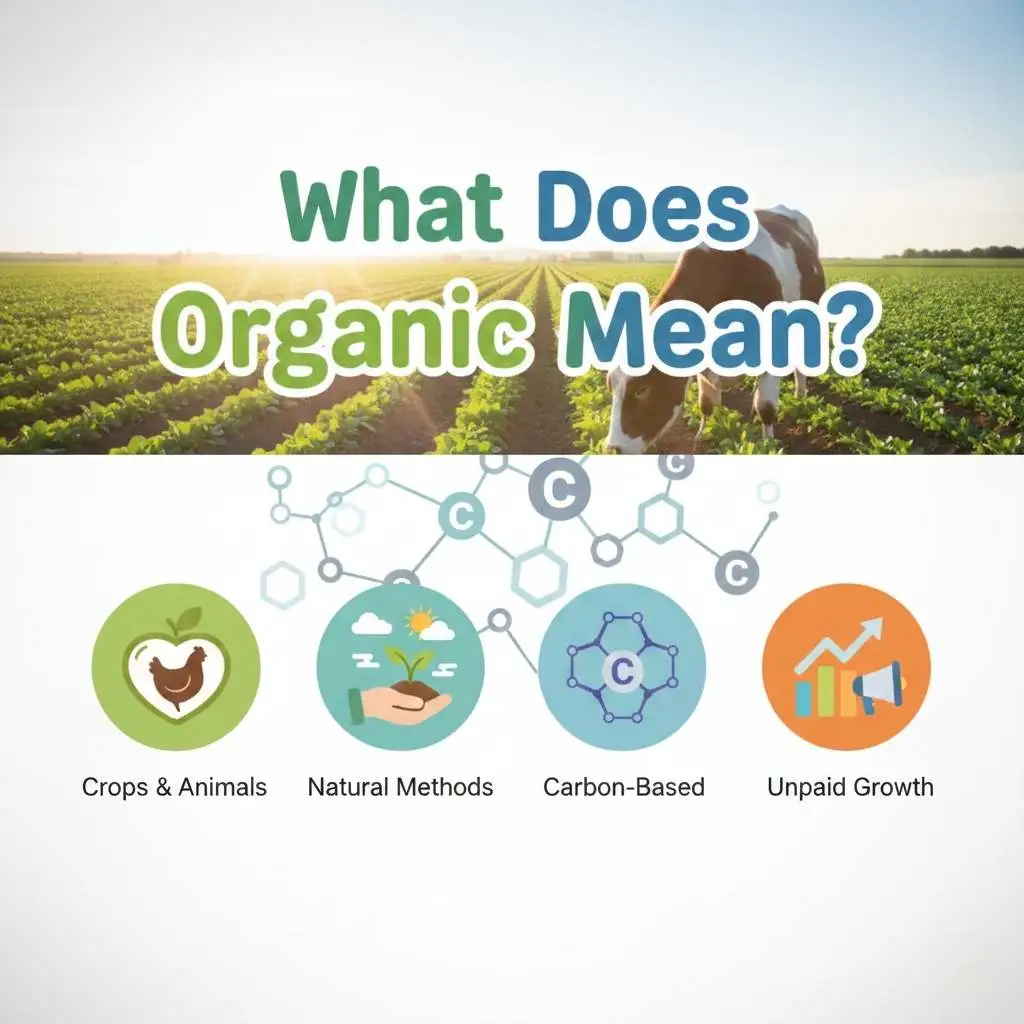
At its core, organic means something produced or existing naturally without synthetic chemicals or artificial interference.
However, the exact meaning depends on where the word is used.
- In food, it refers to how crops and animals are raised.
- In farming, it describes natural agricultural methods.
- In chemistry, it means carbon-based compounds.
- In marketing, it refers to unpaid growth.
The word comes from the Greek term organikos, meaning “relating to an organ or living being.” Over time, it evolved to describe natural processes connected to life.
What Does Organic Mean in Food?
When people ask what does organic mean, they usually mean food.
Organic Food Definition
Organic food is grown or produced without synthetic pesticides, artificial fertilizers, GMOs, antibiotics, or growth hormones.
This applies to:
- Fruits and vegetables
- Meat and poultry
- Eggs and dairy
- Processed foods
How Organic Crops Are Grown
Organic farming avoids chemical shortcuts. Instead, farmers use:
- Crop rotation
- Compost and natural manure
- Biological pest control
- Cover crops to protect soil
For example, instead of spraying synthetic chemicals, an organic farmer might introduce beneficial insects to control pests.
Organic Meat, Eggs and Dairy
Organic livestock must:
- Eat organic feed
- Have access to outdoor space
- Not receive routine antibiotics
- Not be given synthetic growth hormones
This improves animal welfare standards and reduces chemical exposure.
Organic Processed Foods
Even packaged organic foods must follow strict rules. They:
- Cannot contain artificial preservatives
- Cannot include synthetic colors
- Must meet organic ingredient percentages
What Does Organic Mean in Farming?
Organic farming focuses on working with nature, not against it.
Organic Farming Meaning
Organic farming is an agricultural system that prioritizes:
- Soil health
- Biodiversity
- Ecological balance
- Long-term sustainability
Core Principles of Organic Agriculture
- Protect soil fertility
- Reduce pollution
- Conserve water
- Support wildlife
- Avoid synthetic chemicals
Organic vs Conventional Farming
| Feature | Organic Farming | Conventional Farming |
| Pesticides | Natural-based | Synthetic chemicals |
| Fertilizers | Compost/manure | Chemical fertilizers |
| GMOs | Not allowed | Often allowed |
| Soil Focus | Long-term health | Yield-focused |
| Environmental Impact | Lower | Higher |
Organic farming often produces slightly lower yields but supports long-term environmental balance.
What Does Organic Mean in Chemistry?
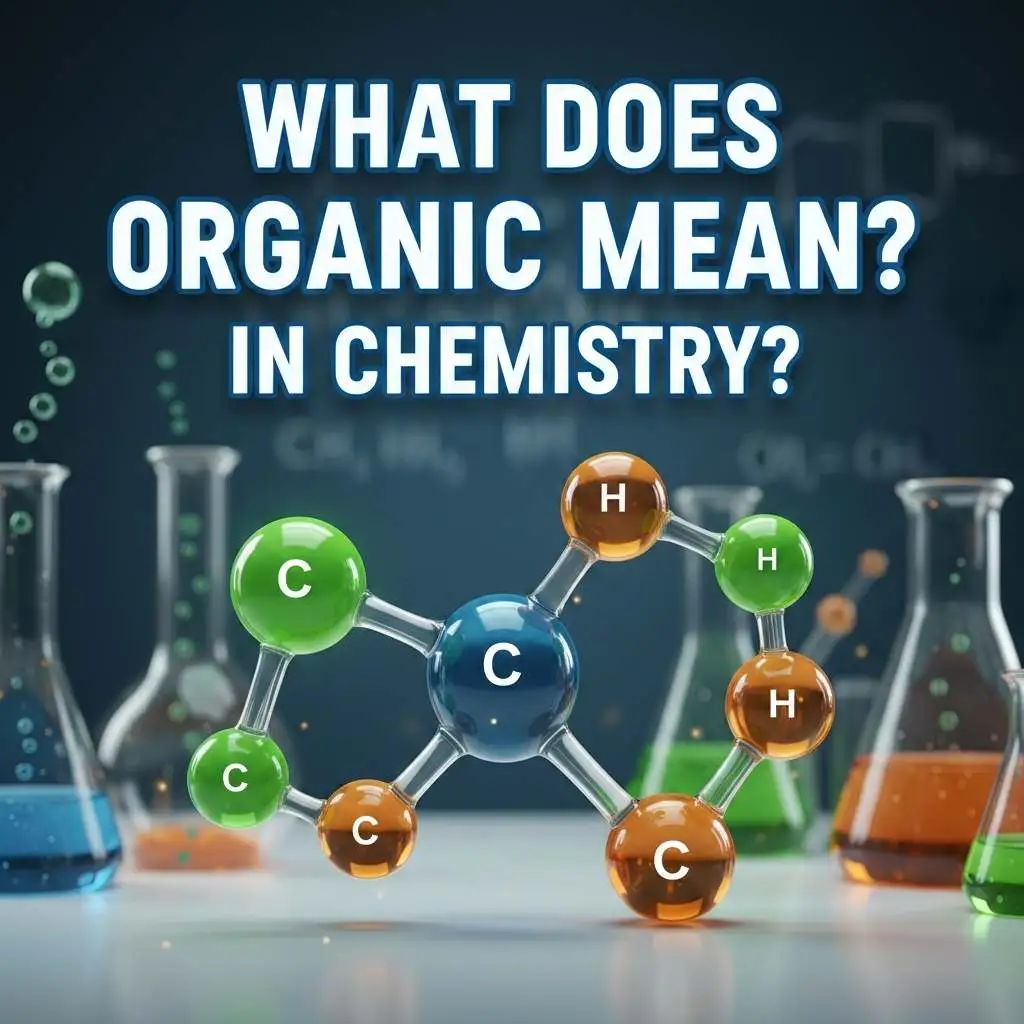
In science, organic has a completely different meaning.
Organic Compounds Definition
In chemistry, organic compounds are carbon-based substances.
Examples include:
- Carbohydrates
- Proteins
- Fats
- Alcohol
- Sugars
These compounds form the basis of life.
Organic vs Inorganic Compounds
The main difference is carbon.
- Organic compounds contain carbon atoms.
- Inorganic compounds usually do not.
For example:
- Water is inorganic.
- Sugar is organic.
Notice how this meaning has nothing to do with pesticides or farming. That’s why context matters.
What Does Organic Mean in Marketing?
In digital marketing, organic refers to unpaid growth.
Organic Traffic Meaning
Organic traffic means visitors who find your website naturally through search engines without paid ads.
For example:
- Someone searches on Google.
- Your site appears in results.
- They click without you paying for that click.
That’s organic traffic.
Organic Social Media Reach
Organic reach means engagement you earn without advertising money.
- Regular posts
- Shares
- Comments
- Followers gained naturally
Organic Growth vs Paid Growth
| Organic Growth | Paid Growth |
| Free traffic | Paid ads |
| Slower | Faster |
| Long-term results | Stops when budget ends |
| Builds trust | Depends on budget |
Organic marketing builds credibility over time.
Organic vs Natural vs Non-GMO
These terms often confuse shoppers.
Organic
Strict farming standards. No synthetic chemicals. No GMOs.
Natural
Loosely regulated. Can still contain processed ingredients.
NonGMO
Simply means no genetically modified organisms. It does not guarantee chemical-free farming.
| Term | Regulated? | No GMOs? | No Synthetic Pesticides? |
| Organic | Yes | Yes | Yes |
| Natural | No | Not necessarily | Not necessarily |
| Non-GMO | Yes | Yes | Not necessarily |
Benefits of Organic Products
1. Reduced Chemical Exposure
Organic food reduces exposure to synthetic pesticide residues.
2. Environmental Protection
Organic farming:
- Improves soil health
- Reduces water pollution
- Encourages biodiversity
3. Better Animal Welfare
Animals receive better living conditions and cleaner feed.
4. Long-Term Sustainability
Organic systems aim to protect future generations.
Is Organic Food Really Healthier?
Research shows organic food often contains fewer pesticide residues. However, nutritional differences are usually small.
What organic clearly improves:
- Lower synthetic chemical exposure
- Cleaner production methods
- Better farming sustainability
So the biggest benefit may be environmental rather than dramatic nutritional change.
Why Is Organic More Expensive?
Organic products cost more because:
- Farming requires more labor
- Certification is expensive
- Yields are sometimes lower
- Supply is smaller
Organic farms cannot rely on cheap chemical shortcuts, so production costs increase.
Organic Certification Explained
Organic products must meet strict standards before using certified labels.
Certification ensures:
- No synthetic pesticides
- No GMOs
- Proper soil management
- Verified farming practices
Common label categories include:
- 100% Organic
- Organic (95%+ ingredients organic)
- Made with Organic Ingredients
Always check labels carefully.
Common Myths About Organic
Myth 1: Organic Means Chemical-Free
False. Organic farming still uses natural chemicals.
Myth 2: Organic Food Tastes Better
Taste depends on freshness and variety.
Myth 3: Organic Lasts Longer
Shelf life depends on storage, not label.
Myth 4: Organic Is Always Healthier
Benefits exist, but differences are often modest.
When Should You Buy Organic?
If your budget allows, prioritize organic for:
- Leafy greens
- Strawberries
- Apples
- Milk
- Eggs
If budget is tight, washing conventional produce thoroughly reduces residue.
Real Life Examples of Organic in Daily Life
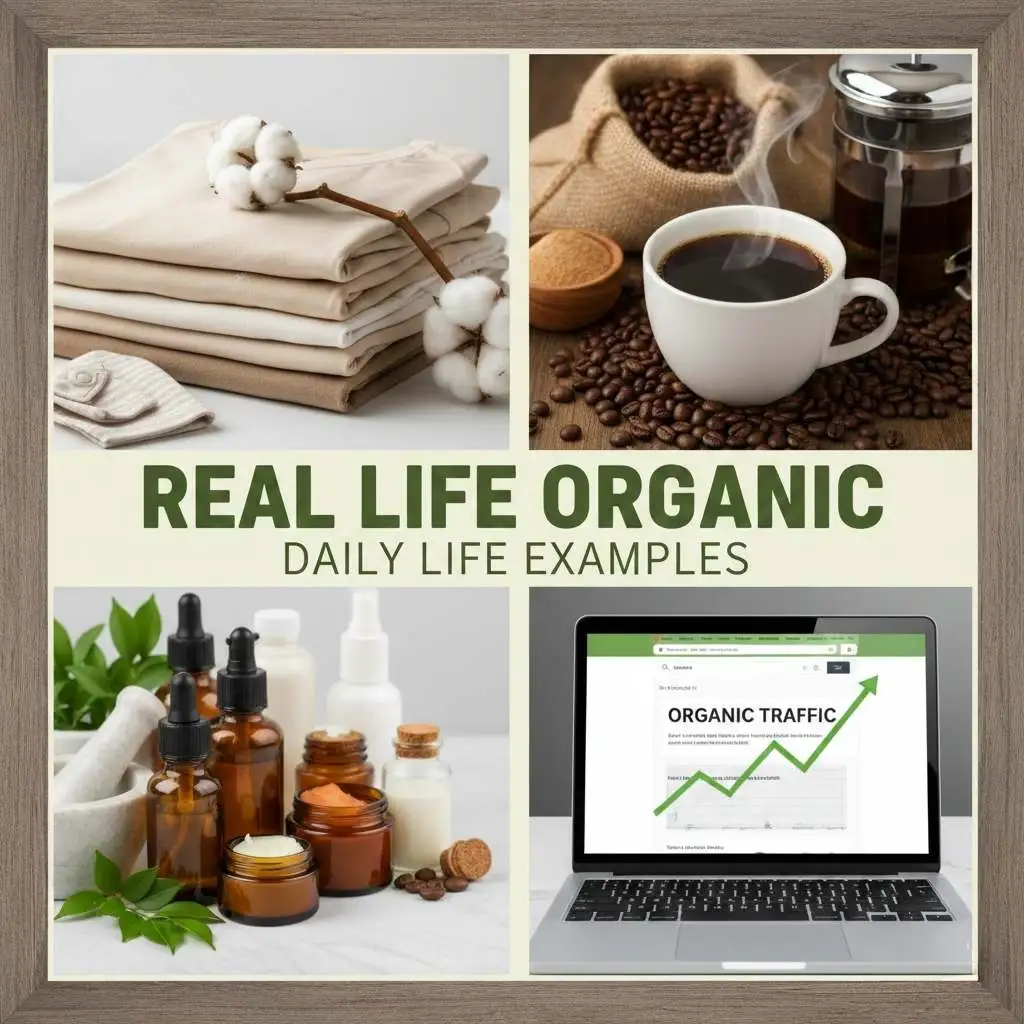
You interact with organic products more than you realize:
- Organic cotton clothing
- Organic skincare
- Organic coffee
- Organic search traffic on websites
The word appears in both grocery stores and Google Analytics dashboards.
Frequently Asked Questions
What does organic mean in simple words?
It means produced naturally without synthetic chemicals or artificial methods.
Does organic mean pesticide-free?
No. Organic farms can use natural pesticides.
Is organic the same as natural?
No. Organic is regulated. Natural is loosely defined.
Why is organic food expensive?
Higher labor, certification costs, and smaller production increase price.
Is organic worth it?
It depends on your priorities, budget, and environmental concerns.
Conclusion
So what does organic mean? It depends on context. In food and farming, it refers to natural production methods without synthetic chemicals or GMOs. In chemistry, it means carbon-based compounds. In marketing, it describes unpaid growth.
Understanding these differences helps you make smarter choices if you’re grocery shopping, studying science, or growing a business. The word organic carries power, but only when you understand how it’s being used.

Ashton Cole is an American author celebrated for his compelling storytelling and ability to capture the depth of human emotions. His works often explore themes of love, resilience, and self-discovery, making him a relatable voice for readers around the world.
He has published several well-received books, including:
-
Whispers of Dawn – a reflective novel about finding hope in life’s darkest moments.
-
Beneath the Silent Sky – a moving story of love, memory, and the bonds that shape us.
-
The Edge of Forever – a thought-provoking tale that blends drama, destiny, and the courage to begin again.
Through his writing, Ashton strives to inspire readers to see beauty in both the struggles and triumphs of life. When he isn’t writing, he enjoys exploring new cities, collecting rare books, and spending time in cozy coffee shops where many of his story ideas take shape.