

“What does OPS mean in baseball?” It stands for On-Base Plus Slugging, a powerful stat that captures a hitter’s ability to reach base and hit for power in one clean number.
If you’ve watched a game, checked a box score, or browsed player stats, you’ve seen it. OPS looks simple. Add two numbers. Done.
However, behind that simple math sits one of the most important advanced stats in modern baseball. Once you understand it, you’ll read the game differently.
You’ll evaluate hitters with sharper eyes. Let’s break it down properly.
What Does OPS Mean in Baseball?
OPS is a baseball statistic that measures overall offensive performance. It combines:
- On-Base Percentage (OBP)
- Slugging Percentage (SLG)
The formula is straightforward:
OPS = OBP + SLG
That’s it. Two components. One total.
Yet those two pieces capture nearly everything that matters offensively:
- Getting on base
- Hitting for power
- Avoiding outs
- Driving in runs
In the era of modern baseball analytics, OPS became a cornerstone of sabermetrics because it summarizes a hitter’s offensive capability in one number.
What Does OPS Stand For? Breaking Down the Components
To understand OPS, you need to understand its ingredients.
On-Base Percentage (OBP)
On-Base Percentage measures how often a player reaches base safely.
That includes:
- Hits
- Walks
- Hit by pitch
- Sacrifice flies (in denominator)
Here’s the formula:
OBP = (Hits + Walks + Hit By Pitch) ÷ (At-Bats + Walks + Hit By Pitch + Sacrifice Flies)
OBP answers a simple question:
“How often does this player avoid making an out?”
Outs kill innings. Avoiding outs fuels rallies. That’s why OBP is often considered one of the most valuable offensive metrics in baseball.
Why OBP Matters More Than Batting Average
Traditional batting average ignores walks. That’s a flaw.
If a player walks 100 times, batting average doesn’t care. OBP does.
For example:
| Player | Batting Average | Walks | OBP |
| Player A | .300 | 20 | .330 |
| Player B | .270 | 90 | .380 |
Player B looks worse by average.
But Player B reaches base far more often.
That’s value.
Slugging Percentage (SLG)
Slugging Percentage measures power.
It calculates total bases per at-bat.
Each hit counts differently:
- Single = 1 base
- Double = 2 bases
- Triple = 3 bases
- Home Run = 4 bases
Formula:
SLG = Total Bases ÷ At-Bats
Unlike batting average, SLG rewards extra-base hits. A home run matters more than a single. As it should.
Here’s a quick example:
| Player | At-Bats | Hits | Doubles | HR | Total Bases | SLG |
| Player A | 100 | 25 | 5 | 5 | 45 | .450 |
That .450 shows solid power hitting.
How to Calculate OPS
Let’s combine everything.
Suppose a player has:
- OBP: .360
- SLG: .520
Now apply the formula:
OPS = .360 + .520
OPS = .880
That .880 OPS signals strong offensive prowess.
Here’s a quick reference table:
| OBP | SLG | OPS |
| .320 | .400 | .720 |
| .350 | .450 | .800 |
| .380 | .500 | .880 |
| .420 | .600 | 1.020 |
OPS blends consistency and power. That’s why teams rely on it for player evaluation.
What Is a Good OPS in Baseball?
Now the question most fans ask:
What is a good OPS in baseball?
League Average OPS in MLB
In recent Major League Baseball seasons, league average OPS typically falls between:
.720 – .730
That fluctuates depending on the offensive environment. Some eras favor pitchers. Others explode with home runs.
For example:
- Late 1990s and early 2000s saw inflated OPS numbers
- Modern pitching depth has lowered league averages
Context matters.
OPS Performance Tiers
Here’s how OPS levels generally break down:
| OPS Range | Performance Level |
| Below .700 | Below average hitter |
| .720–.800 | Solid regular |
| .800–.900 | Above-average hitter |
| .900–1.000 | Elite hitter |
| 1.000+ | MVP-level dominance |
When you see an elite OPS 1.000, you’re watching something rare.
Career OPS Leaders in Baseball History
Some hitters elevated OPS into legend territory.
Consider these all-time greats:
- Babe Ruth – Career OPS: 1.164
- Ted Williams – Career OPS: 1.116
- Barry Bonds – Career OPS: 1.051
- Rogers Hornsby – Career OPS: 1.010
- Mickey Mantle – Career OPS: .977
Notice something? Every one of them combined patience with power.
They didn’t just hit. They dominated.
Why OPS Became Central to Sabermetrics
The rise of sabermetrics changed baseball forever.
Before advanced analysis, teams relied heavily on:
- Batting average
- RBIs
- Home runs
Then analysts like Bill James began asking deeper questions:
“What actually helps teams win?”
That research fueled the analytics movement. It later became mainstream during the Moneyball era, when the Oakland Athletics used data-driven evaluation to compete with bigger payrolls.
OPS wasn’t perfect. But it was:
- Easy to calculate
- Predictive
- More accurate than traditional stats
It became a go-to performance metric across front offices.
OPS vs Traditional Baseball Statistics
Let’s compare.
OPS vs Batting Average
Batting average measures hits per at-bat.
OPS measures:
- On-base skills
- Slugging power
Average ignores walks. OPS doesn’t.
That alone makes OPS superior for evaluating offensive performance in baseball.
OPS vs RBIs
RBIs depend on teammates.
A hitter can’t drive in runs if no one is on base.
OPS focuses on what the player controls:
- Getting on base
- Hitting for power
That’s cleaner.
OPS vs OPS+
OPS+ adjusts for:
- Ballpark effects
- League environment
An OPS+ of 100 equals league average.
An OPS+ of 150 means 50% better than league average.
OPS+ adds context. Raw OPS provides clarity.
Limitations of OPS
OPS isn’t flawless.
Here’s what it misses:
- It weights OBP and SLG equally
- OBP actually contributes more to scoring runs
- It ignores base running
- It ignores situational hitting
That’s why more advanced metrics like wOBA exist.
Still, OPS remains one of the most accessible advanced baseball stats available.
How Coaches and Scouts Use OPS
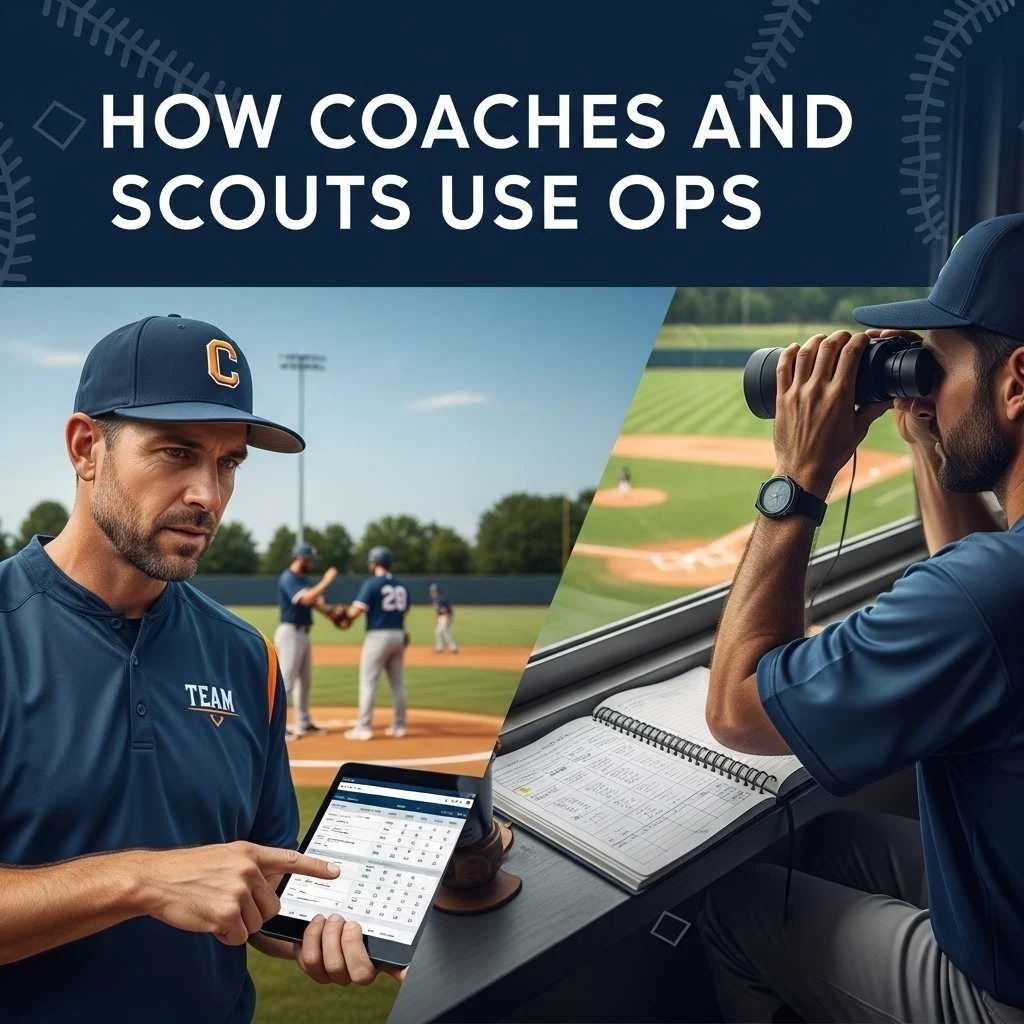
OPS helps with:
- Comparing players quickly
- Identifying undervalued hitters
- Contract negotiations
- Fantasy baseball decisions
Scouts often look for:
- Strong plate discipline
- High walk rate
- Extra-base hit frequency
These feed directly into OBP and SLG.
How Players Improve Their OPS
Want to raise OPS?
Focus on two areas:
Improve On-Base Percentage
- Increase walk rate
- Improve pitch recognition
- Avoid chasing breaking balls
- Control the strike zone
Increase Slugging Percentage
- Develop bat speed
- Optimize launch angle
- Improve strength training
- Focus on hard contact
Improving either component lifts overall OPS.
Improve both and you become dangerous.
OPS in Youth and Amateur Baseball
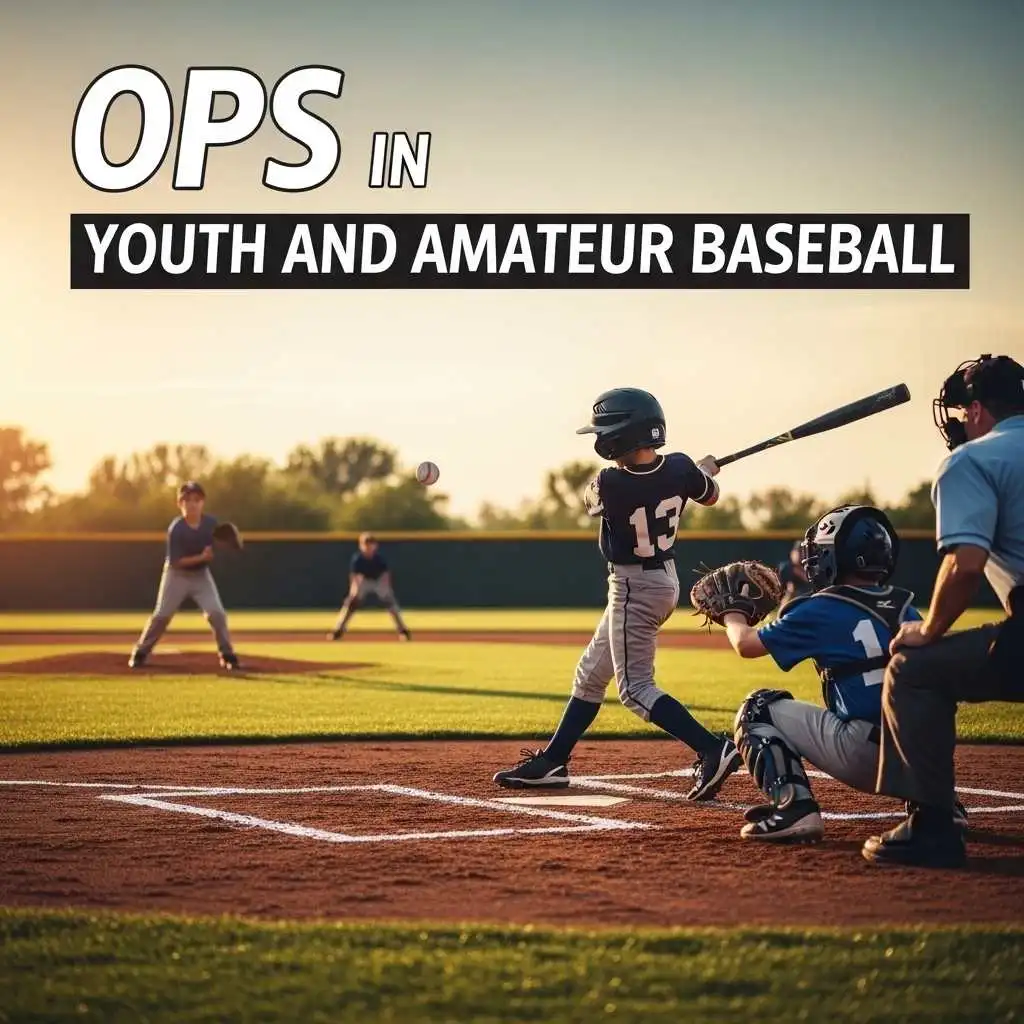
Context matters.
In:
- Little League
- High school
- College baseball
OPS benchmarks differ because:
- Pitching quality varies
- Field sizes differ
- Defensive skill levels change
However, the principle stays consistent:
Get on base. Hit for power.
That formula never changes.
OPS and Player Evaluation in the Modern Game
Front offices rely on predictive statistics to forecast future production.
OPS helps answer:
- Can this player contribute to wins?
- Does he combine patience and power?
- Is his production sustainable?
While newer metrics dig deeper, OPS remains foundational in data-driven baseball analysis.
It bridges traditional fans and analytics experts.
Quick OPS Facts You Should Know
- OPS combines two percentages into one
- League average hovers around .720–.730
- 1.000+ OPS signals elite performance
- Career OPS leaders include Ruth and Williams
- OPS does not adjust for park factors unless using OPS+
Memorize those and you’ll sound informed instantly.
Frequently Asked Questions About OPS in Baseball
What does OPS mean in baseball?
It means On-Base Plus Slugging, a stat combining OBP and SLG to measure offensive value.
What is a good OPS in MLB?
Around .800 is strong. Above .900 is elite.
Is OPS better than batting average?
Yes. It captures both on-base skills and power.
Who has the highest career OPS?
Babe Ruth leads all-time with 1.164.
Final Thoughts on What OPS Means in Baseball
OPS changed how fans and teams evaluate hitters. It blends patience and power into one simple number. League averages provide context while elite levels reveal dominance.
Although advanced metrics continue evolving, OPS remains one of the clearest indicators of offensive impact. If you understand OPS, you understand modern baseball.

Ashton Cole is an American author celebrated for his compelling storytelling and ability to capture the depth of human emotions. His works often explore themes of love, resilience, and self-discovery, making him a relatable voice for readers around the world.
He has published several well-received books, including:
-
Whispers of Dawn – a reflective novel about finding hope in life’s darkest moments.
-
Beneath the Silent Sky – a moving story of love, memory, and the bonds that shape us.
-
The Edge of Forever – a thought-provoking tale that blends drama, destiny, and the courage to begin again.
Through his writing, Ashton strives to inspire readers to see beauty in both the struggles and triumphs of life. When he isn’t writing, he enjoys exploring new cities, collecting rare books, and spending time in cozy coffee shops where many of his story ideas take shape.