
“What does mama say mama-sa mamakusa mean?” You’ve heard it at weddings, clubs, and throwback parties.
The chant feels electric. It sticks in your head for days. Yet most people don’t know where it comes from or what it actually means.
Let’s break it down clearly, trace its African roots, and uncover how it traveled from Cameroon to global pop culture.
What Does Mama Say Mama-Sa Mamakusa Mean in English?
Here’s the honest answer: it doesn’t have a direct English translation.
The phrase most people sing — “mama say mama-sa mamakusa” — is a phonetic mishearing. The original line is:
Ma ma-sé, ma ma-sa, ma ma-ko-sa
It comes from a 1972 song called Soul Makossa by Manu Dibango.
Let’s clarify what’s happening.
- Makossa is a music genre from Cameroon.
- The word comes from the Duala language.
- It loosely relates to dance or rhythmic movement.
So when people ask what does mama-say mama sa mamakusa mean in English, the most accurate explanation is this:
- It’s a rhythmic chant.
- It celebrates dance and groove.
- It isn’t a hidden message or coded phrase.
Pop music often uses sound before meaning. Rhythm matters more than dictionary definitions.
What Does “Mamakusa” Mean?
“Mamakusa” isn’t actually a real word.
The correct term is Makossa.
Makossa developed in the coastal city of Douala in Cameroon during the 1960s. The genre blends:
- Traditional Cameroonian rhythms
- Highlife influences
- Jazz elements
- Funk basslines
- Horn-driven arrangements
The name comes from the Duala verb meaning “to dance” or “I dance.”
Here’s a quick pronunciation guide:
| Spelling | Correct Pronunciation |
| Ma ma-sé | Mah mah-say |
| Ma ma-sa | Mah mah-sah |
| Ma ma-ko-sa | Mah mah-koh-sah |
English speakers gradually changed “makossa” into mamakusa because the syllables flow that way in casual singing.
This happens often in global music. For example:
- “La Bamba” gets simplified.
- “Despacito” gets shortened.
- African phrases get reshaped through American pop filters.
Language bends. Rhythm survives.
What Song Is Mama Say Mama-Sa Mamakusa From?
Most people know the chant from:
Wanna Be Startin’ Somethin’
Released in 1982 as the opening track of Thriller, the best-selling album of all time with over 70 million copies sold worldwide.
In the outro, Michael Jackson repeats the chant in an explosive call-and-response section that runs nearly four minutes.
That outro turned into one of pop music’s most iconic endings.
But here’s the deeper truth.
Michael Jackson didn’t invent the chant.
The Real Origin | Soul Makossa by Manu Dibango
The chant first appeared in 1972 in:
Soul Makossa
Artist: Manu Dibango
Country: Cameroon
Genre: Makossa / Funk / Afro-jazz
The line “ma ma-sé, ma ma-sa, ma ma-ko-sa” appears repeatedly throughout the song.
“Soul Makossa” became the first African single to enter the US Billboard Top 40, peaking at No. 35 in 1973.
That’s historic.
It opened American ears to African dance rhythms long before Afrobeats dominated streaming charts.
Legal Dispute
In 1982, Manu Dibango noticed the similarity in Michael Jackson’s song. A legal settlement followed. They resolved it privately.
Years later, when Rihanna sampled the chant in 2007, Dibango raised the issue again. That case also settled.
The takeaway?
- The chant began in Cameroon.
- It entered American pop through Michael Jackson.
- It reached modern dance floors through Rihanna.
Michael Jackson and Mama Say Mama-Sa Mamakusa
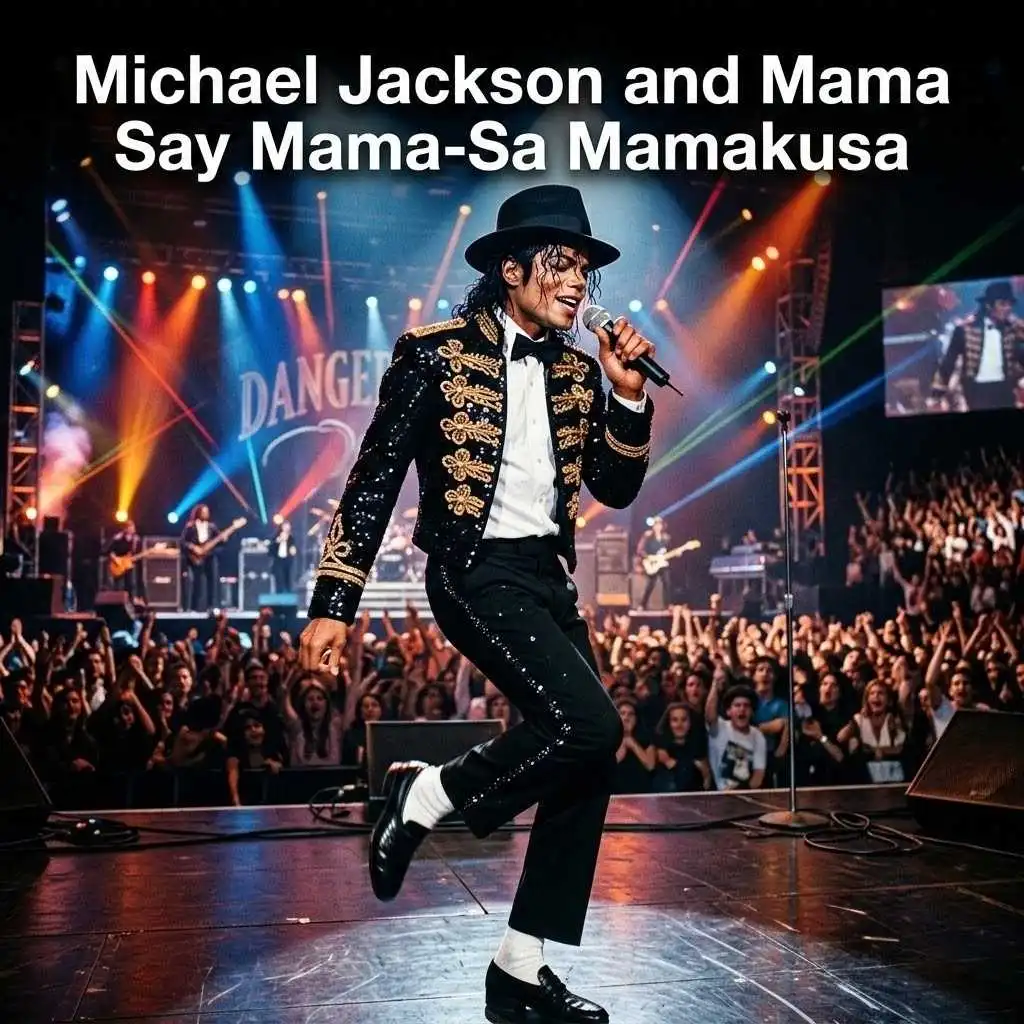
Michael Jackson used the chant in the closing section of “Wanna Be Startin’ Somethin’.”
Why?
Because rhythm creates emotional lift.
That final section builds energy through:
- Layered vocals
- Syncopated percussion
- Call-and-response repetition
- Escalating tempo
It doesn’t push narrative. It pushes movement.
In live performances, especially during the Bad Tour and Dangerous Tour, the chant became a crowd moment. Thousands of fans shouted it back.
That’s musical architecture.
It transforms listeners into participants.
Rihanna and Mama Se Mama Sa Mama Coo Sa
In 2007, Rihanna released:
Don’t Stop the Music
The track samples Michael Jackson’s version of the chant.
The song reached:
- No. 1 in over 10 countries
- Top 5 on the Billboard Hot 100
- Multi-platinum certification in the US
For many younger listeners, this was their first exposure to the phrase.
However, Rihanna’s version required official credit and licensing acknowledgment due to the earlier settlement involving Dibango and Jackson.
This layered history shows how music travels across continents and decades.
Who Sang Mama Say Mama-Sa Mamakusa?
Here’s the full breakdown:
| Artist | Song | Year | Contribution |
| Manu Dibango | Soul Makossa | 1972 | Original chant |
| Michael Jackson | Wanna Be Startin’ Somethin’ | 1982 | Global pop exposure |
| Rihanna | Don’t Stop the Music | 2007 | Modern revival |
Each artist shaped the chant differently.
- Dibango created it.
- Jackson amplified it.
- Rihanna reintroduced it.
What Does Mama Say Mama-Sa Mean on Reddit?
Online discussions often speculate wildly.
Common Reddit claims include:
- It’s Swahili.
- It’s tribal war language.
- It’s spiritual chanting.
- It has hidden political meaning.
None of these are accurate.
Makossa is Cameroonian. Not Swahili. Not coded. Not mystical.
It’s dance music.
Internet myths grow because repetition without context sounds mysterious. However, once you know the origin, the mystery fades.
Why the Phrase Feels So Powerful
Even without literal meaning, the chant hits hard.
Why?
1. Repetition Activates Memory
Short rhythmic phrases stick in your brain. Neuroscience calls this “auditory looping.”
2. Call-and-Response Tradition
African music traditions rely on communal interaction. One voice leads. The crowd answers.
3. Phonetic Energy
The syllables “ma,” “sa,” and “ko” use open vowels. They project loudly in stadium settings.
4. Percussive Structure
Each syllable falls naturally on a beat. It fits funk rhythm patterns perfectly.
Music doesn’t need dictionary meaning to carry emotional weight.
Sometimes sound alone moves people.
Mama Say Mama-Sa Mamakusa Lyrics Explained
The chant section from “Wanna Be Startin’ Somethin’” goes:
Ma ma-sé, ma ma-sa, ma ma-ko-sa
That’s it.
No hidden metaphor.
No extended narrative.
It’s a rhythmic affirmation.
In Dibango’s version, it functions as a groove anchor. In Jackson’s version, it builds climax. In Rihanna’s version, it fuels dance-floor energy.
Same syllables. Different eras.
Common Spelling Variations
Search engines show dozens of spellings:
- mama say mama sa mamakusa
- mama se mama sa makossa
- mama say mama sa meaning
- mama say mama-sa mamakusa lyrics
- mama se mama sa mama coo sa
Why so many?
Because people spell what they hear.
English speakers rarely know Duala phonetics. So the phrase morphs with each generation.
Michael Jackson Songs Connected to the Chant
Fans often search related queries:
- Michael Jackson songs
- Michael Jackson wanna be startin somethin lyrics
- Imma say one more time I’m not gonna stop
That last lyric also appears in the song. It builds tension before the chant section begins.
“Wanna Be Startin’ Somethin’” runs 6 minutes and 3 seconds. Nearly half that runtime builds toward the chant.
That’s deliberate structure.
Jackson understood momentum better than almost anyone in pop history.
Cultural Impact of Makossa
Makossa influenced more than just pop.
It shaped:
- Disco basslines in the 70s
- Funk horn arrangements
- Early hip-hop breakbeats
- Modern Afrobeats rhythms
Without Makossa, global pop would sound different today.
Music historians consider “Soul Makossa” a bridge between African traditional rhythm and Western commercial charts.
That bridge still stands.
Final Answer | What Does Mama Say Mama-Sa Mamakusa Mean?
It comes from Cameroon.
It references Makossa, a dance music genre.
It doesn’t translate word-for-word into English.
It gained global fame through Michael Jackson.
It reached a new generation through Rihanna.
And its power lies not in literal meaning but in rhythm, repetition, and communal energy.
Conclusion
Now you know the truth behind what does mama say mama-sa mamakusa mean. The chant began in Cameroon. It traveled through Michael Jackson’s global dominance.
It resurfaced through Rihanna’s dance anthem. It never carried hidden symbolism. It carried rhythm. Sometimes the strongest words don’t need translation. They just need a beat.

Ashton Cole is an American author celebrated for his compelling storytelling and ability to capture the depth of human emotions. His works often explore themes of love, resilience, and self-discovery, making him a relatable voice for readers around the world.
He has published several well-received books, including:
-
Whispers of Dawn – a reflective novel about finding hope in life’s darkest moments.
-
Beneath the Silent Sky – a moving story of love, memory, and the bonds that shape us.
-
The Edge of Forever – a thought-provoking tale that blends drama, destiny, and the courage to begin again.
Through his writing, Ashton strives to inspire readers to see beauty in both the struggles and triumphs of life. When he isn’t writing, he enjoys exploring new cities, collecting rare books, and spending time in cozy coffee shops where many of his story ideas take shape.