


If you’ve ever felt a sudden rush of desire, a warm tingling in your body, or thoughts drifting toward intimacy for no clear reason, you’re not alone.
Many people quietly ask the same question at some point: “what does horny mean?” The feeling can show up unexpectedly, feel confusing, or even spark worry.
Yet it’s one of the most normal human experiences there is. This guide explains horny meaning in plain language. It breaks down what’s happening in your body, your brain and your emotions.
No shame. No fluff. Just real, useful information you can actually understand and use.
What Does Horny Mean?
So, what does horny mean exactly?
Being horny means your body and mind are experiencing sexual arousal. It’s a state where your nervous system, hormones, and brain work together to create sexual interest or readiness for sexual activity. That activity could be physical intimacy, masturbation, or even just sexual thoughts and fantasies.
In simple terms:
- Horny = sexually aroused
- It can be physical, mental, or both
- It doesn’t require action
- It doesn’t mean something is wrong
Horniness is not a personality trait or a moral issue. It’s a biological response, much like hunger or sleepiness, shaped by hormones, emotions, and context.
Sexual Desire vs Sexual Arousal vs Libido
People often mix these terms together, but they aren’t the same thing. Understanding the difference clears up a lot of confusion.
Key Differences Explained
| Term | What It Means | Example |
| Sexual desire | Wanting sex or intimacy | Thinking about sex during the day |
| Sexual arousal | Physical response in the body | Wetness, erection, faster heartbeat |
| Libido | Overall sex drive over time | High or low interest in sex generally |
You can feel sexual desire without physical arousal. You can also experience sexual arousal without wanting sex. That’s why people sometimes feel horny “for no reason.”
What Does It Feel Like to Be Horny?
This is one of the most searched questions for a reason. The experience can feel intense, subtle, exciting, or even annoying depending on the moment.
Common sensations include:
- A warm or tingling feeling in the genitals
- Increased sensitivity to touch
- A sense of fullness or pressure
- Heightened awareness of your body
- Sexual thoughts popping up easily
Emotionally, you might notice:
- Excitement
- Curiosity
- Restlessness
- A sudden mood boost
- Mild frustration if arousal isn’t relieved
Horniness doesn’t follow a script. For some people it’s loud and obvious. For others it’s quiet and mental.
Physical Signs You’re Horny
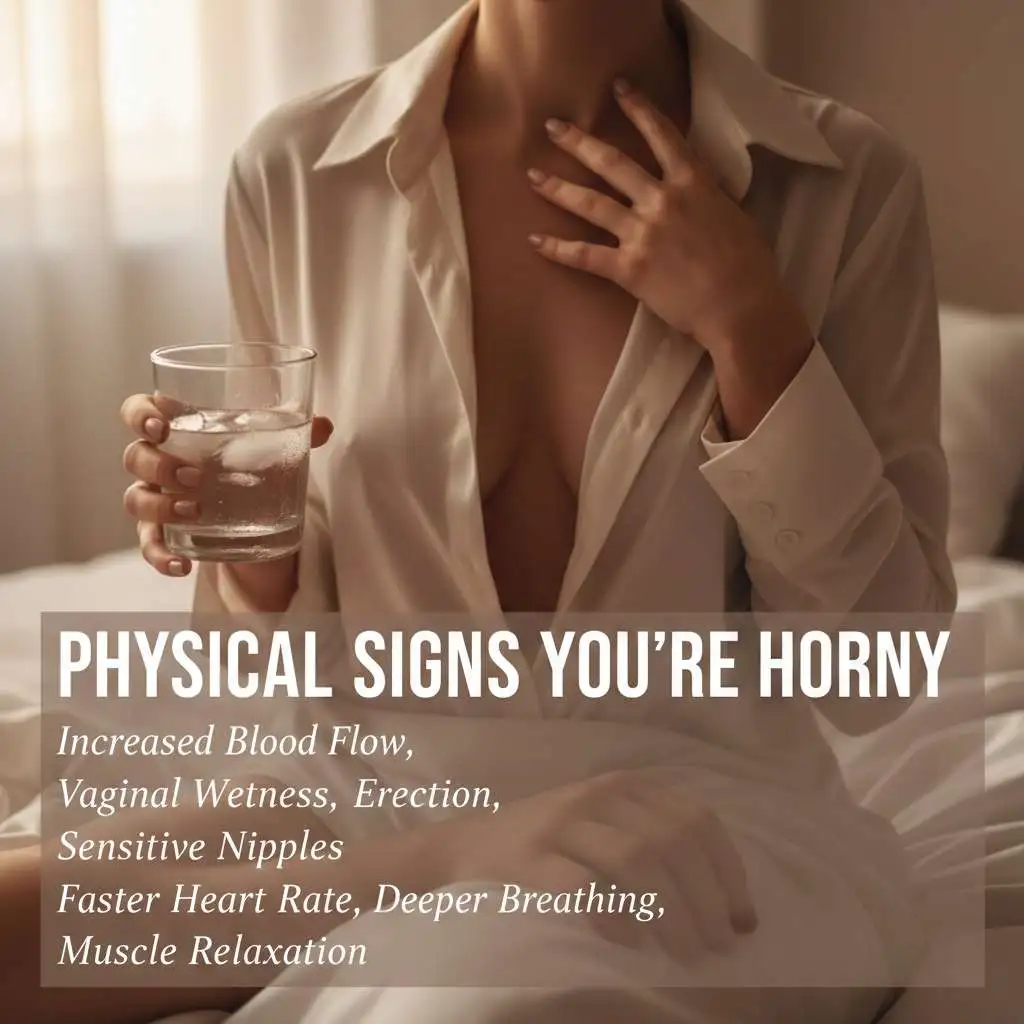
When you’re sexually aroused, your body reacts first. These changes happen automatically. You don’t choose them.
Common Physical Signs of Arousal
- Increased blood flow to genitals
- Vaginal lubrication or wetness
- Erection in the penis
- Pre-cum (pre-ejaculate)
- Hardened or sensitive nipples
- Faster heart rate
- Faster or deeper breathing
- Muscle relaxation
- Warm skin
- Restlessness or fidgeting
- Trouble sleeping
These responses are controlled by the autonomic nervous system, the same system that manages breathing and digestion.
Emotional and Psychological Signs of Horniness
Horniness isn’t just physical. Your mind plays a huge role.
You may notice:
- Sexual fantasies becoming more vivid
- Increased focus on bodies, voices, or touch
- Emotional closeness feeling more appealing
- Reduced stress or anxiety temporarily
- Feeling distracted or overstimulated
For some people, arousal feels grounding. For others, it feels overwhelming. Both reactions are normal.
What Happens in the Brain When You’re Horny?
Sexual arousal starts in the brain long before the body reacts.
Key Brain Areas Involved
- Medial orbitofrontal cortex: evaluates pleasure and reward
- Limbic system: processes emotion
- Hypothalamus: regulates hormones and sexual response
Neurochemicals Released
- Dopamine: motivation and pleasure
- Oxytocin: bonding and closeness
- Endorphins: relaxation and pain relief
- Noradrenaline: alertness and excitement
This chemical mix explains why arousal can feel powerful and distracting. Your brain is literally prioritizing pleasure signals.
Hormones That Influence Horniness
Hormones strongly shape sexual desire and sexual arousal.
Key Hormones Explained
| Hormone | Role in Arousal |
| Testosterone | Increases libido in all genders |
| Estrogen | Affects lubrication and sensitivity |
| Dopamine | Drives pleasure and motivation |
| Oxytocin | Enhances bonding |
| Prolactin | Increases after orgasm, reduces desire temporarily |
Hormone levels change daily, monthly, and across life stages. That’s why horniness can feel unpredictable.
Puberty, Adolescence and Sexual Development
During puberty, horniness often spikes. That’s not accidental.
Here’s why it happens:
- Rapid hormone increases
- Brain regions tied to impulse control are still developing
- Curiosity about bodies and identity grows
- Sexual thoughts become more frequent
For teens and adolescents, feeling horny often feels confusing or embarrassing. Yet it’s a normal part of sexual development, not a sign of being “too sexual.”
Do Girls Get Horny? Do Boys Feel It Differently?
Yes. Girls get horny. Boys get horny. People across the gender spectrum get horny.
The difference isn’t whether it happens. The difference is how it’s talked about.
Common Myths vs Reality
- Myth: Only men feel strong sexual urges
Reality: Libido varies widely in all genders - Myth: Women don’t think about sex often
Reality: Many do but social norms discourage openness
Biologically, arousal looks different depending on anatomy. The underlying brain processes are strikingly similar.
Why Am I So Horny All the Time?

Feeling horny frequently doesn’t automatically mean something is wrong.
Common Reasons for High Sexual Arousal
- Naturally high libido
- Hormonal changes
- Stress or anxiety
- Lack of sleep
- New relationships
- Reduced physical activity
- Mental stimulation
Stress is a big one. For some people, sexual arousal acts as stress relief, even when they don’t consciously want it.
Sexual Fantasies and Mental Arousal
Fantasies are one of the most misunderstood aspects of horniness.
Important truths:
- Fantasies don’t equal desires to act
- They often reflect curiosity, not intent
- They help the brain explore safely
- They’re extremely common
Mental arousal can happen without any physical stimulation at all. Imagination alone can activate the same brain pathways as touch.
Masturbation, Orgasm and Sexual Gratification
Masturbation is one of the most common ways people respond to horniness.
Why It Helps
- Releases built-up tension
- Triggers dopamine and endorphins
- Reduces stress
- Improves sleep for many people
After Orgasm
- Prolactin rises
- The body relaxes
- Arousal temporarily drops
There’s no universal “normal” frequency. What matters is whether it fits comfortably into your life.
Is Being Horny Healthy?
In most cases, yes.
Horniness can:
- Signal healthy hormone function
- Support emotional connection
- Improve mood
- Encourage body awareness
It becomes an issue only when it causes distress, interferes with daily life, or feels compulsive rather than chosen.
How to Reduce Horniness When It’s Distracting
Sometimes arousal shows up at the worst possible time. That doesn’t mean you need to fight your body. You can redirect it.
Practical Ways to Calm Arousal
- Physical movement like walking or stretching
- Cold showers to reset nerve signals
- Deep breathing exercises
- Meditation or grounding techniques
- Shifting attention to a complex task
Suppressing arousal aggressively often backfires. Gentle redirection works better.
Lifestyle Factors That Affect Horniness
Daily habits influence sex drive more than most people realize.
Factors That Increase or Decrease Arousal
- Sleep quality
- Exercise and circulation
- Stress levels
- Music and mood
- Diet and energy levels
Foods labeled as aphrodisiacs don’t magically increase libido. Their effects are mostly psychological and mood-related.
Common Myths About Being Horny
Let’s clear the air.
- Horniness doesn’t mean addiction
- It doesn’t require immediate action
- It doesn’t define character
- It doesn’t make someone immoral
Understanding horniness reduces shame. Shame makes the experience heavier than it needs to be.
When Should You Be Concerned?
While horniness is normal, some signs suggest it’s time to talk to a professional:
- Persistent distress or anxiety
- Compulsive sexual behavior
- Pain during arousal
- Inability to focus on daily life
- Feelings of loss of control
Seeking help isn’t weakness. It’s self-care.
Sexual Health, Self Care and Body Awareness
Healthy sexuality starts with listening to your body without judgment.
Helpful practices include:
- Learning how your body responds
- Respecting personal boundaries
- Reducing guilt around desire
- Asking questions without shame
Sexual awareness is part of overall health, not something separate from it.
Frequently Asked Questions
How do I know if I’m horny?
If you notice sexual thoughts, body sensitivity, or genital changes, you’re likely experiencing sexual arousal.
Is it normal to feel horny every day?
For some people, yes. Libido varies widely and can change over time.
Can stress make me horny?
Yes. Stress can trigger arousal because sex and masturbation can reduce tension.
Does horniness decrease with age?
It often changes but doesn’t disappear. Many adults remain sexually responsive throughout life.
Can anxiety cause sexual arousal?
Yes. Anxiety activates similar nervous system pathways as arousal.
Is horniness the same as wanting sex?
Not always. Arousal can exist without desire to act.
Conclusion
So, what does horny mean? It means your body and brain are responding to sexual signals in a normal, human way. Horniness reflects biology, emotion and context working together.
It doesn’t demand action and it doesn’t deserve shame. When you understand what’s happening inside you, the experience feels less confusing and far more manageable.
Awareness turns discomfort into clarity and curiosity into confidence.

Ashton Cole is an American author celebrated for his compelling storytelling and ability to capture the depth of human emotions. His works often explore themes of love, resilience, and self-discovery, making him a relatable voice for readers around the world.
He has published several well-received books, including:
-
Whispers of Dawn – a reflective novel about finding hope in life’s darkest moments.
-
Beneath the Silent Sky – a moving story of love, memory, and the bonds that shape us.
-
The Edge of Forever – a thought-provoking tale that blends drama, destiny, and the courage to begin again.
Through his writing, Ashton strives to inspire readers to see beauty in both the struggles and triumphs of life. When he isn’t writing, he enjoys exploring new cities, collecting rare books, and spending time in cozy coffee shops where many of his story ideas take shape.