
“What does gnarly mean” is a question many people ask after hearing the word used in totally different situations.
One moment it describes something amazing and the next it sounds unpleasant or shocking.
This single word carries multiple emotions depending on how and where it’s used.
By the end of this article, you’ll understand its meaning, history, slang usage and how to use it naturally without sounding confused.
What Does Gnarly Mean?
Gnarly is an informal English word that describes something extreme, intense, rough, twisted, impressive, or disturbing, depending on context.
In simple terms, gnarly is a strong reaction word. People use it when something stands out in a powerful way, either positively or negatively.
- That wave was gnarly! → impressive or extreme
- That injury looked gnarly. → disturbing or unpleasant
Context decides everything.
The Original Literal Meaning of Gnarly
Before slang took over, gnarly had a very literal meaning.
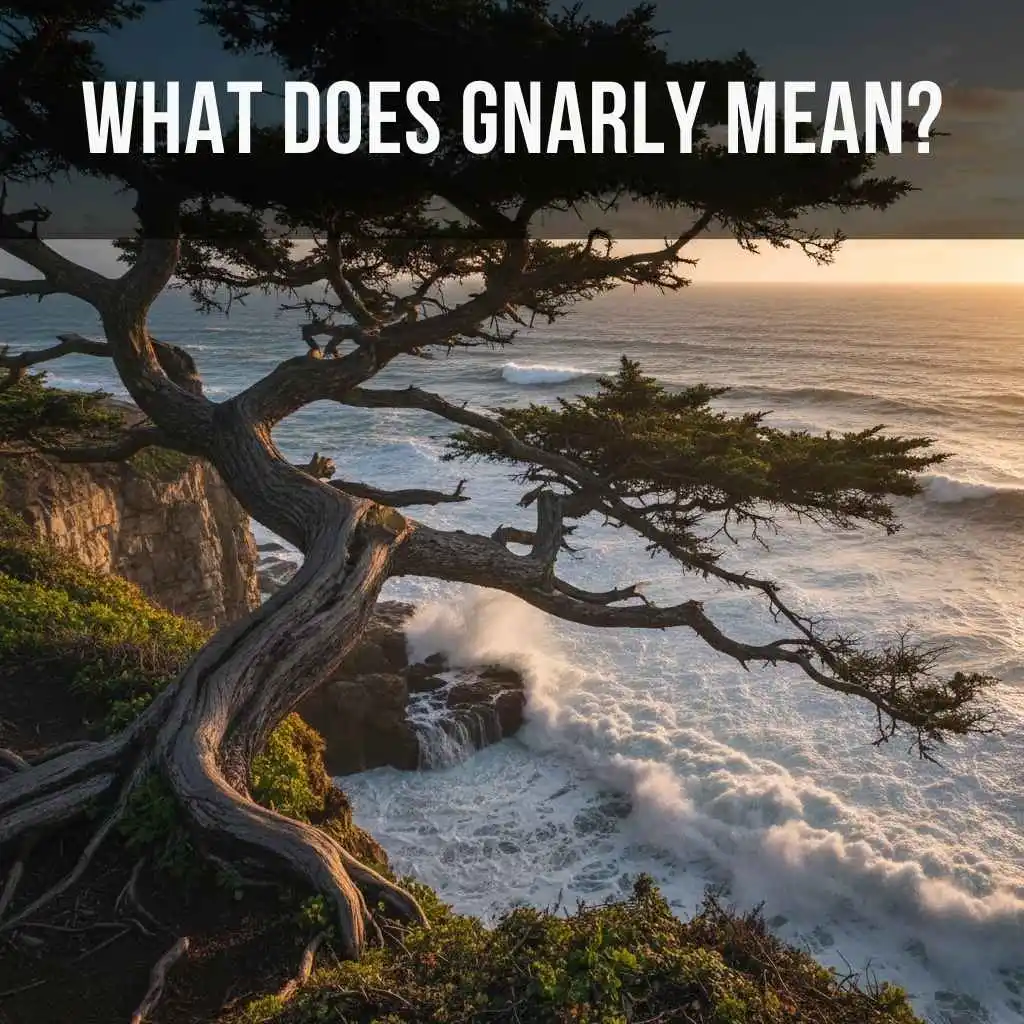
Originally, the word described physical objects that were knotted, rough, or twisted, especially:
- Tree roots
- Old branches
- Rough wood surfaces
For example:
- The gnarly roots twisted through the ground.
This meaning still exists today, mostly in descriptive or literary writing, though it’s far less common than the slang usage.
Gnarly as Slang | Modern Meanings Explained
Over time, gnarly evolved into a slang word with emotional punch. Today, it’s commonly used in spoken English.
Positive Meaning of Gnarly
When used positively, gnarly means:
- Awesome
- Impressive
- Extreme
- Intense (in a good way)
Examples:
- That snowboard trick was gnarly.
- We had a gnarly road trip through the mountains.
Here, the word shows admiration and excitement.
Negative Meaning of Gnarly
In a negative sense, gnarly describes something:
- Gross
- Shocking
- Brutal
- Hard to look at
- Extremely unpleasant
Examples:
- That cut looks gnarly.
- The accident scene was gnarly.
This usage focuses on discomfort or disgust.
How Context Changes the Meaning of Gnarly
The meaning of gnarly depends entirely on:
- The situation
- The speaker’s tone
- What’s being described
Compare these:
- That exam was gnarly. → very difficult
- That pizza was gnarly. → probably bad
- That concert was gnarly! → amazing
Native speakers instinctively understand the difference. For learners, listening to tone and context is key.
Cultural Origins of the Word “Gnarly”

Surf Culture and California Slang
The slang version of gnarly became popular in California surf culture during the 1960s and 1970s.
Surfers used it to describe:
- Dangerous waves
- Rough conditions
- High-risk situations
A gnarly wave meant a wave that was hard to ride but thrilling.
Skateboarding and Youth Culture
From surfing, the word spread into:
- Skateboarding
- Snowboarding
- Youth and street culture
Its meaning expanded to include anything extreme, shocking, or impressive. Movies, music, and pop culture helped push it into mainstream English.
Is “Gnarly” a Positive or Negative Word?
Short answer: it can be both.
Positive uses:
- Extreme sports
- Achievements
- Adventures
- Impressive moments
Negative uses:
- Injuries
- Accidents
- Gross visuals
- Bad experiences
Speakers usually make the meaning clear through tone and context.
How to Use Gnarly in a Sentence
Casual Conversation
- The hike was gnarly but worth it.
- That storm last night was gnarly.
Sports and Action
- He pulled off a gnarly trick.
- Those waves are gnarly today.
Negative or Shocking Situations
- That wound looks gnarly.
- The crash was pretty gnarly.
Humor and Exaggeration
- My allergies are gnarly this year.
- That spicy sauce is gnarly.
Common Situations Where People Use “Gnarly”
People often use gnarly when talking about:
- Extreme sports
- Tough challenges
- Injuries or accidents
- Weather conditions
- Food experiences
- Travel adventures
- Online reactions and memes
It’s especially common in spoken and informal English.
Synonyms for Gnarly
Positive Synonyms
- Awesome
- Epic
- Wild
- Intense
- Sick (slang)
Negative Synonyms
- Gross
- Brutal
- Nasty
- Rough
- Disturbing
Choosing the right synonym depends on whether you want a positive or negative tone.
Common Mistakes When Using Gnarly

Avoid these mistakes to sound natural:
- ❌ Using it in formal writing or business emails
- ❌ Ignoring context
- ❌ Overusing it in every sentence
- ❌ Using it without emotional emphasis
Gnarly works best when used sparingly and expressively.
Is Gnarly Formal or Informal?
Gnarly is informal slang.
Use it in:
- Conversations
- Social media
- Casual writing
- Storytelling
Avoid it in:
- Academic papers
- Professional emails
- Legal or technical writing
Gnarly in Pop Culture and Media
The word appears frequently in:
- Movies and TV shows
- Skate and surf videos
- Music lyrics
- Internet memes
Its flexibility keeps it relevant even decades after its slang debut.
Gnarly vs Similar Slang Words
- Gnarly vs Awesome → gnarly feels rougher and more intense
- Gnarly vs Brutal → gnarly can be positive, brutal usually isn’t
Final Thoughts
Gnarly survives because it’s expressive, flexible, and emotional. One word can describe excitement, fear, admiration, or disgust all depending on how it’s used.
Once you understand the context, gnarly becomes an easy and natural addition to casual English.

Edward Grant is an American author known for his modern storytelling and thought-provoking narratives. With a passion for exploring human emotions, relationships, and the complexities of everyday life, Edward writes in a style that feels both relatable and inspiring. His journey as a writer began in his early 20s, fueled by a love for literature and a deep curiosity about the world around him.
Over the years, Edward has developed a reputation for crafting characters that feel real, layered, and unforgettable. Whether he’s writing contemporary fiction or reflective essays, his work resonates with readers who value authenticity and emotional depth. Beyond writing, Edward is also an avid reader and enjoys spending time in quiet libraries and creative workspaces where new ideas come to life.
Some of his notable works include Whispers of Tomorrow, Shadows of the Heart, and The Last Horizon, each of which has received appreciation for its unique voice and meaningful storytelling.