

“What does ethnicity mean” is a question many people ask when filling out forms, studying social topics, or trying to understand their own identity.
Ethnicity isn’t just a label it reflects shared culture, traditions, and heritage. I remember once pausing at an online form, unsure how to answer the ethnicity section, and that moment pushed me to truly understand what the word means.
If you’ve ever felt the same confusion, this guide is written for you.
What Does Ethnicity Mean?
Ethnicity means a group of people who share a common cultural background. This background can include language, traditions, customs, ancestry, and sometimes religion. Ethnicity focuses on cultural identity, not physical appearance or legal citizenship.
For example, two people may live in the same country but belong to different ethnic groups because their cultures, traditions, or ancestral roots differ.
Origin and Meaning of the Word Ethnicity
The word ethnicity comes from the Greek word “ethnos,” meaning nation or people. In earlier times, it described groups connected by shared customs or origin. Over time, the meaning expanded to describe cultural identity rather than political borders or race.
Today, ethnicity helps explain how people identify themselves culturally in a diverse and global society.
Key Elements That Define Ethnicity
Culture and Traditions
Food, clothing, festivals, music, and daily customs shape ethnic identity.
Language and Dialects
A shared language or dialect often strengthens a sense of belonging within an ethnic group.
Ancestry and Heritage
Family roots and generational history play a major role in ethnicity.
Religion and Belief Systems
In some cases, religion is closely tied to ethnic identity, though not always.
Shared History and Community
Common experiences, struggles, and stories unite ethnic groups over time.
Examples of Ethnicity Around the World
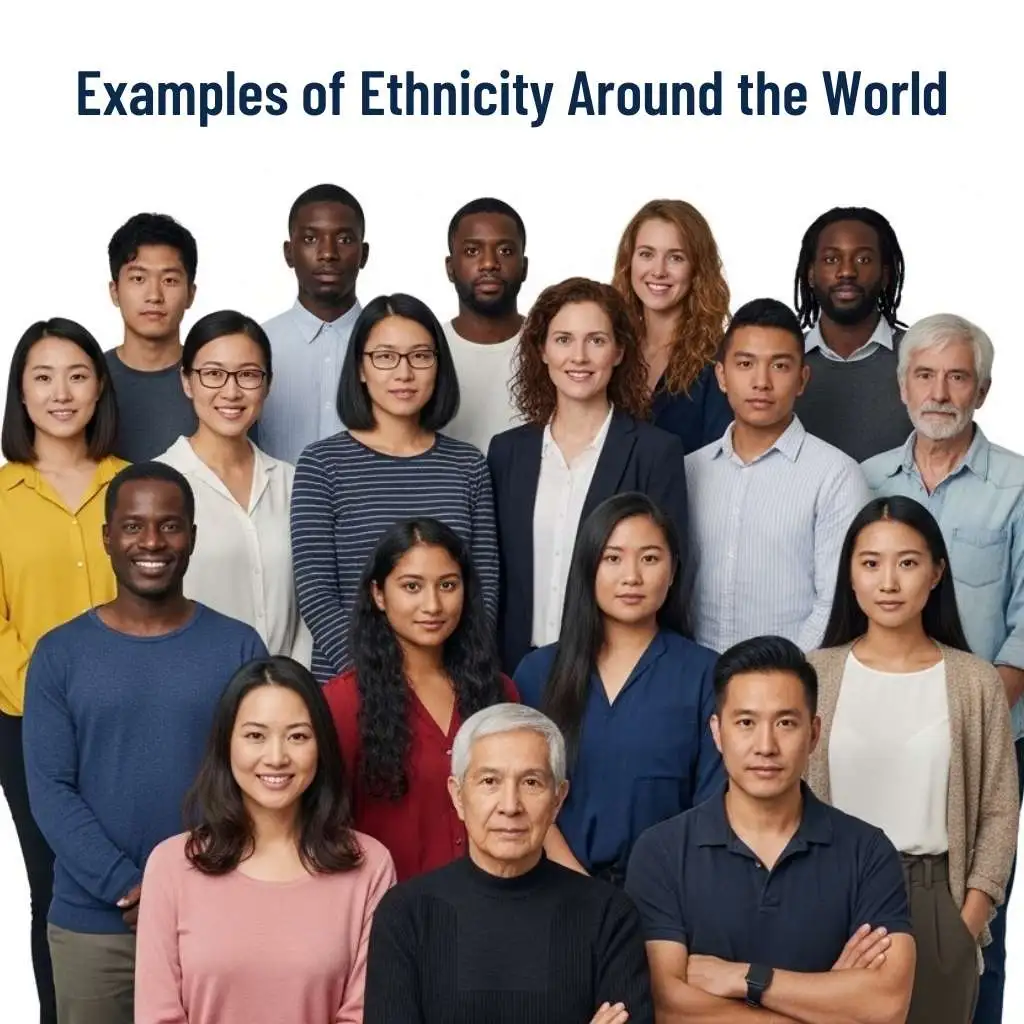
Ethnicity exists in every region of the world. A single country can include many ethnic groups.
- In Asia: Punjabi, Pashtun, Tamil, Han Chinese
- In Africa: Yoruba, Zulu, Berber
- In Europe: Celtic, Slavic, Basque
- In the Middle East: Arab, Kurdish, Persian
- Indigenous and tribal groups across continents
These examples show that ethnicity is about cultural connection, not borders.
Ethnicity vs Race | What’s the Difference?
Ethnicity and race are often confused, but they are not the same.
- Race relates to physical traits like skin color or facial features.
- Ethnicity relates to culture, traditions, language, and heritage.
Two people of the same race can have different ethnicities. For example, two individuals may look similar physically but follow different cultures and traditions.
Ethnicity vs Nationality | Key Differences Explained
Nationality refers to legal citizenship or the country a person belongs to. Ethnicity refers to cultural identity.
- Nationality can change through migration or citizenship.
- Ethnicity usually stays connected to family heritage and culture.
For example, someone may be American by nationality but ethnically Korean or Nigerian.
Why Ethnicity Matters in Everyday Life
Ethnicity helps people understand who they are and where they come from. It promotes cultural awareness, respect, and diversity. Governments, researchers, and healthcare systems also use ethnicity data to better understand communities and provide fair services.
Understanding ethnicity reduces stereotypes and encourages inclusion.
What Is My Ethnicity? How People Identify Themselves
Ethnicity is often self-identified. Some people belong to one ethnic group, while others have mixed or multicultural backgrounds. There is no single “correct” answer—your ethnicity reflects how you connect with your culture and heritage.
How Ethnicity Is Used on Forms and Surveys
Forms ask about ethnicity to collect demographic data. When answering:
- Choose the option that best matches your cultural background
- If optional, you can decide whether to answer
- Some forms allow multiple or mixed ethnicities
This information helps organizations understand population diversity.
Common Misconceptions About Ethnicity
- Ethnicity is the same as race — false
- Everyone has only one ethnicity — false
- Ethnicity is based on skin color — false
Ethnicity is flexible, cultural, and deeply personal.
Can Ethnicity Change Over Time?
Ethnicity can evolve. Migration, intermarriage, and cultural assimilation may influence how people identify themselves over generations. While ancestry remains, cultural expression can change.
Ethnicity in Modern Society
Globalization has increased multicultural identities. People now celebrate multiple ethnic influences while staying connected to their roots. Respecting ethnic diversity strengthens social harmony and understanding.
Frequently Asked Questions About Ethnicity
Is ethnicity biological or cultural?
Ethnicity is mainly cultural, not biological.
Can two people of the same race have different ethnicities?
Yes, very often.
Why is ethnicity sometimes optional on forms?
Because it’s personal and self-identified.
Conclusion
Ethnicity means shared culture, traditions, language, and heritage that shape how people identify themselves.
It is different from race and nationality and plays an important role in personal identity and social understanding. By learning what ethnicity truly means, we become more aware, respectful, and connected in a diverse world
Discover More:
- Understand What Does Archive Mean? Complete Definition, Examples and How Archiving Works in Digital and Real Life for 2026
- Discover What Does Emo Mean? Real Definition, Origin, Culture, Music and Identity Explained in 2026
- Know About What Does PR Mean? The Complete Breakdown of PR in Business, Social Media Sports & Everyday Life for 2026

Ashton Cole is an American author celebrated for his compelling storytelling and ability to capture the depth of human emotions. His works often explore themes of love, resilience, and self-discovery, making him a relatable voice for readers around the world.
He has published several well-received books, including:
-
Whispers of Dawn – a reflective novel about finding hope in life’s darkest moments.
-
Beneath the Silent Sky – a moving story of love, memory, and the bonds that shape us.
-
The Edge of Forever – a thought-provoking tale that blends drama, destiny, and the courage to begin again.
Through his writing, Ashton strives to inspire readers to see beauty in both the struggles and triumphs of life. When he isn’t writing, he enjoys exploring new cities, collecting rare books, and spending time in cozy coffee shops where many of his story ideas take shape.