

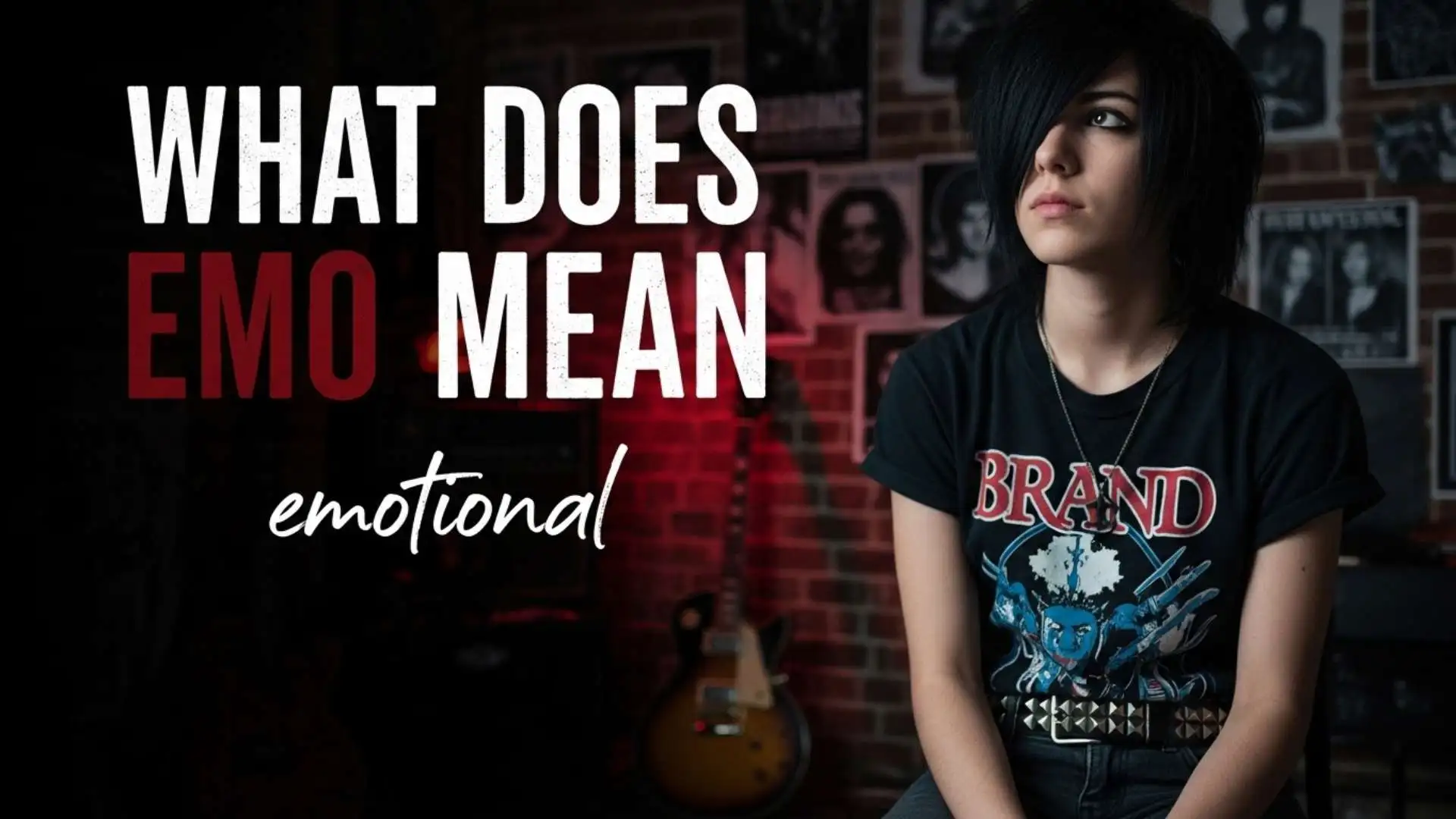
“What does emo mean?” Emo means more than sadness or dark clothing. It describes a powerful music based identity, a deeply expressive emotional subculture, and a personal way of understanding feelings.
Emo began as a subgenre of hardcore punk and grew into a global youth culture centered on honesty, individuality, and emotional truth.
Today, emo influences music, fashion, personality, and how people express themselves.
Understanding emo requires looking beyond stereotypes. Its roots lie in music, its heart lives in emotional expression, and its purpose remains deeply human.
Emo Meaning | Simple Definition and Core Concept
Emo is more than just a word; it represents a style, culture, and way of expressing deep emotions. Over time, the term has evolved from describing a music genre to becoming a popular internet slang used in everyday conversations. Today, people often use it to describe someone’s mood, personality, or aesthetic online.
At its core, emo is short for “emotional.” The term originally described a type of music that focused on honest, personal feelings instead of aggression or rebellion.
Literal Definition of Emo
Emo definition:
Emo is a subgenre of punk rock and a cultural identity focused on emotional honesty, introspection, and personal expression through music, fashion, and lifestyle.
Emo emphasizes three essential elements:
- Emotional vulnerability
- Personal storytelling
- Authentic self-expression
Unlike many music genres that focus on entertainment alone, emo focuses on emotional truth.
Original Meaning vs Modern Meaning
Over time, emo expanded beyond music into a full cultural identity.
| Aspect | Original Meaning | Modern Meaning |
| Primary focus | Emotional punk music | Cultural and emotional identity |
| Origin | Underground music scene | Global cultural phenomenon |
| Expression | Music and lyrics | Fashion, personality, lifestyle |
| Purpose | Emotional storytelling | Emotional identity and connection |
Today, emo represents both a sound and a way of experiencing the world.
Origin of Emo | Where Emo Really Came From
Emo began in the mid-1980s within the American underground punk scene. Musicians wanted something deeper. They wanted emotional truth instead of pure aggression.
Birthplace: Hardcore Punk Scene
Emo originated in Washington, D.C. during the 1980s hardcore punk origins.
Traditional punk focused on:
- Political anger
- Fast aggressive sound
- Social rebellion
Emo musicians shifted focus toward:
- Personal feelings
- Inner struggles
- Emotional vulnerability
This change created something entirely new.
First Wave: Emotional Hardcore (1985–1990)
The first wave introduced what became known as “emocore” or emotional hardcore.
Key characteristics included:
- Deeply personal lyrics
- Slower emotional passages
- Focus on emotional intensity
This era laid the foundation for modern emo.
Second Wave: Identity and Expansion (1990–2000)
Emo evolved into a more melodic and expressive sound.
Major developments included:
- Greater musical complexity
- Increased emotional storytelling
- Expansion into indie and alternative music
Emo began forming a true cultural identity during this period.
Third Wave: Mainstream Explosion (2000–2010)
Emo entered mainstream culture and reached global audiences.
Popular bands included:
- My Chemical Romance
- Fall Out Boy
- Dashboard Confessional
These bands introduced emo to millions worldwide.
Their success transformed emo into a mainstream cultural phenomenon.
Fourth Wave: Modern Emo Revival
Modern emo returned to its roots. Artists focused again on authenticity instead of commercial trends.
Today’s emo emphasizes:
- Emotional truth
- Musical authenticity
- Personal storytelling
The emotional core remains unchanged.
Emo Music Meaning | Sound, Lyrics and Emotional Power
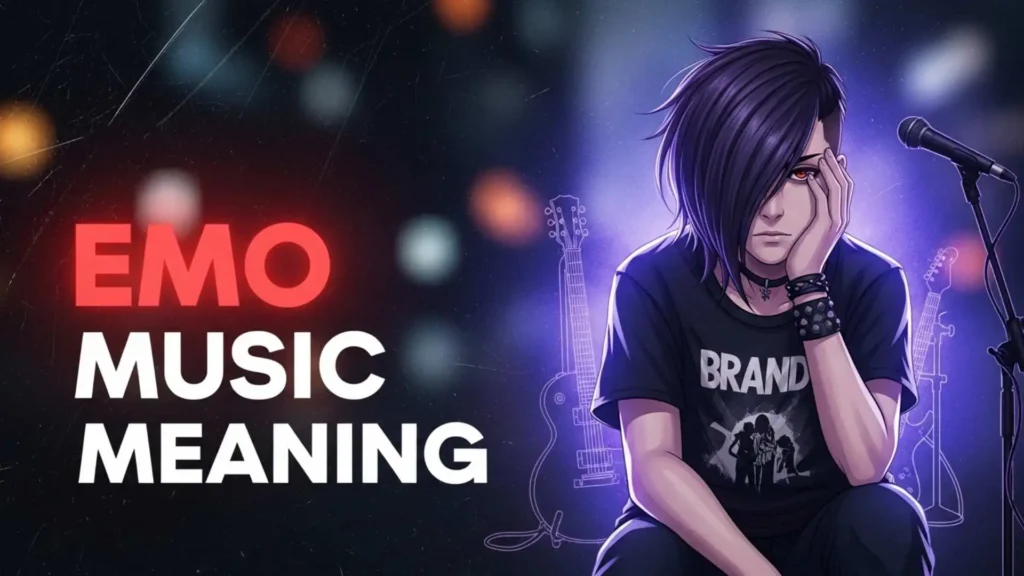
Emo music forms the foundation of emo culture. Everything else evolved from this musical core.
Core Characteristics of Emo Music
Emo music stands apart because of its emotional depth.
Key features include:
- Confessional lyrics
- Raw emotional honesty
- Personal storytelling
- Emotional intensity
- Melodic guitar work
These elements create a deeply emotional listening experience.
Common Themes in Emo Music
Emo explores real human emotions without filters.
Common emotional themes include:
- Themes of angst
- Heartbreak
- Loneliness
- Identity struggles
- Emotional vulnerability
- Self-reflection
These themes allow listeners to feel understood.
Musical Structure and Emotional Dynamics
Emo music often shifts dramatically between soft and intense sections.
| Musical Element | Role in Emotional Expression |
| Soft passages | Represent vulnerability |
| Loud sections | Represent emotional release |
| Lyrics | Communicate personal feelings |
| Melody | Reinforces emotional tone |
| Vocals | Deliver emotional authenticity |
This dynamic structure reflects real emotional experiences.
Why Emo Music Feels So Powerful
Emo music creates emotional connection because it expresses truth.
People often say emo music makes them feel:
- Understood
- Less alone
- Emotionally validated
This emotional connection explains its lasting impact.
Emo Culture Meaning | Beyond Music into Identity
Emo evolved into more than music. It became a complete youth subculture and personal identity.
Emo as Cultural Identity
Emo identity emphasizes emotional awareness and authenticity.
Core values include:
- Self-expression
- Emotional honesty
- Individuality
- Authentic identity
Emo encourages people to embrace their emotions.
Emotional Honesty as a Core Principle
Many cultures discourage emotional vulnerability. Emo embraces it.
Emo promotes:
- Expressing real feelings
- Accepting emotional sensitivity
- Rejecting emotional suppression
This creates psychological freedom.
Emo as Emotional Connection and Community
Emo builds connection between people who share similar emotional experiences.
Emo communities provide:
- Emotional understanding
- Acceptance
- Shared identity
Music becomes a bridge between individuals.
Emo Fashion Meaning | Clothing, Hair and Visual Expression
Emo fashion visually reflects emotional identity.
Fashion serves as a form of self-expression, not just appearance.
Core Emo Clothing Elements
Common emo clothing includes:
- Skinny jeans
- Band T-shirts
- Dark hoodies
- Black clothing
- Vans or Converse shoes
These clothing choices reflect emotional identity.
Emo Hairstyles and Hair Identity
Hair plays an important role in emo style.
Common emo hairstyles include:
- Black dyed hair
- Long side-swept bangs
- Asymmetrical cuts
- Dark hair colors
Hair expresses emotional individuality.
Emo Accessories and Personal Symbols
Emo accessories reinforce identity.
Common accessories include:
- Studded belts
- Wristbands
- Dark nail polish
- Heavy eyeliner
Each item symbolizes emotional expression.
Why Emo Fashion Exists
Emo fashion serves psychological and social purposes.
Fashion helps people:
- Express emotional identity
- Show individuality
- Connect with like-minded people
Fashion becomes a visual language.
Emo Personality and Emotional Identity
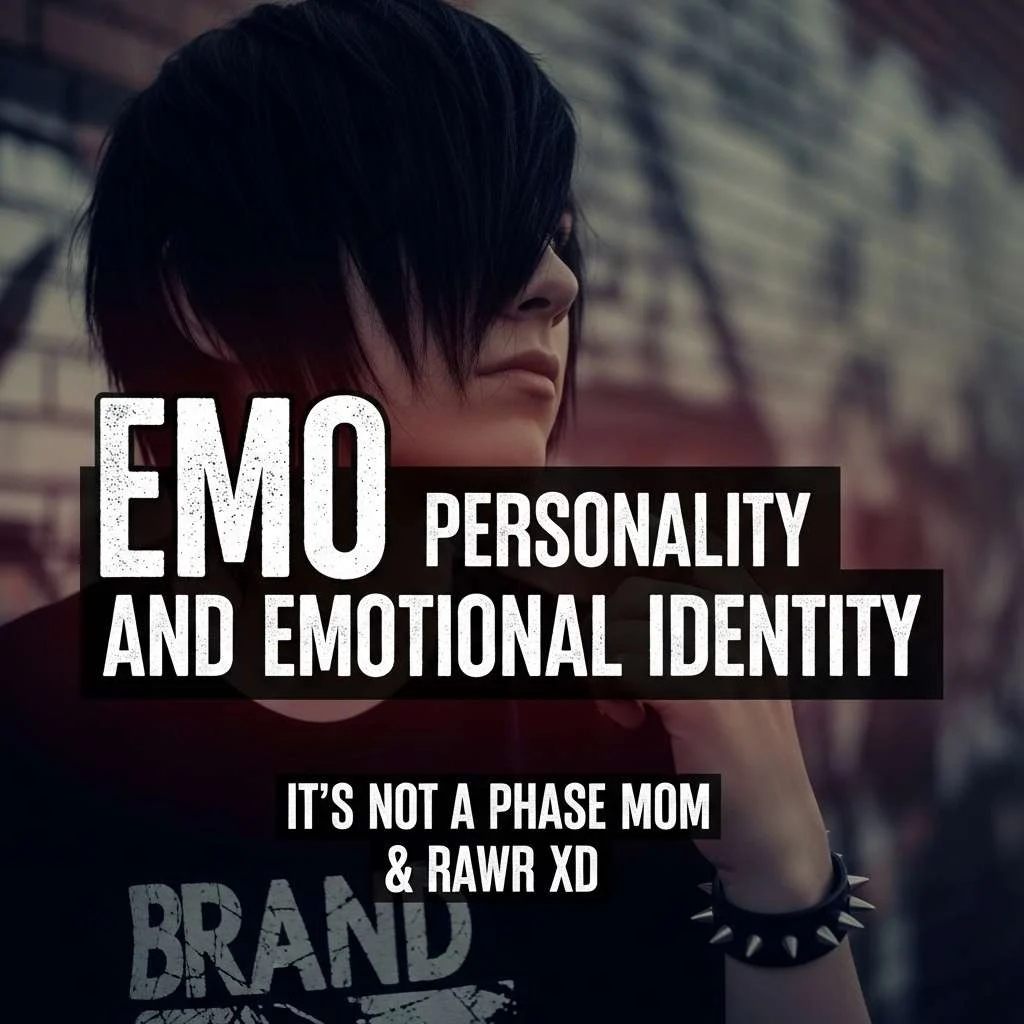
Emo identity involves personality traits related to emotional awareness.
Common Emo Personality Traits
Many emo individuals share emotional characteristics.
These include:
- Emotional sensitivity
- Deep thinking
- Creativity
- Introspection
- Emotional awareness
These traits strengthen emotional intelligence.
Emo Encourages Emotional Strength
Contrary to stereotypes, emo promotes emotional strength.
Emotional awareness helps people:
- Understand themselves
- Process emotions
- Build resilience
Emo encourages emotional maturity.
Emo Supports Authentic Identity Development
Emo allows individuals to explore their true selves.
Benefits include:
- Self-understanding
- Emotional acceptance
- Personal growth
Emo supports healthy identity development.
Emo vs Goth vs Scene: Understanding the Differences
Many people confuse emo with goth or scene. These identities differ significantly.
| Feature | Emo | Goth | Scene |
| Focus | Emotional expression | Dark aesthetic | Visual energy |
| Music | Emotional rock | Gothic rock | Electronic pop |
| Personality | Introspective | Mysterious | Energetic |
| Purpose | Emotional honesty | Artistic darkness | Social identity |
Each culture serves different emotional needs.
Common Emo Stereotypes vs Reality
Misunderstanding created harmful stereotypes about emo.
Myth: Emo Means Depressed
Reality: Emo encourages emotional awareness not depression.
Emo helps people process emotions constructively.
Myth: Emo Is Only Fashion
Reality: Fashion represents identity but music forms the foundation.
Music defines emo culture.
Myth: Emo Is Weakness
Reality: Emotional awareness strengthens psychological resilience.
Emotional honesty builds mental strength.
Myth: Emo Is Just a Phase
Reality: Many people maintain emo identity throughout life.
Emo reflects personality not temporary trends.
Why Emo Became Popular Worldwide
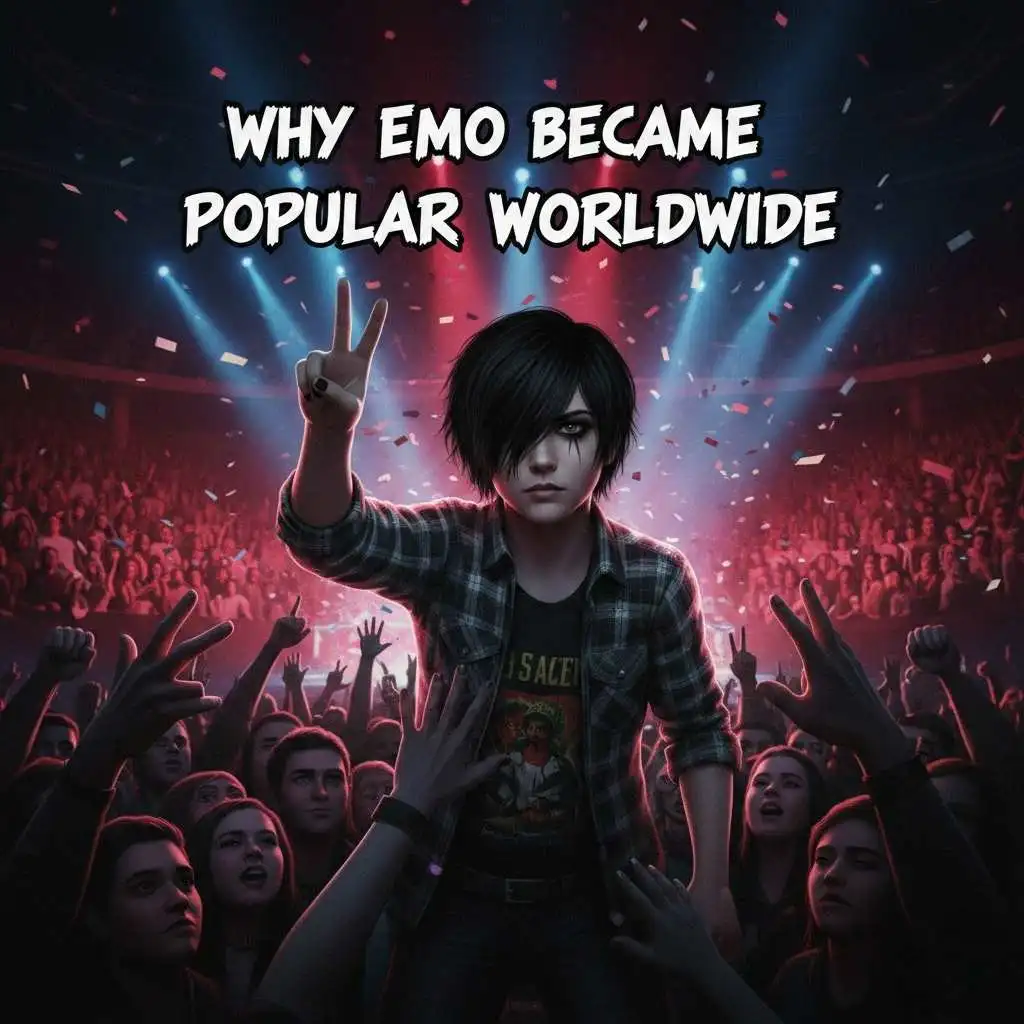
Emo grew rapidly because it fulfilled emotional needs many cultures ignored.
Emotional Relatability
People connected deeply with honest emotional expression.
Emo provided emotional validation.
Identity Formation During Youth
Young people use emo to explore identity.
Benefits include:
- Emotional understanding
- Identity exploration
- Social belonging
Emo helps build personal identity.
Internet and Global Spread
The internet accelerated emo’s growth.
Social media allowed:
- Music sharing
- Community building
- Cultural expansion
Emo became global.
Modern Meaning of Emo in Everyday Language
Today, emo has multiple meanings depending on context.
Slang Meaning vs Real Meaning
| Slang Meaning | Real Meaning |
| Emotional person | Cultural and musical identity |
| Temporary sadness | Long-term emotional identity |
| Personality trait | Cultural movement |
Real emo involves music, culture, and identity.
Is Emo Still Relevant Today?
Emo remains highly relevant today.
Emo Continues Influencing Modern Music
Modern genres influenced by emo include:
- Alternative rock
- Indie rock
- Pop punk
Emo’s emotional DNA persists.
Emo Remains Important Cultural Identity
Many people still identify as emo.
Emo continues providing emotional support and identity.
Emo Continues Helping Emotional Expression
Emo remains a powerful tool for emotional communication.
Its emotional value remains timeless.
Psychological Importance of Emo Culture
Emo provides real psychological benefits.
Emotional Expression Improves Mental Health
Expressing emotions reduces psychological stress.
Emo promotes emotional release.
Emotional Validation Improves Well-Being
Feeling understood improves emotional stability.
Emo provides emotional validation.
Identity Development Strengthens Self-Confidence
Understanding identity builds confidence.
Emo helps people discover themselves.
Signs Someone May Identify as Emo
Common indicators include:
- Deep connection to emotional music
- Strong emotional awareness
- Preference for emotional honesty
- Desire for authentic identity
- Emotional sensitivity
These signs reflect emotional awareness.
Why Understanding Emo Meaning Matters
Understanding emo improves cultural awareness.
Benefits include:
- Reduced stereotypes
- Improved emotional understanding
- Greater cultural acceptance
Emo represents emotional authenticity.
Emo Cultural Structure Diagram
Emo Identity
│
├── Music Foundation
│ ├── Emotional lyrics
│ ├── Personal storytelling
│
├── Emotional Identity
│ ├── Emotional awareness
│ ├── Self-expression
│
└── Visual Expression
├── Clothing
├── Hairstyles
├── Accessories
Key Facts About Emo Culture
Fact 1: Emo originated in the 1980s hardcore punk scene
Fact 2: Emo emphasizes emotional honesty
Fact 3: Emo became mainstream in the 2000s
Fact 4: Emo remains culturally relevant today
Fact 5: Emo promotes emotional awareness and identity
Quote That Defines Emo Culture
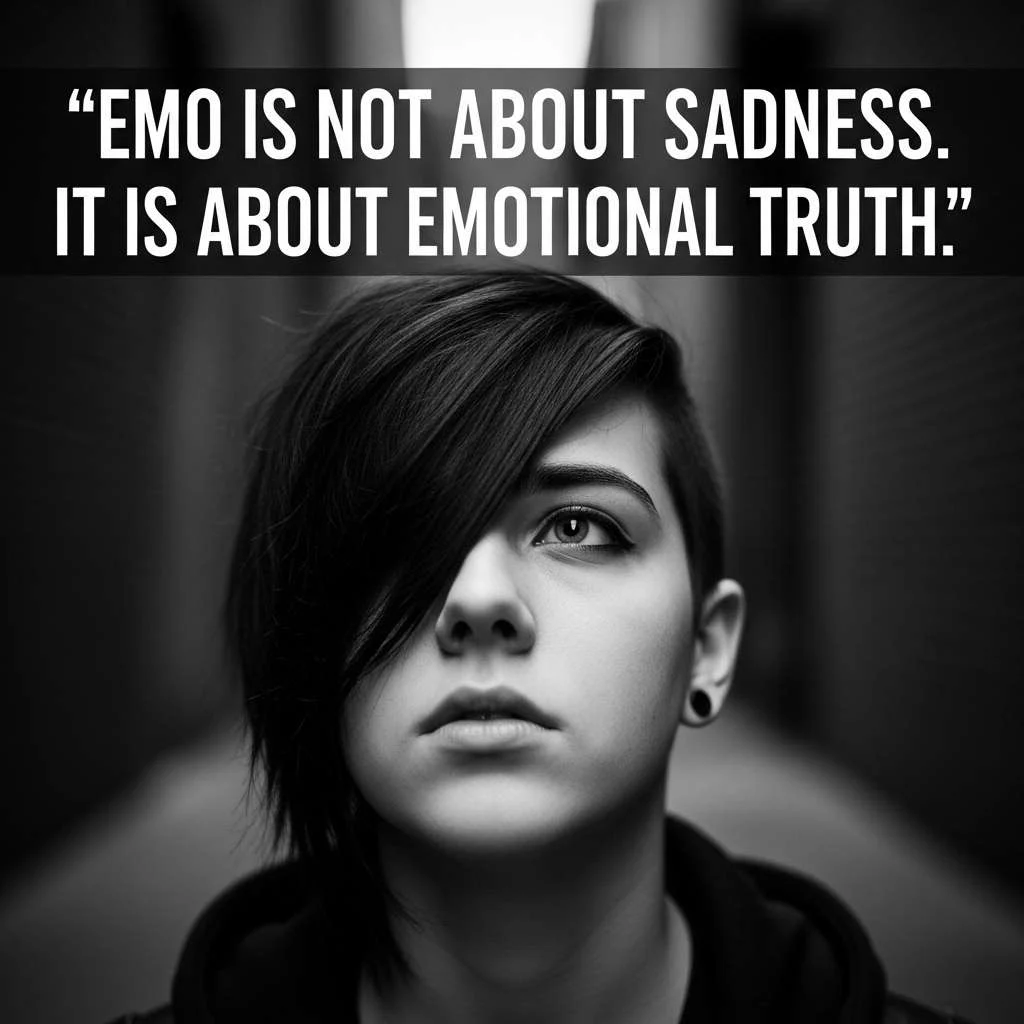
“Emo is not about sadness. It is about emotional truth.”
This quote captures emo’s true meaning.
FAQs About Emo Meaning
What does emo mean in simple words?
Emo means emotional expression through music, identity, and culture. It focuses on emotional honesty and personal storytelling.
Is emo a music genre or personality?
Emo is both. It started as a music genre and evolved into a cultural and emotional identity.
Is emo still popular today?
Yes. Emo continues influencing modern music, fashion, and emotional identity worldwide.
What makes someone emo?
Emotional awareness, connection to emo music, and authentic self-expression define emo identity.
Is emo the same as goth?
No. Emo focuses on emotional expression while goth focuses on dark artistic aesthetics.
Conclusion
Emo represents emotional truth, not sadness or weakness. It began as a subgenre of hardcore punk and evolved into a powerful cultural movement centered on self-expression and identity.
Emo music provides emotional connection and validation. Emo culture encourages emotional honesty and individuality. Its influence continues shaping music, identity, and emotional expression worldwide.
Discover More:
- Know About What Does PR Mean? The Complete Breakdown of PR in Business, Social Media Sports & Everyday Life for 2026
- Understanding What Does Ethnicity Mean? A Simple Explanation with Real Examples for 2026Understand
- What Does Archive Mean? Complete Definition, Examples and How Archiving Works in Digital and Real Life for 2026

Tyler Wells is an American author known for his captivating storytelling and thoughtful insights into modern life. With a natural talent for weaving words into meaningful narratives, he has built a strong connection with readers who appreciate both authenticity and imagination.
Over the years, Tyler has written several acclaimed books, including “Echoes of the Dawn” (a moving story about hope and new beginnings), “Whispers Between the Lines” (a heartfelt story exploring love, loss, and resilience), and “The Silent Hour” (a suspenseful drama that keeps readers turning pages late into the night). His works blend emotional depth with relatable characters, making them both timeless and relevant for today’s audience.
Beyond writing, Tyler enjoys sharing his thoughts on creativity, personal growth, and the human experience. Whether through his books or his articles, he inspires readers to look at life from new perspectives and embrace their own stories with courage.