“What does BTW mean” is a question many people ask after seeing it pop up in texts, chats, or social media comments.
You notice it mid conversation and suddenly feel like you missed something important.
Don’t worry you’re not behind.
This short guide breaks down the meaning, usage, tone and mistakes so you can use “BTW” confidently and naturally.
What Does BTW Mean?
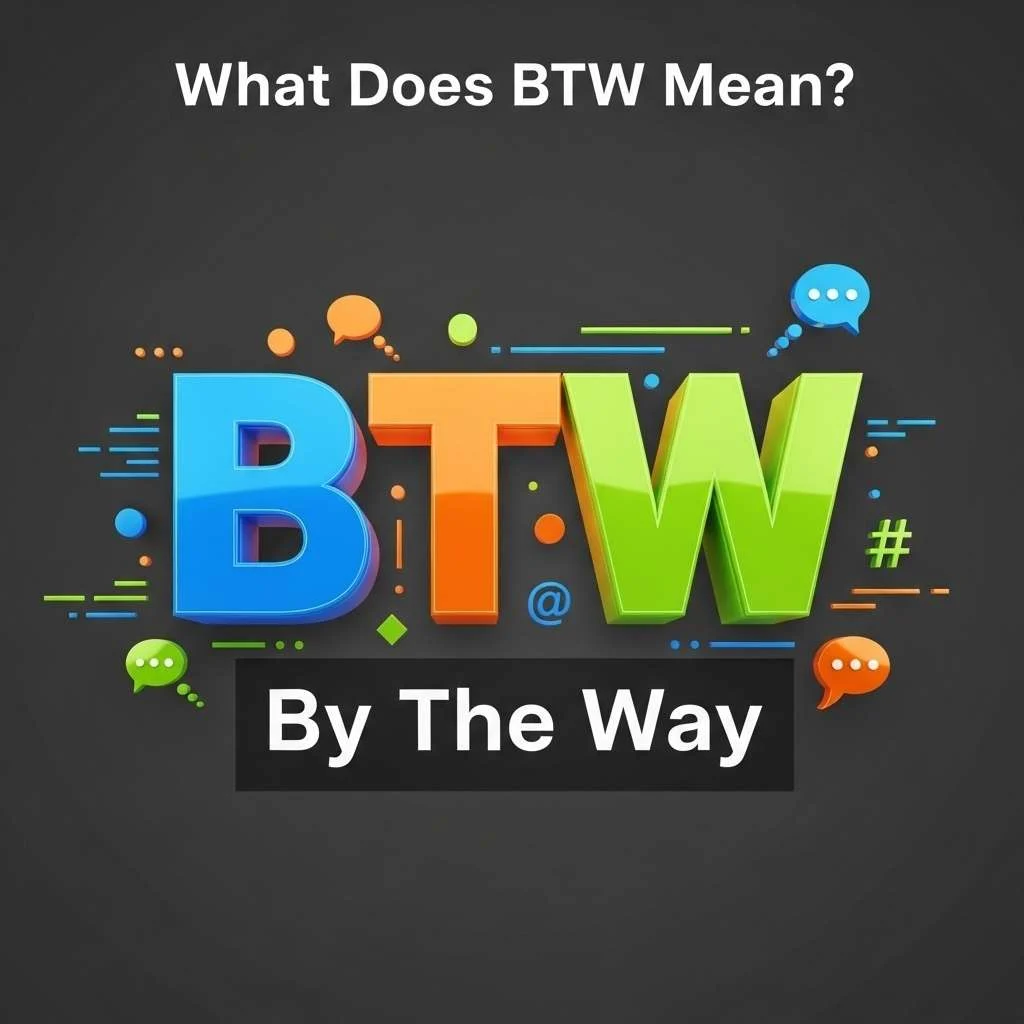
BTW means “By The Way.”
People use it to introduce extra or side information that isn’t the main topic of the conversation. It’s a casual way to add something you just remembered or didn’t want to forget.
Think of it as a conversational nudge—oh, one more thing…
What Does BTW Stand For?
BTW is an abbreviation of By The Way.
- By → along or through
- The Way → the path or direction of conversation
Online and in texting, people shorten it to BTW to save time and keep messages quick and informal.
What Does BTW Mean in Texting and Chat?
In texting and chat apps, BTW signals a topic shift or extra thought. It doesn’t mean the new information is more important—it’s just additional.
Common intentions behind BTW:
- Adding a reminder
- Sharing a quick update
- Bringing up something related but not central
The tone is usually friendly, relaxed, and neutral.
How to Use BTW Correctly in Sentences
You can place BTW in different parts of a sentence depending on flow.
At the beginning:
- BTW, I’ll be late tonight.
In the middle:
- I finished the report, btw, and sent it.
At the end:
- I already talked to her btw.
Capital letters (BTW) and lowercase (btw) both work. Lowercase feels more casual.
Examples of BTW in Real Conversations

Texting:
- BTW, did you see my last message?
- I’m free tomorrow btw.
Social media:
- Great post btw 👏
- BTW this made my day.
Casual spoken English:
- By the way, I liked your idea.
Is BTW Formal or Informal?
BTW is informal.
It works best in:
- Text messages
- Social media
- Casual chats
- Friendly emails
It’s not suitable for:
- Professional emails
- Academic writing
- Formal business communication
Can BTW Be Used in Professional Writing?
Generally, no.
Instead of BTW, use formal alternatives like:
- Additionally
- By the way (written out)
- Also
- I’d like to mention
These sound clearer and more professional.
Common Mistakes People Make Using BTW
- Using BTW in serious or formal emails
- Overusing it in one conversation
- Assuming everyone understands internet slang
- Using it in emotional or sensitive discussions
When in doubt, write it out fully or skip it.
BTW vs Similar Internet Slang Terms
- BTW vs FYI
BTW adds information. FYI shares information directly. - BTW vs TBH
BTW changes topic. TBH expresses honesty or opinion. - BTW vs IDK
BTW adds info. IDK shows uncertainty.
Each serves a different purpose.
Why Do People Use BTW So Often Online?
- Faster typing
- Casual digital culture
- Conversational tone
- Fits texting and social media habits
It mirrors how people talk in real life—quick and relaxed.
Is BTW Rude or Polite?
BTW itself isn’t rude or polite. Context matters.
It sounds polite when:
- Used friendly or neutrally
- Added gently to a conversation
It can sound rude if:
- Used to interrupt
- Dropped abruptly in serious talks
Tone always wins.
How to Respond When Someone Says BTW
You don’t need a special reply. Just respond to the new information.
Examples:
- Oh yeah, thanks for telling me.
- Got it!
- That helps, thanks.
FAQs About BTW Meaning
What does BTW mean in a text message?
It means “by the way,” used to add extra information.
Is BTW still used today?
Yes, it’s very common in texting and social media.
Can BTW start a sentence?
Yes, that’s one of the most common uses.
Does BTW mean something different online?
No, the meaning stays the same across platforms.
Conclusion
BTW simply means by the way, and it’s a handy way to add extra thoughts in casual conversation.
It’s perfect for texts and chats but not for formal writing. Once you understand the tone and timing, using BTW feels natural and effortless just like everyday conversation.

Edward Grant is an American author known for his modern storytelling and thought-provoking narratives. With a passion for exploring human emotions, relationships, and the complexities of everyday life, Edward writes in a style that feels both relatable and inspiring. His journey as a writer began in his early 20s, fueled by a love for literature and a deep curiosity about the world around him.
Over the years, Edward has developed a reputation for crafting characters that feel real, layered, and unforgettable. Whether he’s writing contemporary fiction or reflective essays, his work resonates with readers who value authenticity and emotional depth. Beyond writing, Edward is also an avid reader and enjoys spending time in quiet libraries and creative workspaces where new ideas come to life.
Some of his notable works include Whispers of Tomorrow, Shadows of the Heart, and The Last Horizon, each of which has received appreciation for its unique voice and meaningful storytelling.