

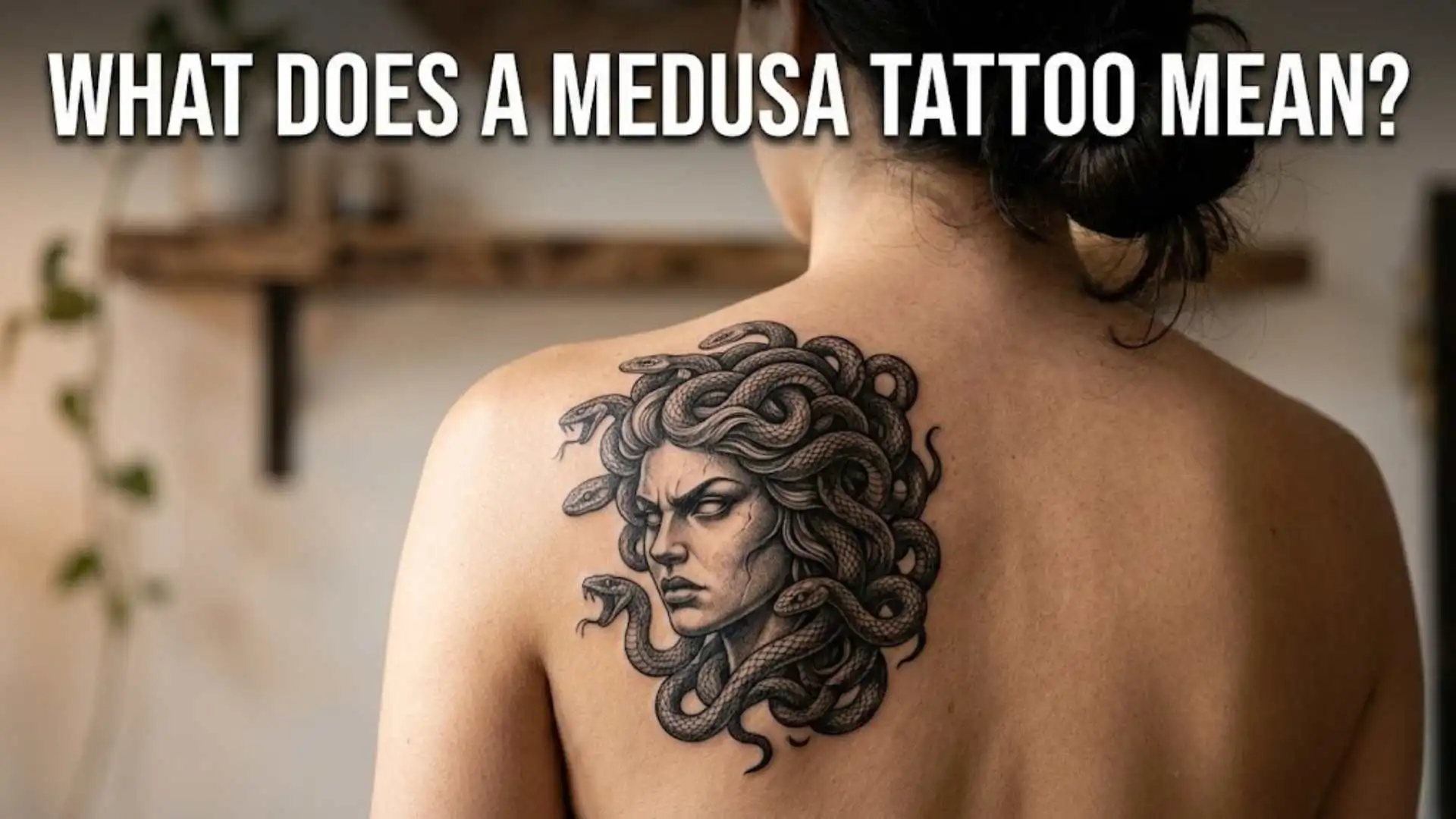
“What does a Medusa tattoo mean?” It’s a question people ask after seeing the striking face with snake hair appear on social media or in real life.
The answer runs deeper than myth. A Medusa tattoo meaning blends ancient legend, modern empowerment, protection symbolism, and personal transformation.
If you’re considering one, or simply curious, you deserve the full story.
Who Is Medusa? The Myth Behind the Medusa Tattoo Meaning
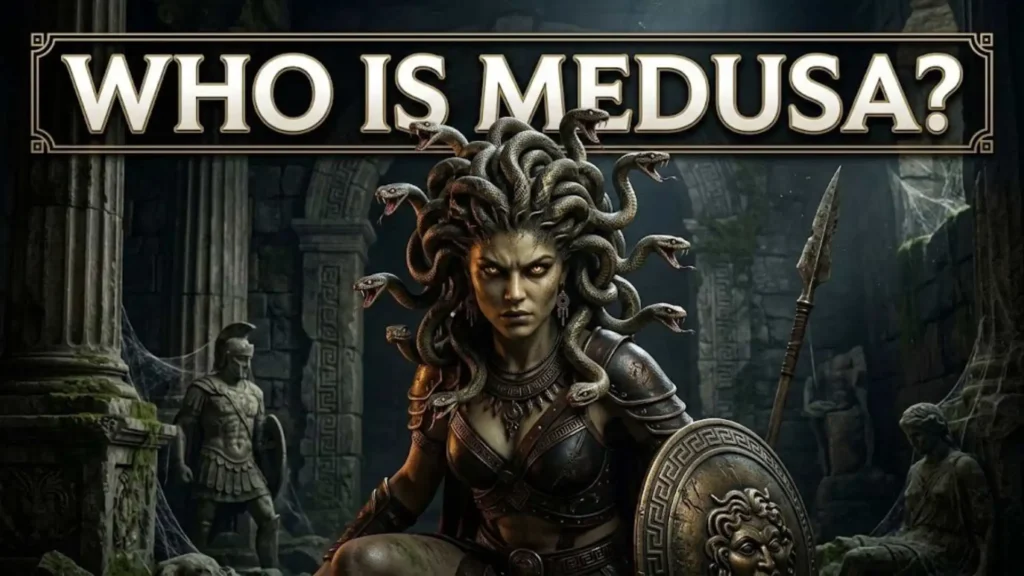
To understand the meaning of Medusa tattoo designs, you need to start with her origin.
In Greek mythology, Medusa was one of three Gorgons. Unlike her immortal sisters, she was mortal. She had living snakes for hair and a gaze that turned people to stone. That image alone shaped centuries of fear, fascination, and symbolism.
But here’s what many people miss.
Medusa wasn’t always a monster.
According to later versions of the myth, she was once a beautiful priestess devoted to Athena. The story takes a darker turn when Poseidon assaulted her inside Athena’s temple. Instead of punishing Poseidon, Athena transformed Medusa into a Gorgon.
That transformation matters.
It reframes Medusa from villain to victim of injustice. It also explains why the Medusa tattoo sexual assault meaning resonates so deeply today.
Medusa in Ancient Art | Protection, Not Just Fear
In ancient Greece, people didn’t only fear Medusa. They used her image for protection.
Warriors painted her face on shields. Sculptors carved her into temple pediments. Her head appeared on armor, coins, and doorways.
Why?
Because her face acted as an apotropaic symbol. That means it was meant to ward off evil.
The logic was simple:
- Evil fears something more terrifying.
- Medusa’s gaze turned enemies to stone.
- Therefore, her image protects the wearer.
This ancient belief directly connects to the modern Medusa tattoo protection symbol interpretation.
It wasn’t just art. It was armor.
Core Medusa Symbolism Explained
When people search for Medusa symbolism, they usually want clarity. Let’s break it down into clear themes.
Protection
Medusa represents:
- Defense against harm
- Emotional boundaries
- Guarding yourself after betrayal
- Protection against danger
Her gaze symbolizes stopping threats before they reach you.
Survival After Trauma
Modern interpretations connect Medusa to:
- Survival after trauma
- Overcoming sexual abuse
- Reclaiming personal agency
- Body empowerment
The transformation myth mirrors a survivor’s journey. Pain reshapes you. You become stronger.
Feminine Power
Medusa embodies:
- Feminine rage
- Reclaimed identity
- Power in vulnerability
- Refusal to be silenced
She challenges old narratives about women and control. That’s why many see her as a feminine power tattoo.
Transformation and Rebirth
Snakes shed their skin.
Medusa’s snake hair symbolizes:
- Renewal
- Rebirth
- Cycles of healing
- Personal transformation
Her story isn’t just about punishment. It’s about becoming something powerful.
What Does a Medusa Tattoo Mean Today?
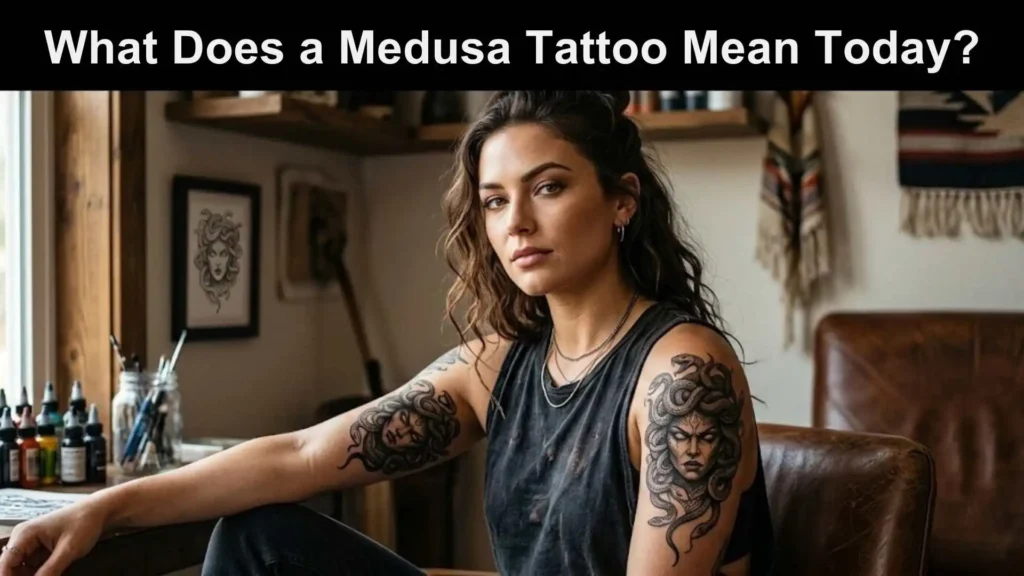
The Medusa tattoo meaning has evolved.
Today, it often represents survival. Many women who experienced sexual harassment or sexual abuse choose this design. It doesn’t mean every Medusa tattoo signals trauma. However, for many, it absolutely does.
Connection to the Me Too Movement
The rise of the #MeToo movement reshaped public perception.
The movement:
- Amplified survivor voices
- Exposed systemic abuse
- Encouraged body autonomy conversations
- Sparked symbolic reclaiming of power
During this period, the hashtag #MedusaTattoo gained traction.
Why Medusa?
Because her story mirrors injustice. She was harmed, then punished. Survivors saw themselves in that narrative.
The Role of TikTok and Social Media Trends
Platforms like TikTok accelerated the symbol’s spread.
Short-form videos explaining:
- Medusa tattoo sexual assault meaning
- Survivor stories
- Healing journeys
- Tattoo transformations
These videos reached millions. The #MedusaTattoo hashtag created a global conversation.
What started as ancient myth became a viral movement.
Medusa Tattoo Meaning at a Glance
Here’s a quick breakdown of interpretations:
| Symbolic Theme | What It Represents Today |
| Protection | Emotional and physical defense |
| Survival | Overcoming trauma |
| Empowerment | Reclaiming identity |
| Feminine Power | Strength in vulnerability |
| Transformation | Growth through pain |
| Awareness | Sexual assault awareness symbol |
This layered symbolism makes the Medusa tattoo deeply personal.
Is Every Medusa Tattoo About Trauma?
No.
Some people choose it because:
- They love Greek mythology origin story themes.
- They admire mythic art.
- They appreciate bold imagery.
- They connect to snake symbolism.
- They love dramatic illustrative tattoos.
For others, it’s purely aesthetic.
Meaning always depends on the wearer.
Snake Hair Symbolism | More Than Decoration
Snakes carry powerful symbolism across cultures.
They represent:
- Rebirth
- Knowledge
- Danger
- Wisdom
- Healing
In Medusa’s case, snake hair reinforces transformation. The snakes move, coil, and live. They’re not static. That dynamic quality makes the tattoo visually intense and emotionally layered.
Comparing Medusa Tattoo to Other Survivor Symbols
Many compare Medusa to the semicolon tattoo.
Semicolon Tattoo Meaning
The semicolon represents:
- A pause, not an end
- Survival through mental health struggles
- Continuation of life
While subtle, it’s minimalistic.
Medusa as a Survivor Symbol Tattoo
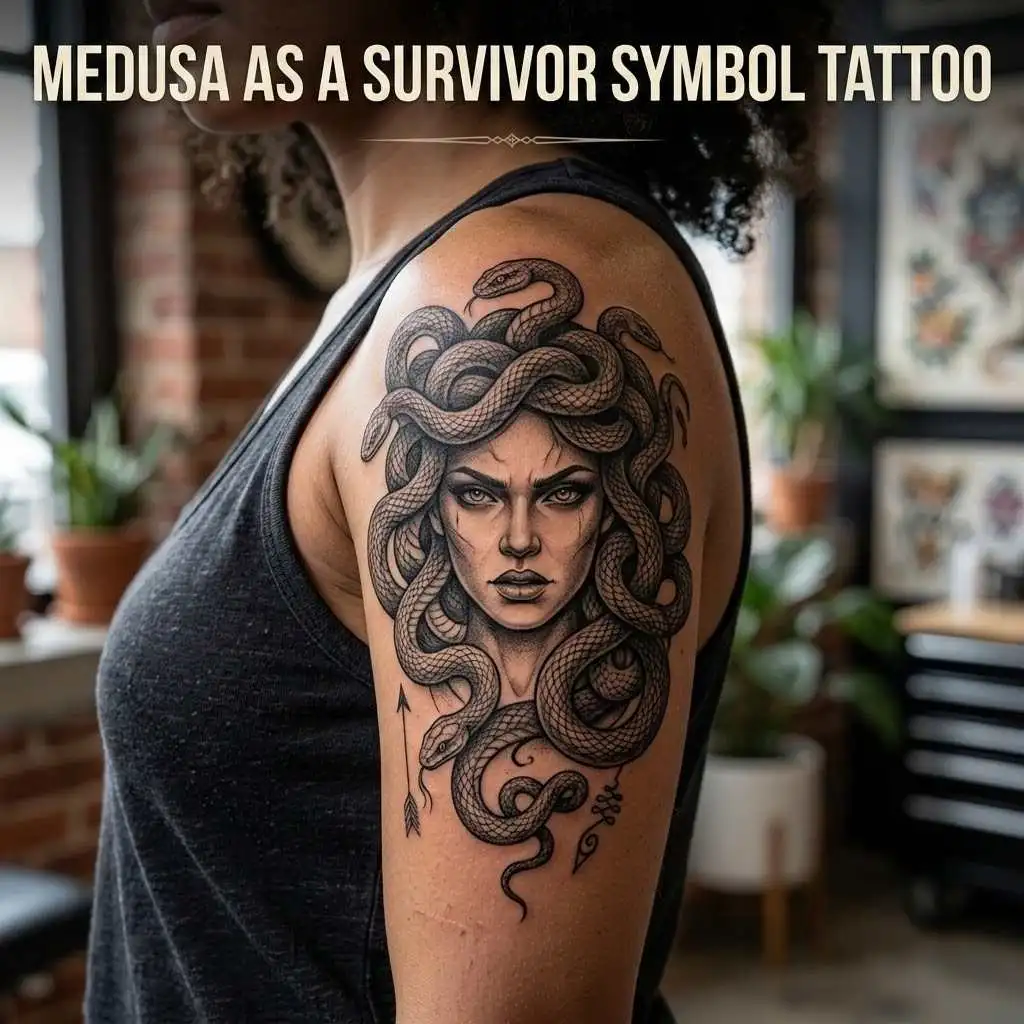
Medusa differs because:
- It’s bold and visually striking.
- It ties directly to a myth involving injustice.
- It represents transformation through rage and resilience.
- It embraces complexity instead of subtlety.
One whispers strength. The other declares it.
Medusa Tattoo Styles and Their Impact
Design influences interpretation.
Fine-Line Medusa Tattoo
- Soft and delicate
- Often black ink
- Minimal shading
- Works well on wrist or ankle
This style balances beauty and quiet strength.
Realistic Medusa Tattoo
- Hyper-detailed face
- Emotional expression emphasized
- Textured snake scales
- Dramatic shadowing
Often used in tattoo sleeve designs.
Dotwork and Illustrative Styles
- Geometric accents
- Mandala-inspired backgrounds
- Black and white contrast
- Mythic goddess aesthetic
Each style shifts emotional tone.
Tattoo Placement and Meaning
Placement communicates intention.
| Placement | Possible Symbolism |
| Wrist | Personal reminder, visible strength |
| Ankle | Subtle resilience |
| Back | Protection symbolism |
| Thigh | Body empowerment |
| Chest | Emotional armor |
Many survivors choose placements near stretch marks as stretch mark cover-up tattoos. That choice transforms perceived insecurity into strength.
Psychological Meaning Behind Getting a Medusa Tattoo
Why do people permanently ink Medusa on their skin?
Because tattoos create ownership.
Psychologically, a Medusa tattoo can:
- Restore a sense of control
- Mark survival milestones
- Transform invisible pain into visible art
- Reinforce protection symbolism
It turns vulnerability into visual power.
That shift matters.
Medusa, Beauty and the Myth of Vanity
Older interpretations portrayed Medusa as vain.
Some myths suggest she boasted about her beauty. Others focus on punishment. However, these interpretations often reflect patriarchal moral lessons.
Modern readings challenge that narrative.
Instead of vanity, people now see:
- Silenced anger
- Misplaced blame
- Survival after injustice
This reinterpretation fuels modern Medusa transformation symbolism.
Medusa Tattoo Popularity | Why It’s Rising
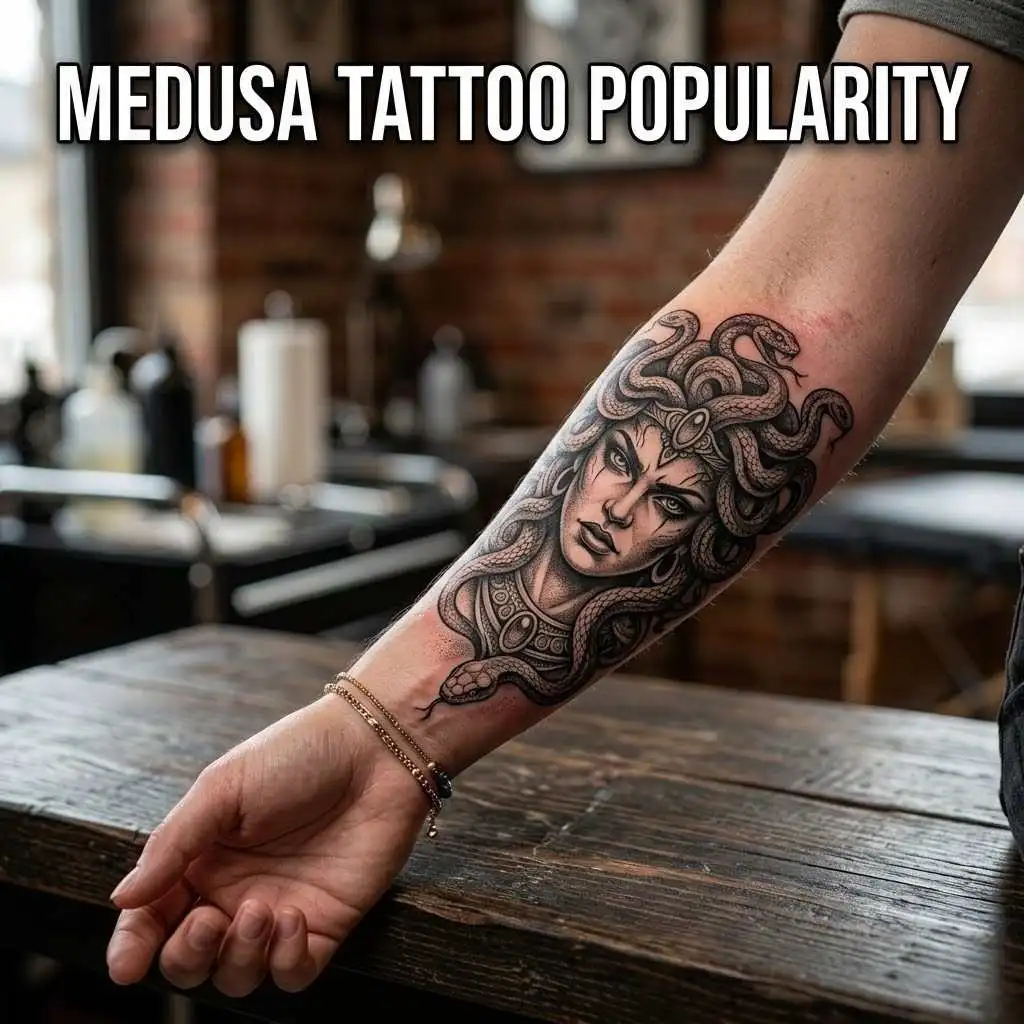
Several factors explain the surge:
- Increased awareness of gender equality
- Survivor solidarity movements
- Social media exposure
- Tattoo artistry evolution
- Cultural reexamination of myths
When culture shifts, symbols shift with it.
Common Questions About Medusa Tattoo Meaning
Is a Medusa tattoo a protection symbol?
Yes. Historically and symbolically, Medusa represents protection against evil.
Why is Medusa linked to sexual assault survivors?
Her myth involves assault and unjust punishment. Survivors resonate with her transformation story.
Is Medusa a feminist symbol?
Many consider her one. She represents feminine rage and reclaimed power.
Does a Medusa tattoo always mean trauma?
No. Some choose it purely for aesthetic or mythological interest.
Key Facts About Medusa in Mythology
- She was one of three Gorgons.
- She was the only mortal sister.
- Her gaze turned people to stone.
- Perseus later beheaded her.
- Even after death, her head retained power.
Her severed head was placed on Athena’s shield. That detail reinforces protection symbolism.
The Deeper Message Behind a Medusa Tattoo
At its core, the Medusa tattoo meaning represents transformation.
Pain can harden you. Or it can strengthen you.
Medusa’s story suggests that survival changes you. It doesn’t erase you.
When someone chooses a Medusa tattoo, they often say:
“I survived. I protect myself. I am not what happened to me.”
That message resonates across cultures.
How to Decide If a Medusa Tattoo Is Right for You
Ask yourself:
- Do you connect to Greek mythology?
- Does protection symbolism resonate?
- Are you reclaiming personal power?
- Do you want a bold design?
- Does transformation reflect your journey?
If the answer feels clear, you already know.
Conclusion
The Medusa tattoo meaning blends ancient myth and modern empowerment. It represents protection, survival, transformation, and feminine strength. For some, it marks healing after trauma.
For others, it reflects admiration for mythology and bold symbolism. Ultimately, the meaning of Medusa tattoo designs rests with the wearer. Symbols evolve, and Medusa now stands as a powerful emblem of resilience.

Ashton Cole is an American author celebrated for his compelling storytelling and ability to capture the depth of human emotions. His works often explore themes of love, resilience, and self-discovery, making him a relatable voice for readers around the world.
He has published several well-received books, including:
-
Whispers of Dawn – a reflective novel about finding hope in life’s darkest moments.
-
Beneath the Silent Sky – a moving story of love, memory, and the bonds that shape us.
-
The Edge of Forever – a thought-provoking tale that blends drama, destiny, and the courage to begin again.
Through his writing, Ashton strives to inspire readers to see beauty in both the struggles and triumphs of life. When he isn’t writing, he enjoys exploring new cities, collecting rare books, and spending time in cozy coffee shops where many of his story ideas take shape.