

“What does 6-7 mean in slang?” If you’ve heard kids shouting “six-seveeeeen” across a classroom or seen it flood your TikTok feed, you’re not alone.
The phrase sounds random. It feels meaningless. Yet it spreads like wildfire. This isn’t just another throwaway joke. The 6-7 meme reveals something deeper about Gen Alpha slang, online culture, and how language evolves in the internet age.
Let’s break it down clearly. No fluff. Just facts, context, and cultural insight.
What Does 6-7 Mean in Slang? The Short Answer
Here’s the direct truth:
6-7 has no fixed dictionary meaning.
It functions as a nonsense phrase, a viral soundbite that operates more like a social signal than a word. In linguistic terms, this is an example of semantic bleaching—when a phrase loses literal meaning and gains social function instead.
Think of it this way. When someone shouts “6-7” in class, they’re not describing math. They’re signaling belonging. They’re participating in a shared joke.
That’s why the six seven meme spreads so fast:
- It’s easy to say.
- It sounds rhythmic.
- It feels absurd.
- Adults don’t get it.
And when adults don’t get it? That’s fuel.
The Origin of the 6-7 Meme
Pinpointing the exact starting moment of a viral phrase is tricky. Internet trends don’t launch with press releases. They emerge in fragments, then snowball.
However, several clear cultural touchpoints shaped the 6-7 origin.
The Sports Connection | Basketball Culture and 6-7
One popular explanation links “6-7” to basketball height references. In sports culture, “six-seven” often describes a player’s height—6 feet 7 inches.
For example:
- LaMelo Ball is officially listed at 6 ft 7 in.
- He plays in the NBA.
- Viral highlight clips of tall, flashy players circulate constantly.
Height becomes shorthand. Kids repeat it. It detaches from context.
Basketball clips from Overtime Elite also amplified exaggerated announcer tones. When a commentator shouts “six-seven!” dramatically, the sound sticks.
Then TikTok loops it.
Then it mutates.
This is cultural diffusion in real time.
TikTok Amplification and the “Doot Doot 6 7” Trend
No modern slang trend survives without TikTok.
The TikTok algorithm favors short, repeatable audio clips. The stranger the sound, the better it performs.
The so-called “Doot Doot 6 7” audio variation emerged from distorted remix culture. Users layered exaggerated voices over sports clips and reaction memes.
Why did it explode?
Because it fits the formula of internet virality:
- Under 3 seconds
- Highly repeatable
- Easily remixable
- Context optional
This is classic meme lifecycle behavior.
Meme Lifecycle Table
| Stage | What Happens | 6-7 Example |
| Creation | Clip emerges | Sports height reference |
| Amplification | TikTok boost | Viral audio remix |
| Peak | Overuse everywhere | Classroom shouting |
| Saturation | Adults notice | Teachers complain |
| Decline | Replaced by new slang | Next absurd phrase |
Short shelf life. High intensity.
Is 6-7 a Police Code? Clearing Confusion
Some users linked it to 10-67 police code, which refers to specific communication signals in certain jurisdictions.
However:
- There is no strong evidence tying the viral meme directly to police radio usage.
- Kids using it in classrooms rarely reference law enforcement.
- The meme thrives on ambiguity, not accuracy.
Internet culture loves retroactive meaning. But most viral slang starts messy.
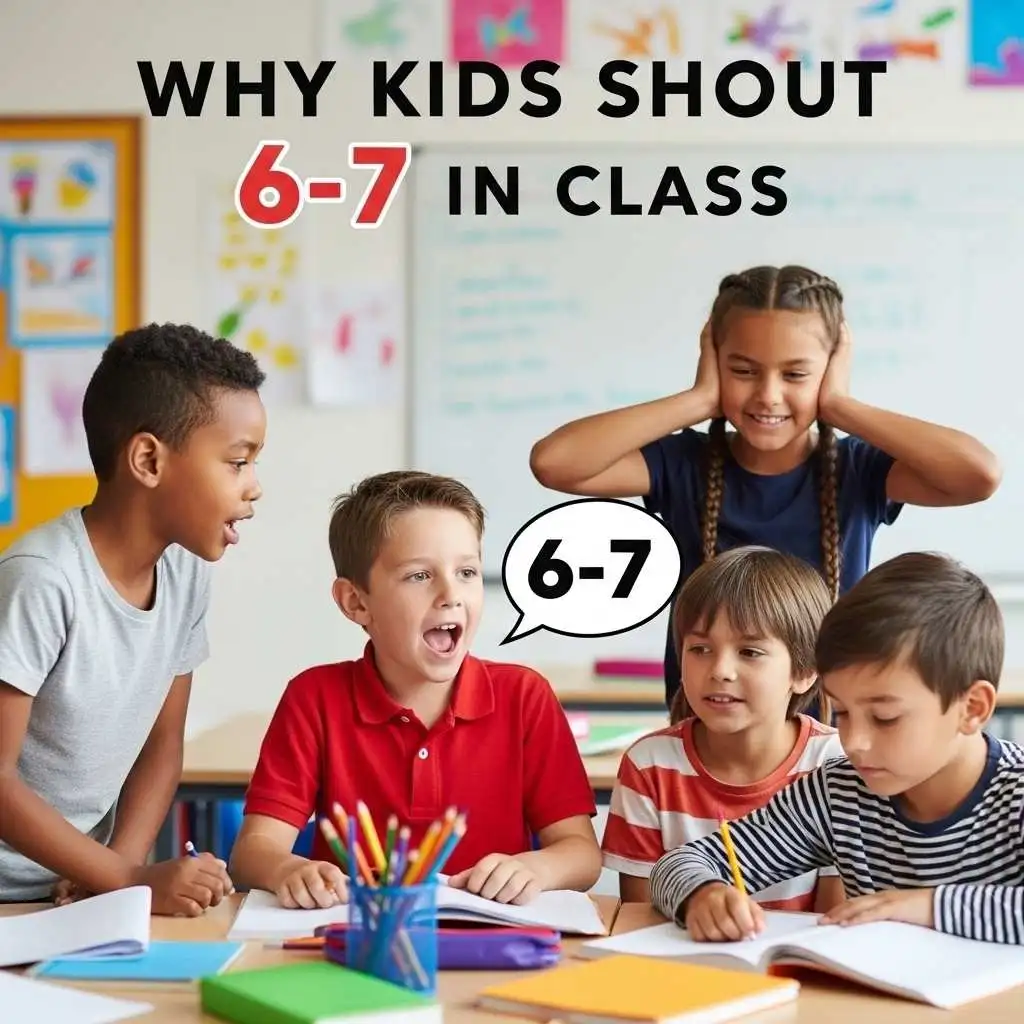
Why Kids Shout 6-7 in Class
Now we reach the heart of it.
Why does this phrase disrupt classrooms?
Because language builds tribes.
6-7 as In-Group Language and Shibboleth
In sociolinguistics, a shibboleth is a word or phrase that identifies membership in a group.
“6-7” operates as:
- In-group language
- A group belonging marker
- A form of social identity signaling
When one student yells “six-seveeeeen,” another responds instantly.
That call-and-response creates unity.
Adults stand outside the circle.
That exclusion strengthens the bond.
This is community formation through language in action.
Classroom Disruption and Resistance Language
Middle school culture thrives on mild rebellion. Not dangerous rebellion. Just symbolic.
Shouting “6-7” becomes:
- A safe act of resistance
- A break from structure
- A shared inside joke
This aligns with broader patterns of resistance language.
When teachers ban it, usage increases. Suppression intensifies novelty.
Here’s why:
- Prohibition adds thrill.
- Shared secrecy increases value.
- Adults reacting validates the joke.
It’s simple psychology.
The Linguistics Behind 6-7 | Semantic Drift and Meaning Detachment
Let’s zoom out.
Language constantly shifts. But the speed of shift today is unprecedented.
“6-7” demonstrates semantic drift—a change in meaning over time.
In this case:
- Original reference: basketball height.
- Audio exaggeration: comedic distortion.
- Repetition: meme adoption.
- Detachment: meaning becomes irrelevant.
- Pure function: social signal only.
This leads to what some scholars describe as meaninglessness in language.
However, it’s not truly meaningless.
It just shifted function.
Brainrot, Absurd Humor, and Post Truth Internet Culture
Gen Alpha humor often embraces absurdity. Some call it brainrot.
This doesn’t imply intellectual decline. It reflects:
- Rapid content consumption.
- Irony stacked on irony.
- Randomness as entertainment.
Compare it to South Park, which often exaggerates nonsense catchphrases to parody culture.
Absurd humor creates interpretive freedom. There’s no wrong answer.
That’s powerful in a digital age.
Comparing 6-7 to Other Gen Alpha Slang
To understand it fully, compare it to similar trends.
Slang Comparison Table
| Term | Literal Meaning | Social Function | Platform Driver |
| 6-7 | None fixed | Belonging signal | TikTok |
| Skibidi | Minimal | Absurd humor | TikTok/YouTube |
| Rizz | Charisma | Identity expression | TikTok |
| Ohio meme | Hyperbole | Stereotype humor | TikTok |
The absurd web series Skibidi Toilet shows similar pattern logic: chaotic, loud, fast-moving, meme-driven.
Meanwhile, rizz slang meaning carries actual definition. “6-7” doesn’t need one.
That’s the difference between traditional slang and nonsense internet slang.
Generational Conflict | Gen Z vs Gen Alpha Slang
Older generations often criticize new slang.
Concerns include:
- Literacy decline
- Reduced attention span
- Weakening critical thinking
But history repeats.
Every generation invents coded language.
Gen Z had its own wave. Gen Alpha accelerates it.
Why?
Because algorithmic amplification didn’t exist 30 years ago.
Education Context | Are Teachers Overreacting?
Teachers report classroom disruptions tied to the 6-7 TikTok trend.
However, consider the scale:
- It’s non-violent.
- It’s temporary.
- It fades naturally.
Banning slang often backfires.
Instead, educators can:
- Redirect humor.
- Incorporate media literacy lessons.
- Discuss meme lifecycle openly.
Turning it into analysis deflates its mystique.
Cultural Diffusion and Meme Dethroning
Memes rarely die from logic. They die from boredom.
The dethroning a meme trend process usually follows:
- Overexposure.
- Corporate adoption.
- Adult usage.
- Ironic fatigue.
Once adults repeat “6-7,” it loses edge.
Youth culture thrives on freshness.
The Social Function of Language | Why 6-7 Matters
Language isn’t just about information.
It serves deeper purposes:
- Bonding
- Identity
- Exclusion
- Humor
- Power
“6-7” fulfills all five.
It acts as a language game—a concept suggesting words gain meaning through use, not dictionary definition.
And that’s the key insight.
FAQ | What People Search About 6-7
What does 6-7 mean on TikTok?
It functions as a viral audio-based catchphrase with no stable literal meaning. It signals participation in a shared meme culture.
Why do kids say six seven at school?
To bond socially. It’s a classroom inside joke and viral school meme.
Is 6-7 connected to basketball?
Yes, likely through height references such as players listed at 6 ft 7 in. Viral highlight commentary amplified it.
Is 6-7 Gen Alpha slang?
Yes. It aligns strongly with Gen Alpha nonsense phrase patterns and rapid TikTok spread.
Who started the 6-7 meme?
There’s no single confirmed creator. It evolved through remix culture and sports audio loops.
Will the 6-7 Meme Last?
Probably not.
Most viral school trends last weeks or months. Very few achieve linguistic longevity.
For a meme to survive long term, it needs:
- Adaptability
- Clear meaning
- Broader demographic adoption
“6-7” thrives on chaos. Chaos fades quickly.
Expect replacement soon.
The Bigger Picture | Youth Internet Language Evolution
Here’s what matters most.
The 6-7 phrase explained isn’t about numbers.
It’s about how:
- Digital platforms compress language.
- Youth identity forms online.
- Absurd humor replaces structure.
- Meaning detaches from words.
We’re witnessing accelerated linguistic evolution.
Short cycles. Fast shifts. Intense bursts.
That’s the modern language landscape.
Key Takeaways
- 6-7 meaning: No fixed definition.
- Origin likely tied to basketball height references.
- TikTok amplified it.
- It functions as in-group slang.
- It disrupts classrooms through bonding behavior.
- It will likely fade soon.
Simple on the surface. Complex underneath.
Conclusion
So what does 6-7 mean in slang? It means belonging more than anything else. It’s a signal, not a sentence. A meme, not a message.
This viral phrase shows how fast language mutates in digital spaces. Meaning detaches. Community takes over. And youth culture keeps moving.
Today it’s 6-7. Tomorrow it’ll be something stranger. That’s not decline. That’s evolution.

Ashton Cole is an American author celebrated for his compelling storytelling and ability to capture the depth of human emotions. His works often explore themes of love, resilience, and self-discovery, making him a relatable voice for readers around the world.
He has published several well-received books, including:
-
Whispers of Dawn – a reflective novel about finding hope in life’s darkest moments.
-
Beneath the Silent Sky – a moving story of love, memory, and the bonds that shape us.
-
The Edge of Forever – a thought-provoking tale that blends drama, destiny, and the courage to begin again.
Through his writing, Ashton strives to inspire readers to see beauty in both the struggles and triumphs of life. When he isn’t writing, he enjoys exploring new cities, collecting rare books, and spending time in cozy coffee shops where many of his story ideas take shape.