

“What does 40 acres and a mule mean?” It refers to a historic promise made in 1865 to give formerly enslaved African Americans land and resources so they could build independent lives after slavery ended.
For millions of freed people, this promise symbolized hope, dignity, and economic freedom. Land meant survival. It meant control over their future.
Yet what began as a bold effort during the Reconstruction era quickly became one of the most devastating examples of broken trust in American history.
Understanding this phrase reveals not just a policy, but a turning point that shaped land ownership, economic inequality, and generational wealth for over 150 years.
Quick Definition | What Does 40 Acres and a Mule Mean in Simple Terms?
The phrase “40 acres and a mule” is more than just a historical term it represents one of the earliest attempts at economic justice after slavery in the United States. It reflects the hope many formerly enslaved people had for a stable and self-sufficient future. Understanding its simple meaning helps explain why this promise still appears in discussions about equality and reparations today.
At its core, 40 acres and a mule means giving land and farming support to formerly enslaved people so they could live independently.
Here’s a clear breakdown:
| Term | Meaning |
| 40 acres | Land allocated to each freed family for farming |
| Mule | Animal used to plow land and grow crops |
| Purpose | Help freed slaves become economically independent |
| Origin | Special Field Orders No. 15 issued in 1865 |
| Outcome | Promise largely reversed and land taken back |
This promise was not charity. It was a practical solution. Freed slaves needed land to survive. Without land, freedom had little economic value.
America After Slavery | Why Land Was Essential for Survival
When the American Civil War ended in 1865, slavery officially ended. But freedom created a new crisis.
Nearly 4 million formerly enslaved people suddenly had:
- No homes
- No income
- No land
- No protection
Meanwhile, former Confederate landowners still controlled vast plantations across the South.
Imagine being free but having nowhere to live. Nowhere to work. No way to feed your family. That was the reality.
The Southern economy depended on agriculture. Land was everything. Without land ownership, freed slaves risked falling back into economic dependence.
Key realities of the time:
- Over 400 million acres of land existed in the South
- Former slaves owned less than 1% of total land
- Most agricultural land remained in the hands of former slaveholders
Freedom without land meant vulnerability.
Special Field Orders No. 15 | The Origin of 40 Acres and a Mule
The phrase originated from Special Field Orders No. 15, issued on January 16, 1865.
This order came from:
- General William Tecumseh Sherman
- Supported by Secretary of War Edwin Stanton
- Authorized by the Union Army
Sherman issued the order after meeting with Black community leaders. They made one thing clear: land was the only path to true freedom.
What the Order Promised
Sherman reserved 400,000 acres of confiscated Confederate land for freed slaves.
This land stretched across:
- Coastal Georgia
- Coastal South Carolina
- Parts of Florida
Each family could receive up to:
- 40 acres of land
- Access to military support
This was not random land. It included fertile agricultural areas abandoned by Confederate landowners.
Where Freed Slaves Actually Received Land
The land allocation focused on strategic coastal areas.
Important locations included:
- Sapelo Island, Georgia
- Edisto Island, South Carolina
- Coastal Georgia plantations
- Coastal South Carolina farmland
These areas were ideal for farming crops such as:
- Rice
- Cotton
- Corn
Many freed families moved quickly to claim land. They built homes. They planted crops. They created communities.
Within months:
- Around 40,000 freed slaves settled on redistributed land
- Thousands of families began independent farming
This marked one of the first large-scale attempts at land redistribution in American history.
Where the Mule Came From | Fact vs Myth
Many people assume the mule was officially promised. That’s partly true but also misunderstood.
The mule came from practical necessity.
The Union Army had surplus military mules. These animals were no longer needed for war.
Officers began loaning mules to freed families so they could farm land.
Why mules mattered:
- Strong enough to plow fields
- Essential for agriculture
- Allowed families to produce food and income
Without a mule, land alone had limited value.
Over time, the phrase “40 acres and a mule” became shorthand for both land and farming support.
How Many Freed Slaves Actually Received Land
The redistribution effort showed early success.
Important numbers include:
| Category | Figure |
| Land redistributed | 400,000 acres |
| Freed people settled | 40,000 individuals |
| Families settled | Approximately 10,000 families |
| States affected | Georgia, South Carolina, Florida |
Freed families received possessory land titles, meaning they could use and occupy the land.
These land titles appeared in official Freedmen’s Bureau records, which still exist in the National Archives today.
For the first time in American history, former slaves began becoming landowners.
The Freedmen’s Bureau | Helping Freed Slaves Transition to Freedom
The federal government created the Freedmen’s Bureau in March 1865.
Its mission was to help freed slaves build independent lives.
The bureau provided:
- Food assistance
- Medical care
- Education
- Legal protection
- Help securing land
Most importantly, it created valuable historical records, including:
- Land title records
- Labor contracts
- Marriage certificates
- Property deeds
- Census records
These historical archives remain essential for genealogical research today.
The bureau represented one of the first federal social support programs in American history.
Why the Promise Was Broken | President Andrew Johnson’s Role
Everything changed after President Abraham Lincoln was assassinated in April 1865.
Vice President Andrew Johnson became president.
Johnson had very different views.
He quickly reversed Sherman’s land redistribution policy.
His actions included:
- Returning confiscated land to former Confederate landowners
- Canceling land redistribution programs
- Removing freed families from land they had settled
This decision destroyed the promise.
Thousands of families lost land they had already begun farming.
Imagine building a home, planting crops, and then being forced to leave.
That happened to thousands of freed families.
What Happened After Freed Families Lost Their Land
After losing land, most freed slaves had limited options.
Many entered a system called sharecropping.
Sharecropping worked like this:
- Freed workers farmed land owned by white landowners
- They paid rent using a portion of their crops
- Landowners controlled tools, housing, and supplies
This system created long-term economic dependency.
Sharecroppers rarely built wealth.
They remained trapped in cycles of poverty.
Key consequences:
- Limited economic mobility
- Continued dependence on landowners
- Lack of generational wealth
Freedom existed legally but economic independence remained out of reach.
Why Land Ownership Was So Important
Land ownership creates economic stability.
It provides:
- Food security
- Income generation
- Wealth accumulation
- Family inheritance
Land creates opportunity.
Without land, families struggle to build wealth.
Consider this example:
A family with land can:
- Grow crops
- Sell food
- Save money
- Pass land to future generations
But families without land must work for others.
This difference shapes economic futures.
The lost promise of land directly contributed to the modern wealth gap.
Timeline of Key Events | 40 Acres and a Mule History
| Year | Event |
| 1865 | Sherman issues Special Field Orders No. 15 |
| 1865 | Freedmen’s Bureau established |
| 1865 | Freed families begin receiving land |
| April 1865 | Abraham Lincoln assassinated |
| 1865 | Andrew Johnson becomes president |
| 1865–1866 | Land returned to former Confederate owners |
| Late 1800s | Sharecropping becomes widespread |
This timeline shows how quickly hope turned into loss.
Cultural and Historical Significance of 40 Acres and a Mule
The phrase became a symbol of broken promises.
It represents:
- Historical injustice
- Failed Reconstruction policies
- Lost economic opportunity
- Government betrayal
It also became a symbol of resilience.
Despite losing land, freed families built communities.
They created churches, schools, and businesses.
The phrase remains deeply tied to discussions about:
- Reparations
- Economic inequality
- Civil rights
Modern Cultural References
The phrase continues to appear in modern culture.
Examples include:
- Film company 40 Acres and a Mule Filmworks
- References in music and literature
- Educational discussions about Reconstruction
Artists such as Nas and Kanye West have referenced the phrase to highlight inequality.
These references show the lasting impact of this historic promise.
Common Myths About 40 Acres and a Mule
Myth | Every freed slave received land
Reality: Only about 40,000 freed people received land temporarily.
Myth | The government permanently gave land
Reality: Most land was returned to former Confederate owners.
Myth | The mule was guaranteed
Reality: Mules were loaned informally, not officially promised.
Myth | The policy lasted many years
Reality: It lasted less than one year.
Understanding these facts reveals the true scale of the broken promise.
Did Any Freed Families Keep Their Land?
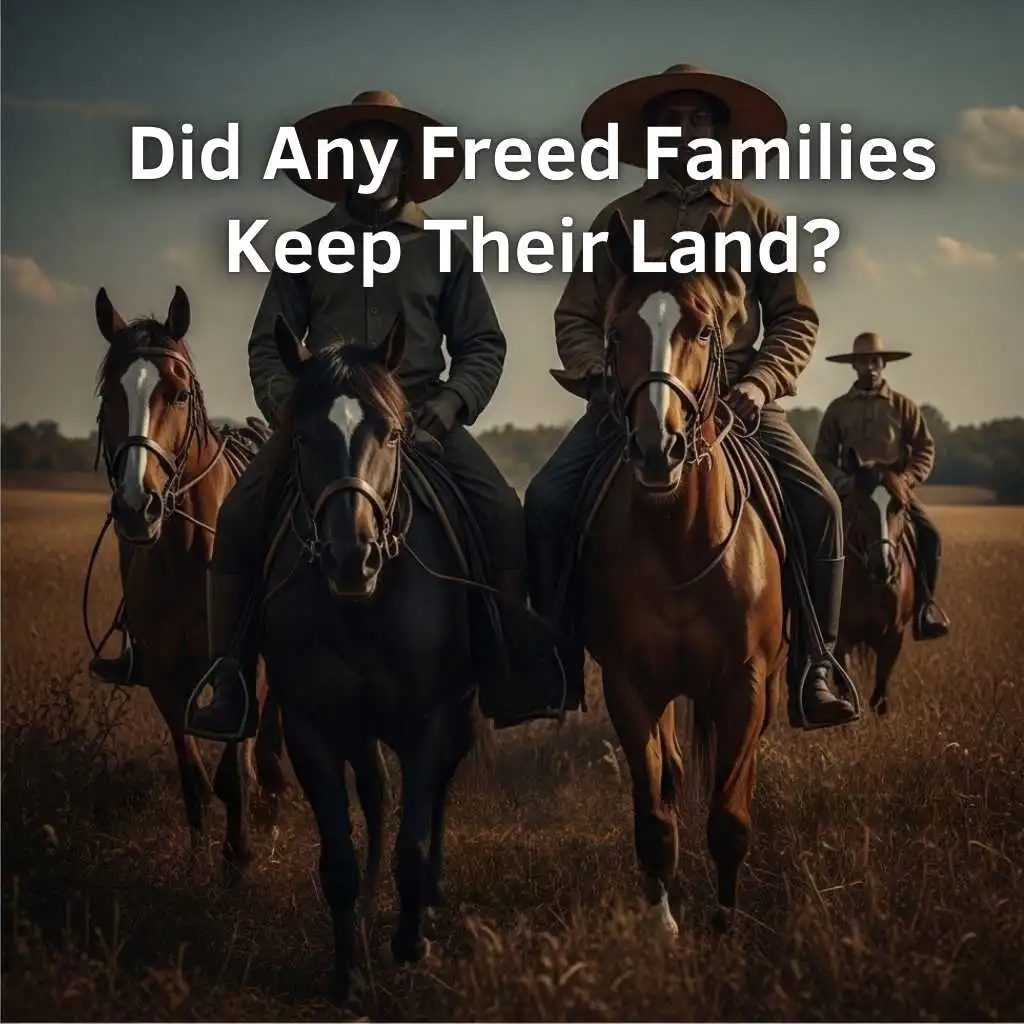
Some freed families later purchased land independently.
By 1900:
- Black Americans owned approximately 15 million acres of land
This was achieved through:
- Hard work
- Saving money
- Purchasing property
However, much land was later lost due to:
- Legal discrimination
- Fraud
- Violence
Land ownership remains significantly lower compared to white Americans.
How Historians Study 40 Acres and a Mule Today
Researchers rely on important historical records, including:
- Freedmen’s Bureau records
- National Archives records
- Property deeds
- Federal Census records
- Historical land titles
These digital archives help reconstruct lost history.
Modern genealogical research uses these records to trace descendants.
Researchers analyze:
- Land ownership records
- Archival documents
- Plantation records
This work helps restore forgotten stories.
Long Term Economic Impact on African Americans
The loss of land had lasting consequences.
Economic effects include:
- Reduced generational wealth
- Limited property ownership
- Lower economic mobility
Today, land ownership remains one of the strongest drivers of wealth.
The promise of land could have changed millions of lives.
Its loss shaped economic inequality for generations.
Why the Phrase Still Matters Today
The phrase remains powerful.
It represents:
- Hope
- Loss
- Justice
- Economic independence
It reminds people of promises made and broken.
It highlights how policy decisions shape economic futures.
Understanding this history helps explain modern economic disparities.
Frequently Asked Questions
What does 40 acres and a mule mean in simple terms?
It refers to a promise made in 1865 to give freed slaves land and farming resources so they could live independently.
Who promised 40 acres and a mule?
Union General William Tecumseh Sherman issued the order under Special Field Orders No. 15.
Did freed slaves actually receive land?
Yes. Around 40,000 freed slaves temporarily received land before it was taken back.
Why was the promise taken away?
President Andrew Johnson returned land to former Confederate landowners after becoming president.
Was the mule officially promised?
No. Mules were loaned informally by the Union Army but not officially guaranteed.
Why is this phrase still important today?
It symbolizes broken promises, economic injustice, and ongoing discussions about reparations.
Conclusion
The meaning of 40 acres and a mule goes far beyond a simple promise. It represents a critical moment when freed slaves stood on the edge of true independence. For a brief time, land ownership offered hope, stability, and opportunity.
But political decisions quickly reversed that progress, leaving lasting economic consequences. This broken promise shaped generations and contributed to modern wealth inequality.
Understanding this history reveals how deeply land, freedom, and justice remain connected. The phrase endures as both a reminder of injustice and a symbol of resilience.
Discover More:
- Explained What Does FML Mean in Text? Full Form, Real Meaning, Examples and How to Use It Correctly in 2025
- Learn What Does Don’t Tread on Me Mean? The Powerful History and Hidden Message Behind the Iconic Phrase in 2026
- Find Out What Does Adjacent Mean? Simple Definition, Real Examples and Easy Math Explanation for 2026

Tyler Wells is an American author known for his captivating storytelling and thoughtful insights into modern life. With a natural talent for weaving words into meaningful narratives, he has built a strong connection with readers who appreciate both authenticity and imagination.
Over the years, Tyler has written several acclaimed books, including “Echoes of the Dawn” (a moving story about hope and new beginnings), “Whispers Between the Lines” (a heartfelt story exploring love, loss, and resilience), and “The Silent Hour” (a suspenseful drama that keeps readers turning pages late into the night). His works blend emotional depth with relatable characters, making them both timeless and relevant for today’s audience.
Beyond writing, Tyler enjoys sharing his thoughts on creativity, personal growth, and the human experience. Whether through his books or his articles, he inspires readers to look at life from new perspectives and embrace their own stories with courage.