

If you finished “The Perfect Marriage” and closed the book feeling unsettled, conflicted, or even angry, you’re not alone.
Many readers walk away stunned, unsure whether to admire the ending or recoil from it. This is not an accident. Jeneva Rose designed the novel to provoke discomfort, not comfort.
This in depth guide breaks down “The Perfect Marriage ending explained” in full detail. It connects the dots, exposes the manipulation beneath the surface, and explains why the ending feels shocking yet disturbingly inevitable.
Along the way, it unpacks the trial, the psychology, the themes and the clues most readers miss the first time. A clear spoiler warning applies from this point forward.
The Perfect Marriage at a Glance
Before diving into the ending, it helps to ground the story in what it pretends to be versus what it actually is.
The Perfect Marriage presents itself as a domestic thriller and legal thriller centered on infidelity and murder. On the surface, the plot looks familiar: a cheating husband, a dead mistress, and a wife who happens to be a powerful defense attorney.
Underneath, it is a psychological thriller about control, power, and punishment.
Core facts readers should know
- Author: Jeneva Rose
- Publication date: July 3, 2020
- Genre blend: Domestic thriller, legal thriller, courtroom drama, psychological thriller
- Sequel: The Perfect Divorce (released October 2023)
This context matters because the ending only works if readers understand the genre misdirection at play.
Spoiler Free Snapshot Before We Go Further
At its heart, The Perfect Marriage explores what happens when intelligence, resentment, and opportunity collide inside a marriage already hollowed out by betrayal.
A woman who built her career defending criminals decides she no longer wants to defend her husband.
That’s all the warning you get.
The Affair That Starts Everything
Adam Morgan’s affair with Kelly Summers is not just a moral failure. It is the inciting event that sets every domino in motion.
Adam is a struggling writer. Sarah Morgan is a high-powered defense attorney accustomed to winning. From the beginning, the marriage operates under a clear power imbalance, both financially and psychologically.
Kelly Summers, a waitress Adam meets while staying at the lake house, represents:
- Validation Adam craves
- Escape from Sarah’s dominance
- A fantasy unburdened by accountability
However, the affair carries more weight than Adam realizes.
Why the affair matters narratively
- It creates motive for multiple characters
- It places Adam in a position of legal vulnerability
- It exposes Sarah’s tolerance for humiliation and her breaking point
The novel quietly suggests that betrayal, not murder, is the original crime.
The Murder and the Convenient Suspect
Kelly Summers is found brutally stabbed at the lake house. Almost immediately, suspicion lands on Adam.
From a murder mystery novel standpoint, the case looks airtight.
Evidence stacked against Adam
- His DNA is present at the scene
- He had a documented relationship with the victim
- He lacks a solid alibi
- The murder weapon is a knife he plausibly handled
The investigation unfolds quickly. Too quickly.
This speed is the first red flag.
In most legal thriller novels, investigators uncover contradictions gradually. Here, the narrative rushes Adam toward arrest, signaling that the real drama lies elsewhere.
Sarah Morgan as Defense Attorney | Conflict by Design
Sarah insists on defending Adam herself. This decision feels noble at first, even romantic.
It is neither.
From a legal standpoint, this creates an extreme conflict of interest. From a psychological standpoint, it gives Sarah absolute control.
What Sarah gains by defending Adam
- Full access to evidence
- Control over trial strategy
- Influence over witnesses
- The ability to shape Adam’s expectations
Sarah doesn’t just defend Adam in court. She manages him emotionally.
Her calm demeanor reads as professionalism. In hindsight, it reads as calculation.
The Trial Explained Clearly
Many readers criticize the trial for feeling unrealistic. That criticism isn’t wrong, but it also misses the point.
The trial isn’t meant to be a procedural masterpiece. It is a stage for manipulation.
Key evidence that seals Adam’s fate
- DNA evidence that places him at the scene
- Bloodwork inconsistencies he cannot explain
- A timeline that collapses under pressure
- His own shifting testimony
Sarah does not dismantle the prosecution’s case. She rearranges it.
Instead of proving Adam’s innocence, she frames his guilt as tragic inevitability.
Why the Jury Convicts Adam
Adam’s conviction feels brutal but believable.
Several forces work against him:
- His affair paints him as morally compromised
- Kelly’s role as a victim invites sympathy
- Sarah’s detached defense weakens emotional resonance
Jurors respond not just to facts but to stories. Sarah gives them one where Adam fits neatly into the role of the guilty man.
Justice, in this courtroom drama, becomes performance.
The Perfect Marriage Ending Explained Step by Step
This is where the novel sheds its disguise.
The Confession That Changes Everything
After Adam is convicted and sentenced to death, Sarah reveals the truth.
She killed Kelly Summers.
Not in a moment of rage. Not by accident.
She planned it.
Sarah drugged Adam to ensure he would have no memory gaps she couldn’t exploit. She used her legal expertise to manufacture a case that would survive scrutiny. She planted evidence knowing exactly how investigators think.
This is not a crime of passion. It is a revenge-driven murder executed with precision.
The Execution Scene and Its Meaning
Adam’s execution is the emotional core of the ending.
Readers often ask why Jeneva Rose chose finality over a last-minute rescue. The answer lies in theme, not shock value.
Adam’s death represents:
- The irreversible cost of betrayal
- The illusion that intelligence equals immunity
- The ultimate transfer of power
Sarah doesn’t just punish Adam. She erases him.
The silence surrounding his execution is deliberate. There is no catharsis. No moral closure.
The Final Twist Reframed
Once Sarah’s confession lands, the entire novel reorients itself.
Moments that once felt sympathetic now feel sinister.
Scenes that appeared emotionally flat become chillingly intentional.
The title The Perfect Marriage reveals its irony.
Perfect does not mean loving. It means controlled.
Was Sarah Always the Villain?
This question fuels endless debate.
Sarah functions as:
- Protagonist
- Antagonist
- Unreliable narrator
- Moral enigma
Two dominant interpretations
- Feminist thriller reading: Sarah reclaims power in a system that excuses male betrayal
- Psychological manipulation reading: Sarah exhibits sociopathic control masked as empowerment
The novel refuses to choose for you.
That refusal is its boldest move.
Themes the Ending Confirms
The ending sharpens themes that run quietly throughout the book.
Central themes clarified
- Power imbalance in marriage creates emotional violence
- Justice vs manipulation exposes legal systems as tools
- Control disguised as love erodes empathy
- Revenge thrives on patience, not rage
- Trust is more fragile than loyalty
None of these themes rely on subtlety in the final pages. They strike cleanly and without apology.
Hidden Clues Readers Miss Early On
The novel plants clues in plain sight.
Overlooked warning signs
- Sarah’s emotional neutrality during intimacy
- Her comfort discussing death penalty cases
- Her lack of curiosity about alternate suspects
- Dialogue that avoids moral language altogether
These moments feel minor until the ending reframes them.
Why the Ending Feels Shocking Yet Inevitable
The shock comes from misplaced trust, not narrative trickery.
Readers assume:
- The wife defending her husband must love him
- Intelligence aligns with morality
- Legal expertise implies fairness
The book dismantles each assumption systematically.
How the Ending Connects to The Perfect Divorce
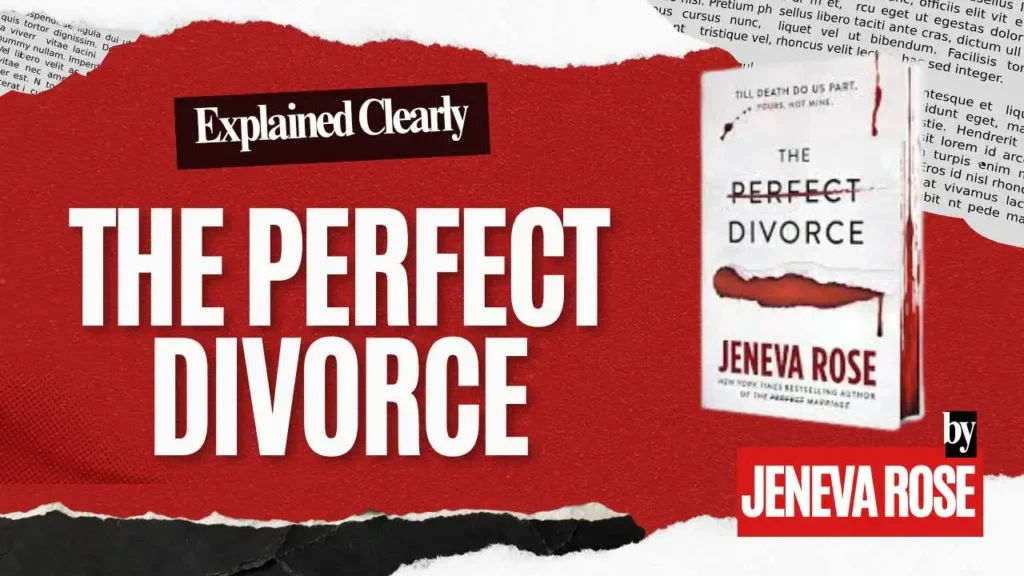
The sequel does not undo the ending. It expands its consequences.
Themes that carry forward:
- Power redistribution
- Moral ambiguity
- Control as currency
Readers who understand The Perfect Marriage ending explained enter the sequel with sharper eyes.
Frequently Asked Questions About The Perfect Marriage
Is The Perfect Marriage based on a true story?
No. The novel is entirely fictional, though it draws inspiration from real-world legal dynamics, power imbalances in marriage, and familiar domestic thriller tropes.
Who killed Kelly Summers?
Sarah Morgan. She planned and executed the murder alone.
Was Adam ever innocent?
Legally no. Morally complicated. He didn’t kill Kelly but his betrayal triggered the chain of events.
Could Adam have survived?
Only if Sarah chose mercy. She did not.
Is the legal process realistic?
Some elements stretch credibility. The emotional logic remains intact.
Why didn’t Sarah just divorce Adam instead of killing Kelly?
Divorce would have cost Sarah control, assets, and emotional leverage. The murder allows her to punish betrayal permanently while maintaining dominance.
Should you read The Perfect Divorce after this book?
Yes, especially if you’re interested in long-term consequences, shifting power dynamics, and how Sarah’s choices continue to echo beyond the first novel.
Conclusion
The Perfect Marriage delivers an ending that unsettles rather than satisfies. By revealing Sarah as both architect and executioner, the story transforms from a legal thriller into a chilling study of control and revenge.
The final pages force readers to question justice, loyalty, and the cost of betrayal. Love doesn’t fail quietly here.
It calcifies into something far more dangerous. That lingering unease is exactly why the ending refuses to be forgotten.
Read More:
- https://anniversiry.com/is-the-perfect-marriage-based-on-a-true-story/
- https://anniversiry.com/the-perfect-marriage-review/

Edward Grant is an American author known for his modern storytelling and thought-provoking narratives. With a passion for exploring human emotions, relationships, and the complexities of everyday life, Edward writes in a style that feels both relatable and inspiring. His journey as a writer began in his early 20s, fueled by a love for literature and a deep curiosity about the world around him.
Over the years, Edward has developed a reputation for crafting characters that feel real, layered, and unforgettable. Whether he’s writing contemporary fiction or reflective essays, his work resonates with readers who value authenticity and emotional depth. Beyond writing, Edward is also an avid reader and enjoys spending time in quiet libraries and creative workspaces where new ideas come to life.
Some of his notable works include Whispers of Tomorrow, Shadows of the Heart, and The Last Horizon, each of which has received appreciation for its unique voice and meaningful storytelling.